30 November 2010

30/11/2010 - BJJ (Advanced)

Class #364
RGA High Wycombe, (BJJ), Kev Capel, High Wycombe, UK - 30/11/2010

I'm not sure I've posted these up before, but there is a series on YouTube called 'Ask A Black Belt'. The idea is pretty simple, as a guy just gets a bunch of black belts together, asks them all the same questions, then edits them together into clumps. The unnecessarily long intro is a bit annoying, but the content is excellent: lots of great answers from the various black belts, with some big names like Kurt Osiander and Dave Camarillo. Also, there is some random competition footage which doesn't seem necessarily related, and it was beginning to feel a bit tiresome...until this awesome move by Sean Roberts. Definitely want to try that next time I'm in half guard, though I'm guessing there is way more to it than simply rolling to the back.

Kev continued class with a couple of De La Riva passes. For the first one, turn your trapped knee outwards, which should either loosen their grip or pop it off completely. Put both hands on the trouser leg of the foot pushing into your hip, and drive that hip forward slightly. You can then bring it back while at the same time bringing that leg across your body. Switching your grips, push that leg down to the floor on your hooked leg side. Maintaining a grip on the bottom of their trousers and clamping it to the ground, move around behind them to settle into side control.

The second De La Riva pass begins by grabbing both their collars high on their chest, then driving the knee of your hook leg through to meet that hand. You want to get as much weight going through that knee as possible, so they're pinned to the floor. Take a big step forward with your other leg, while pushing their leg underneath it.

You can then move into a pass, with two options. Either you can underhook their far armpit, to help settle into a tight side control, or alternatively, you can slide that hand into their near collar. This means you're threatening a choke, and it also makes it more difficult for them to try and slip under the arm in an attempt to scupper the pass.

Sparring began with Callum, from inside the guard. Once again I was looking for that running escape, to see if I could get into a strong defensive position. I then somehow ended up in position to attempt a double underhooks pass, I think (unless that was from a different position). Either way, something went wrong, as I got stuck in a triangle. I tried to move into the escape Kev showed us, but my base had been knocked flat, so I couldn't get my knee across.

With my next partner, the same injured blue belt I rolled with last week, something similar happened, after a long stalemate in his guard (particularly as I had the excuse of his injury, I was being even more passive and defensive than usual). At some point he moved to side control, and I immediately went for the running escape. Like Drazen, he tried to take my back, but this time I was able to stay tight and block the hooks, spinning to try and drive through for top half guard or side control instead. Although I can't be sure that would have worked, as time ran out before I could secure anything.

I've got two more poetry seminars to teach on Thursday, so won't be back to RGA High Wycombe until Tuesday. Lots of PhDing to get stuck into as well, as I want to polish off the introduction in time to pass to my supervisor, so I can then get cracking on the conclusion. A fast turnaround on my part would be good, particularly as it is coming up to Christmas so I don't want to piss him off. After all, eating turkey and opening presents is rather more fun than reading the ramblings of a PhD student. ;)

30/11/2010 - BJJ (Beginner)

Class #363
RGA High Wycombe, (BJJ), Kev Capel, High Wycombe, UK - 30/11/2010

I arrived back from Germany late last night, which made for a pleasant short trip, plus some very tasty food courtesy of my grandparent's Diamond Wedding Anniversary in Maastricht. Unfortunate that all the art galleries in Aachen appear to be closed on Mondays, but still, bunch of other stuff to see: write up here, if you're thinking of a trip there yourself.

If you're interested in winning some Scramble gear, check out the new competition Matt is running, in conjunction with a bunch of other sites. Also, I think I've mentioned the Robson online seminar already, but either way, they've now got a podcast up about it, here.

Kev started off with a cool open guard drill, building up through increasingly difficult positions. All of them had one person doing a basic bullfighter pass, stepping to your side, and then you readjust to recover guard. The first stage, they don't step particularly deep. So, you can bring your outside foot to the inside of their nearest leg, then use that to square back up in open guard. Make sure you hook with that foot, or they'll be able to easily step out and continue to pass. If you're got a hook secured, you'll follow them when they try to move.

The next stage, they've gone a bit deeper, so their foot is by your hip. Now, you will have to shrimp a bit before you can hook, pushing off their leg with your hands. You can then proceed as normal, again hooking and squaring up. If you're very flexible, you could try hooking without the shrimping motion, but it isn't advisable.

For the final stage, they've passed to knee on belly. This time, you hook around their knee with your near hand, then step the foot nearest their legs right over your own body. You're aiming to turn your hips, so that you end up with your bum in the air, both feet past your head. You then push off your feet and roll back into guard.

On an interesting terminological note, when I mentioned the similarity to Saulo's running escape, Kev said he'd also seen Jean Jacque Machado use the same escape, except that Machado called it the coffee grinder. Well, I found it interesting. ;p

The first full technique was the tripod sweep, which we've done a few times before (although I referred to it as a cross guard sweep last time). You can also see it on page 228 of Theory & Technique (though they use the term 'hook sweep' instead). In short, you have a cross-grip, grabbing their same side heel with your other hand. Push on that hip with your same side foot, while simultaneously hooking and pushing behind the other leg. Come up from there and slide past into side control, stepping over their leg with your other foot.

Kev moved on to another technique demonstrated in Theory & Technique, the sickle sweep (page 226): as I mention in the review, the organisation of that book is completely random, so these two basic techniques are in the brown belt section. They combine together very well, as Kev showed. You're going for the tripod sweep, but they angle themselves to the side, avoiding your hook and stepping that leg back. Rather than trying to wriggle into place to try again, you can instead switch the position of your feet.

So, you will remove the foot your had on their hip, replacing it with your hooking leg. The foot that was on their hip now goes behind their other foot. As before, you push on the hip and yank back with your hook, knocking them to the floor. The main difference is that when you come up to pass this time, your other knee will be up, so you'll need to make sure to shove their leg down and step over, enabling you to complete your knee slide.

The third option wasn't demonstrated, but said in passing, because some people were stepping too far during drilling. If your partner steps way back so they're very side on, then they've basically given you their back. You can now take their back, using the De La Riva technique I've seen previously.

Sparring was from open guard, and I started with Kev. On top, I wasn't able to do much, so tried to drive my hips forward and attempt to grab his leg with both hands, yanking it up and then sliding down to side control. Every time I tried that, he just turned to his knees. So, I'm definitely doing something wrong there, as he had loads of space.

Underneath, Kev advised that I need to break his grips, which is a relatively simple technique. Reach behind their grip with your arm, grabbing your own gi if you require additional leverage. Then kick out to strip the grip. However, don't do what I did, which was kicking out to the side: that cunningly gifts them a pass.

I also tried that spider guard grip again from Braulio, which I got, but as I was looking to move into the triangle attack, Kev had already circled his hand behind my leg and initiated his escape. Finally, I had a go at reverse De La Riva, but as Kev said when I asked him afterwards, I was forgetting the key detail of both grabbing the heel of their trapped leg and swivelling to hook the other hand behind their other leg. If you don't do that, they have all the time they need to push your knee to one side, because they're not under any threat.

29 November 2010

Maastricht & Aachen, 27th-29th November 2010

Having reconnected with my paternal heritage in Turkey last year, I did the same with my mother's side of the family over the weekend in Germany. As I had essentially one day, that wasn't too extensive, but I was still pleased to finally make it to Aachen (apparently I've been before, but was too young to remember). It has multiple connections for my family, as my mother was born and grew up there, met my father while he was studying at Aachen University, which in turn resulted in my sister being born in the city as well.

However, that wasn't the reason behind the trip. My mother's parents have been married for sixty years, so wanted to celebrate with a Diamond Anniversary in Maastricht: rather generously, they paid for all of us to fly over and stay at Hotel Klein Zwitserland. Judging by the rooms, I'm guessing it isn't cheap, but if you can afford it, I can unreservedly recommend the food, which was brilliant. Although the servings look small from the picture I've added on the left, there were plenty of courses, so we were all feeling stuffed by the end of the night. The views are also pretty spectacular, as long as you're on the right side of the hotel (otherwise you can just see a row of houses).

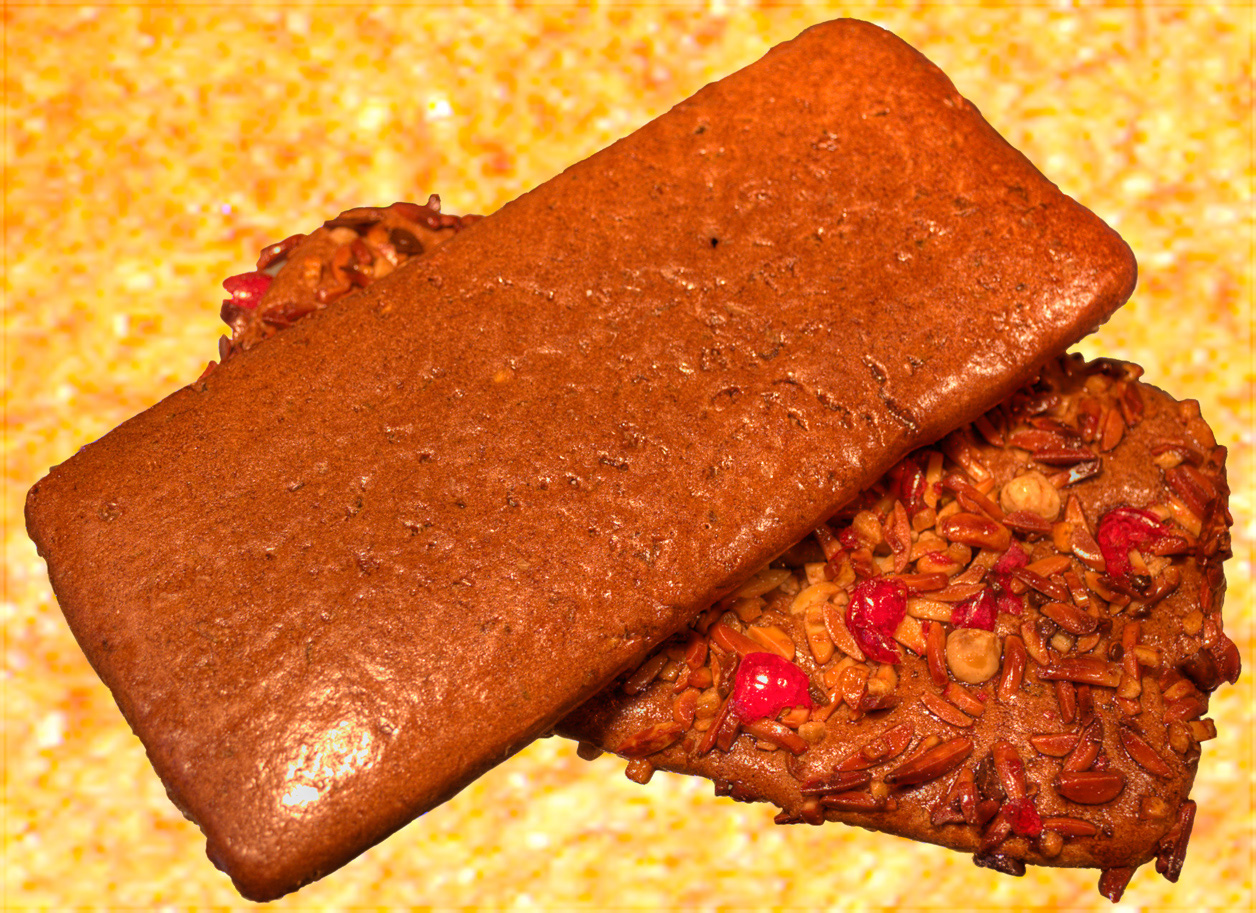
We were only in Maastricht for Saturday night and Sunday morning, spending the rest of the day at my aunt's house in Mönchengladbach: she drove us over to Aachen on the Monday. Christmas for me is never complete without Aachener Printen, a slightly chewy gingerbread biscuit they make here. If you're planning to pick some up yourself in Aachen, don't buy them in the centre of town. There's a Lambertz factory outlet on 9 Ritterstraße, where you can get a massive bag for €10.

First port of call was the pub/restaurant where my parents met thirty years ago, Die Goldener Schwan, which is in the main square: still looks much the same, according to my father. Aachen isn't especially big, so the three main sights are all within easy walking distance. Opposite that pub ('kneipe' in German, if you're looking for one when you're in the country) is the Rathaus. It dates back to the 14th century, but has been burned down several times and also took a pounding during World War II (there's a film running inside that shows the devastation), so the only original part left is the eastern tower.

Then again, that also means you can see a range of architectural styles inside, from the baroque rooms downstairs to the medieval hall upstairs. You also get a fabulous view of the cathedral from the second floor window. Though there isn't a huge amount to see, the Rathaus is pretty cheap to enter at €2.50 (or €2.00 if you're a student: they don't seem too picky about ID, as my NUS card didn't even get a cursory glance).

The Cathedral ('Dom' in German) was where we headed next, and is by far the highlight of Aachen. It is also free, which makes a refreshing change from exorbitant English counterparts like St Paul's and Westminster. The oldest and most attractive section of Aachen's cathedral dates from the year 800, and if you've been to Istanbul, you'll recognise the Byzantine influence. The mosaics are all beautifully intact, though that's because (if I'm remembering my Kenneth Clark correctly) they are 19th century reconstructions rather than the originals. If you do happen to go to both cities, then I'd strongly recommend you check out the Church of SS Sergius and Bacchus in Istanbul for comparison.

Unfortunately we couldn't go and see the famous throne, where the Holy Roman Emperors were crowned from 936-1531. To see it properly, you have to go on one of the regular tours, but they weren't running that day because they were tuning the organ (which made for some decidedly strange ambient music). Then again, the actual throne isn't that exciting to look at, so without the historical significance, it wouldn't attract much attention.

It is known as the throne of Charlemagne (Karl der Große in German), who is the most notable figure associated with the city. He made Aachen the capital of his empire, and given his status as not only the first Holy Roman Emperor but the legendary progenitor of the French kings, he makes for a useful tourist attraction. There are therefore references to him dotted all over the place, including statues, the annual Karlspreis (various exhibits in the Rathaus on that) and the local Karl's Apotheke (a pharmacy on the main square, which has a plaque outside proudly stating its heritage dates back to 1615).

He also dominates the third major sight in Aachen, the Cathedral Treasury ('Domschatzkammer'). This is round the corner from the main cathedral, and costs €4.00 to enter. For an extra Euro, you can pick up a handy little fifty page booklet talking about the contents of the treasury, although it isn't in any kind of order. Unsurprisingly, most of the items on display are religious, with a large number of reliquaries.

If you're a fellow fan of art, then you'll enjoy the Passion Altar, painted in the early 16th century. The name of the artist isn't known, so as a result of this work, he is referred to as the 'Master of the Aachen Altarpiece'. That title is a little misleading, as it was actually intended for a Carmelite church in Cologne (Köln), but was later moved to Aachen. There is also a Roman style sarcophagus, decorated with a representation of the abduction of Proserpine/Persephone: this held Charlemagne's bones, until he was canonised. That meant they could then chop up what was left of him to put in the aforementioned reliquaries.

We flew into Weeze (presumably because there was a cheap deal through Ryanair), but as we could get a lift from relatives, I'm not sure how easy it is to get from there to Aachen via public transport. Driving takes about an hour and a half. Maastricht Aachen Airport is another option, or you can hop on a train from Köln.

26 November 2010

Article - The Dreaded Beast-Men

Article #20, by guest writer Allie McClish

For a fighter, I’m not much to look at. I’m an average sized girl: 5’5’’, 135 lbs. In a sport dominated by men, most of my opponents boast a significant weight advantage. Add onto that the spastic craziness of a new, white belt male and you have a creature I like to call the beast-man.

I used to complain about the impossibility of grappling beast-men. They were too big and strong. They used too much muscle. I cringed at the thought of grappling them, secretly rejoicing whenever my instructor, Fabio, assigned me to grapple someone with a little color on their belt.

When I got my blue belt, my distaste for beast-men increased. I felt I had something to prove. I was supposed to be more technical than them now, right? Mysteriously, that technique was missing on the mat. I was still getting crushed. The more I tried to beat these guys the more frustrated I got.

My breakthrough came when I realized I was looking at them in the wrong light. Beast-men weren’t my enemies. They were my training partners. Not only that, but I realized that these guys, with all their strength and spasticness, were some of the best training partners I could ask for.

If you take BJJ for self defense, who would be more like a real attacker on the street? A seasoned brown belt who rolls with control and courtesy, or a white belt who is coming at me with all of his strength and random bursts of movement? The white belt would be more like what I would actually face.

I realized I only wanted to defend myself against people who were going to attack me nicely. I was complaining about the most realistic mock attackers that I would get in a safe setting. Having training partners who relax and teach me things is an invaluable treasure, but having guys whose only goal is to crush me into oblivion is equally valuable.

After I stopped looking at these guys as evil villains who wanted to ruin my evening of happy grappling, and started looking at them as real-life scenario tests, everything changed. I took the pressure off myself to perform. I stopped letting my own frustration and anger cloud up my mind while I was grappling. Instead of thinking about how unpleasant the grapple was, I started thinking about what I was doing; paying attention to where I could move, where they were off balance, where both of us were vulnerable.

The results were instantaneous. Not only did I grapple better, but I started growing again in general. I started enjoying jiu-jitsu again. I stopped hating the beast-men and actually learned to look forward to the challenges they present.

It doesn’t matter whether you’re big or small. Eventually, you’ll encounter people that seem created for your misery. When you come up against them, the difference between frustration and growth is your point of view. You can decide to complain, or you can be thankful that beast men are there to point out the holes in your game. You can be the victim against an insurmountable enemy, or accept the challenge of a training partner who has something to teach you. The distinction is yours to make.

Allie McClish is a blue belt, who has been training Brazilian Jiu Jitsu for a year and four months under Fabio Novaes in Florida. She maintains a blog at Allie the Clear Belt.

< Previous Article ::: Next Article >

23 November 2010

23/11/2010 - BJJ (Advanced)

Class #362
RGA High Wycombe, (BJJ), Sahid Khamlichi, High Wycombe, UK - 23/11/2010

Sahid continued with guard, this time from the top, beginning with a guard break. After you've got the initial double grip on the collar, use your other hand to block their attempts to grab your collar. If they reach for it, hold their sleeve and shove that into their hip. You can then lean over slightly in the other direction, then step up your sleeve-grip side knee. You've trapped their arm, so they can't slip their hand under to set up sweeps.

Lean back in the other direction and step up your other leg in order to stand. Immediately move that leg back, as their other hand is free to try and underhook it. Grab their trouser leg on that side, then step backwards with your leg, pivoting around the sleeve-grip side foot. As you move round in a circle, wiggle your hips. This is surprisingly effective at dislodging their locked feet, as that rattling motion is very uncomfortable on the ankles and instep.

Next, you can move into a guard pass from combat base. Sahid emphasised that you don't want to just sit there in combat base, but immediately drive your raised knee over their same side leg, pinning it. Put their other leg up on your shoulder reaching through for their opposite collar, crush their knee towards their face, then slip around to side control (so, the leg pin pass).

Interestingly, Sahid sat in combat base with both his knees pointing forward, rather than one forward the other to the side, with the back foot tucked behind. As he mentioned, that is probably part of the reason he developed a quick transition from combat base straight into a pass, rather than pausing in their guard (though either way, it's a good idea to begin passing as soon as possible).

Sparring wasn't as much about being squashed under side control as usual, so no more work on the running escape today. I still ended up there, naturally, where I need to be careful of my neck, especially quick people who are good at moving towards the back: there were a couple of times where I had to dislodge a grip I should have blocked earlier. At another point, I was able to lock in the triangle from under side control, and tried to focus on attacking their free arm: not much luck, however.

My next sparring partner had an injury to their leg, so we were going a bit lighter. I spent most of it on top in side control, looking to be slow and steady. He almost recovered half guard a couple of times, so I pushed the bottom leg with my foot to free myself before it was locked in (being careful to check his leg was ok in the process). I eventually moved through to the step-over triangle, but again couldn't isolate that arm like I wanted, this time from the opposite position.

Finally I rolled with Callum, where I had a chance to work spider guard. I had the grip I wanted on one arm, but then spent the rest of the spar trying to get a hold of the other arm. My intention was to go for Braulio's attack, where you push both feet into one arm, then open up and pull them into a triangle or armbar, but you need to get that second arm first. Still, I could at least keep the control, so that was something (although I continue to worry that spider guard may not be something I want to do long-term, given that at least one black belt has told me they don't use it anymore because it's knackered their fingers).

23/11/2010 - BJJ (Beginner)

Class #361
RGA High Wycombe, (BJJ), Sahid Khamlichi, High Wycombe, UK - 23/11/2010

Sahid was taking class again tonight, and after starting off with a takedown, he moved on to the flower sweep. His set up was a little different to what I'm used to, and started off in closed guard. They have the typical grip, with one hand on your collars, the other back by your hip. Swim your arms through and back towards you to knock their arms off (easier said than done, depending on their grip), bringing them forwards with your knees. Reach around their back and clasp your hands together in a gable grip, locking them to your body.

Next, release the top hand (using the other to keep control of their head), then bring it out and under their arm, so that you can put it by their head. Reclasp your hands in a gable grip: Sahid recommended having the higher hand thumb down, for a stronger hold). Straighten your legs and move your hips out to the side (in the direction of your upper arm).

Relock your legs, then lean back slightly, nudging their arm with your shoulder. Your aim is to push their arm under their head or body. If they don't react, you can move to take their back. More likely, they will try to square back up, which is what you want. You've now got them locked against your torso, with their arm trapped underneath them. As before, release your gable grip, switching the upper arm to grab around their far armpit instead.

Your other arm either threads under their same side leg, or grabs the same side trouser leg, by the knee. Open your guard and kick through, so that the leg on the trouser grip side whacks into their armpit, while the other chops through. You can also lift with the arm gripping their trouser leg/under their leg, rolling through to mount.

If that all seems a bit complicated, you could also try the simpler version Callum mentioned. Grab their sleeve, then grab their knee on the other side. From here, kick through as before to get the flower sweep: you'll be using that grip on the sleeve to stop them posting out. However, it is of course more difficult to break their posture from here than in the previous variation, where you've already got them bent forwards and locked close to your torso.

Alternatively, you can use Sahid's set-up to go for an armbar. You being as above, until you get to the point where you're gripping their far armpit. Instead of going for the sweep, walk your legs up high, until you can bring a leg over their shoulder, on their trapped arm side. That means you're now in a position that looks a little like Eddie Bravo's pleasantly named 'crack head control', except that you aren't grabbing your own leg (p150 of Mastering the Rubber Guard). From here, you just push the head to get your leg from their shoulder to over their head, and go for the armbar. The flower sweep is still an option from here too.

In specific sparring, I as ever need to be more proactive in guard, particularly with chokes. I'm still using them as more of a threat, rather than following through. That's probably because I don't have any confidence in actually landing them, so something to work on: that should also make them a more effective distraction, so I can then look at attacking arms, securing overhooks or even trying Shawn Williams guard again (I had a go, but didn't isolate Callum's arm properly, so it wasn't doing a whole lot).

I also need to watch my arm when they stand up. I wanted to go for my favoured handstand sweep to star sweep combination, but that doesn't function properly if they've managed to grab your other arm. Callum doesn't grab the arm initially, instead standing up with a hand on the hip: he grips it as he stands, so something I need to pay more attention to next time.

When I was on top, I was trying to drive my hips forward when he went to open guard, and see if I could grab a leg and pull up. I'm still not standing when I should, but Callum tends to go to open guard anyway, so that forced me to get off my knees. I also got into the dreaded z-guard type thing, with that frustrating knee. I tried switching to pushing on the knee...but left an arm behind for Callum to kimura.

We also chatted some more about Callum's magazine and his plans: if you haven't already 'liked' the Facebook page for Jiu Jitsu Style, check it out here for the latest news. There's also an interview I did with him on the topic, for the FightWorks Podcast (text rather than audio).

18 November 2010

18/11/2010 - BJJ (Beginner)

Class #360
RGA High Wycombe, (BJJ), Kev Capel, High Wycombe, UK - 18/11/2010

In exciting news, Roy Dean is going to be reworking his fantastic online book, The Uchideshi Experience (he's now taken it down, so if you haven't had a chance to read it, you'll have to wait for the new book). That's what first got me interested in his other work, so I'm really looking forward to this! He just mentioned it on his blog: should be very cool when done.

Also, if you haven't seen them yet, check out Oli G's videos for Black Eagle, here. Those are going to be part of an ongoing series of short instructional vids, which as far as I'm aware will feature Black Eagle sponsored fighters (they're one of the main companies putting money into BJJ here in the UK, along with Tatami and a few others).

Class tonight continued with side control. Kev started by going through the basic escape to your knees, where you then have two options. If you put your head on one side and your leg up on the other, that's a good set-up to sit back into butterfly guard, inserting your hook. Alternatively, if you have your head on the same side you step up your leg, grip the gi by their legs, then drive towards them while pulling their legs in the other direction. That should enable you to move through into side control.

Next up was a choke from side control. Start by reaching for their far collar with the hand your have under their head, then pull that in tight, so that your hand moves behind their head. Turn your hips slightly so you can sit on their near arm, which also gives you enough room to step your other leg over their head. Straighten the arm under their head, so that you're pressing firmly into their neck. The leg you have over the head moves backwards. This should eventually choke them, though it often turns into a crank, so you need to be careful.

Specific sparring was from side control. I was with Drazen, whose name I'd heard before: he's usually at Kev's Aylesbury location. The conversation would normally be along the lines of "I don't know how Drazen did that, his legs came from nowhere." I had the opportunity to experience that reputation first hand, as he smashed me during sparring. Underneath, I was able to hold off for a while, but it felt like it was simply a matter of time before he took my back. I was looking for Saulo's running man escape, but each time wasn't able to avoid leaving space for him to insert his hooks (asking him later, he mentioned that I was staying fairly tight, but not enough to stop him pulling me up to make his own space). That also reminds me, I know Saulo talks more about the running escape in his second DVD set, so I should give that a watch.

On top, I could only hold him down for a few seconds before I found myself on the bottom, in his guard, or indeed with my back taken yet again. The one thing that enabled me to stay in the dominant position for a little longer was moving into the step-over triangle I always look for. That gave me sufficient leverage to keep him from making much space, and also attack the far arm (I couldn't quite get into the figure-four). However, even that didn't last especially long, as he eventually managed to reverse me, with my legs still locked.

In the following hour of free sparring (though as ever I sat out plenty of times), things started with Drazen again, meaning I was in for another crushing. I think he may have been taking it a little easier, as I was able to work my guard a bit, but most of the roll was spent spinning madly in an attempt to avoid getting choke or my back taken. I was paying particular attention to block hooks with my elbows, which may or may not have helped. Either way, I was knackered after that, so it certainly proved to be a good cardio workout.

Having been beaten up quickly, I then had a chance to get beaten up slowly, by Kev's methodical transitions. Again, I was trying to stay tight and watch my elbows. However, I wasn't being sufficiently proactive when he moved into high mount. Asking him afterwards, he suggested that I should attempt to work back to normal mount. Though I could sit under high mount with my elbows in, if anybody was going harder, they wouldn't have had much trouble separating those elbows. So, in a very bad position, move back to a plain bad position first, then work to escape from there.

Finally, I had a roll with Dan, who I don't think I've rolled with since he got his blue belt. As ever, I was soon under side control, failing to stop his sit-up sweep (my base was clearly dodgy, as he blasted straight through my knees, folding me backwards). Particularly as I was tired, I relied on my defence, which very almost cost me as Dan went for the choke we'd just learned. He nearly landed it, but there was just enough space to get my arms in the way and slip my head free.

All in all, tonight was handy for working my defence, and reminding me my cardio is crap. Not that I'm going to do anything about it, as I'm far too lazy to work cardio stuff outside of class. ;)

16 November 2010

16/11/2010 - BJJ (Advanced)

Class #359
RGA High Wycombe, (BJJ), Matt Burn, High Wycombe, UK - 16/11/2010

Those who read this blog at the main site rather than through Google Reader or Facebook may have noticed I've chopped up my header a bit. Hopefully (it looks ok in the browsers I checked, though personally I always use Firefox, so that's the best way to view the site), there is now a swish horizontal navigation menubar under the header, with menus that appear when you hover over the words. I followed the handy tutorial here, and will be playing around with it some more in the future, to see what happens. Let me know if the site now runs incredibly slow for you, or anything like that.

Matty kicked off the advanced class with a nifty choke from side control, using your gi lapel. You're in the classic side control position with an arm under the head. Open up your gi with your far hand: if possible, be sneaky and then hold the end of it your hand, so it is less obvious to your opponent. You can then have your hand by their far arm, where you're going to wait.

They will probably have their far arm into your throat. What you're waiting for is an opening to punch your hand inside that arm, then feed the gi lapel you were holding to your other hand, which is behind their hand. Get a firm grip: you may want to keep on feeding it further to make it even more secure. Cinch it tight to their neck, straightening the arm you have under their head.

Keeping your upper body low, walk your legs around towards their head, as if you were going to north south. At the same time, move your head towards their near hip: they will probably tap before you get there, but if not, keep going until you can put your head next to their hip. If the submission still isn't happening, make sure you're keeping your arm straight and pressed into their neck, so that your gi lapel digs into the other side of their neck.

Next, Matty went through a variation on the bow and arrow choke, off a grip break when attempting the kimura from north-south. As happens so often with the kimura from there, they've got a death grip on their belt, so you can't shift their arm despite having locked up the figure four. Changing tack, release the grip on your wrist and put your hand palm up.

With your other hand, grab the bottom of their gi and feed it to your first hand. Pull that in tight, bringing your hand back towards you arm and trapping their arm in the process. Get a grip on their collar with your free hand, then swivel to one side, bringing a leg over their shoulder and the other across their torso. From there, you can pull on the collar and push down with your legs to get the choke. Alternatively, you could try having your knee pressed into their head, but I find the leverage is better when you've got your legs over.

I was drilling in a three, so didn't actually get a chance to spar, because there was only time for two rounds (it was specific from side control again, so five minutes on top, five minutes on bottom). Not that I particularly minded, as it gave me a chance to scribble some notes down on my pad. Should be training against on Thursday, before heading up to Birmingham for the Christmas Market (my gf likes it, and it's always nice to get back in touch with one of my favourites things about being part-German: Aachener Printen. :D).

16/11/2010 - BJJ (Beginner)

Class #358
RGA High Wycombe, (BJJ), Matt Burn, High Wycombe, UK - 16/11/2010

I recently updated the summary of my training history in martial arts, mainly expanding the last paragraph into a new section covering 2009 up until today. So, if for some reason you want to know what I've been doing for the last eleven years, that summary should tell you everything you want to know (in regards to martial arts, at least).

Kev couldn't make it tonight, so Matty took the class (unfortunately shorn of his excellent Movember biker moustache, as apparently you aren't allowed those side bits in the fire service). After going through a double leg, Matty moved on to side control, beginning with an armbar. You're in a solid side control position, and you've somehow managed to get their far arm by your head, on the side nearest their legs: this could be because they're trying to escape an Americana, or perhaps they've tried to swim through for the underhook, and you've managed to block it.

Grab their arm a little below their elbow, using the arm that is nearest their legs. Pull them up onto their side, and make sure that your inside knee goes right into the armpit on their near side: this is important for later control, as otherwise they will find it much easier to block with their arm. Your other leg is based out, similar to how you'd arrange your legs in knee on belly.

With your free hand, push their head down. Step that based out leg over, putting the foot by their back, towards their hips. You can now swivel around to that side, grabbing their trouser leg, then drop back for the armbar (alternatively, you could sit on their head and go for the kimura from north-south). Ideally you want to keep hold of their leg, pulling them in tight so they can't try for the hitchhiker escape. It is possible to finish the armbar with one hand, but you may end up needing both hands (in which case make sure your body is angled towards their legs rather than their head, to help prevent their escape).

Matty then covered off the basic escape from side control, bridging into them and shrimping back to guard. He also noted that you could try swinging your legs right through and try for an armbar, though more as a distraction than a submission. That's something Chiu showed at Gracie Barra Birmingham when I was there, as it's a favourite attack of Braulio's.

Sparring was from side control, and for once I tried to put into practice what we'd just learned. On top, I pulled in the arm and went for the kimura from north south, but couldn't hold the position because I couldn't get that knee into the armpit. I was also looking for my favoured triangle position on top, but again couldn't quite work my leg through in order to lock it up and start to attack the far arm.

Underneath, I was going for the usual basic escape Matty had run through earlier. I almost recovered to guard a few times, and remembered to try stiff-arming into the shoulder and bicep, but didn't shrimp enough, so Howard was able to drive back through. I threw up a few triangle attempts from the bottom too, but wasn't able to attack the arm too well (although I think that may have been where I got some of those near-miss guard recoveries).

10 November 2010

10/11/2010 - Gracie Barra Bristol

Class #357
Gracie Barra Bristol, (BJJ), Nicolai 'Geeza' Holt, Bristol, UK - 11/10/2010

My gf was doing some work-related training, so that meant I had another opportunity to pop down to the class at Gracie Barra Bristol. I was heading over directly after getting off the Megabus from London, so had to work out where to go from the centre of town. Google Maps handily doesn't tell you which random road you take to get down from Colston Hall, so I managed to wander round in a circle a few times, before realising it was Zed Alley (like the Christmas Steps, this cuts through to the town centre).

I'd thought I would be late, running some of the way, but arrived at roughly the same time as Geeza, who has the keys to the club. Construction has begun since I was last there, which gives me a further indication of just how incredibly huge the new gym will be. There is still a reasonable chunk of car park left for your car, though I will probably be cycling or walking once I eventually move to Bristol (especially as I still haven't bothered learning how to drive, though I think I'm going to have to finally join the adult world in that respect once I move down here.)

After the warm-up, Geeza had us move directly into specific sparring, from guard. So, coupled with running to class and then running round the mats, I was definitely feeling warm! No bad thing, as the weather has been pretty cold recently, so you could feel the chill on your bare feet from the mats.

Geeza handily texts everybody before each class to say what he'll be teaching that night, so I already knew we'd be doing back escapes and spider guard sweeps. However, he began technique with a takedown, which is something Roger does as well. You start from the usual collar and sleeve grip, then take a step back to get them to step forward (this should be the leg on the same side as your collar grip).

Once they step, thread your same side leg into that space, putting your knee on the mat behind their leg. Drop down, hanging heavily off that collar you're still holding, then drive forward to knock them backwards. Don't follow them down, but try to maintain good posture (I was basing off their stomach). Apparently this is a good takedown for small guys like me, so something I might have to try (though I think I'll almost certainly just pull guard when I give competition another go).

Interestingly, Geeza does the same thing as Roy Dean when teaching technique, in that he has everybody line up by the wall, rather than the usual huddle. That has the disadvantage of restricting your view, although that is easily counter-acted by showing the technique from several angles. It fits with the traditional flavour Geeza brings to his classes, bowing to a picture of Carlos etc at the beginning.

The next technique, rather handily given my struggles yesterday, was an escape from the back where you pull on their arm. You start from all fours (what Cane Prevost calls the quarter position: turtle would be another common term), where they have one hook in, and are also gripping around your neck with the same side arm, feeding their other hand under your armpit.

First, use your hand on the non-hooked side to grab the arm they have around your neck. With your other arm, base out forwards on your elbow. On your non-hooked side, you can also use your elbow to prevent them getting their foot in: you'll also need to step up your leg on that side. From here, start shrugging them off your back, which should cause them to slip off on the hooking side.

An important detail here is to make sure that on the hooked side, you keep your elbow outside their knee. Otherwise, they'll still be able to take your back. Once you've shrugged them off to the ground, pull on their arm and drive forwards. Either shove your head under their other arm, or over the top, depending on their grip on your neck. You can then settle into top half guard, cross-facing them.

The final technique was a sweep from spider guard. You've moved to spider guard, and they have stood up. One foot is pressed into their same side bicep, stretching it out, while also gripping their sleeve with your same side hand. Your other foot is going to hook around the front of their opposite knee. This feels a bit counter-intuitive, but the reason is to stop them moving around that side (they can't go the other way, because your foot into the bicep means you can just sweep them if they do). Hook your free hand around their same side foot, using that to swivel parallel to them, your hips close to their feet.

From here, break their posture by pulling their sleeve down and pushing out with your foot, until finally you can kick out over your outside shoulder. Again, this position feels slightly weird: if you're having trouble getting the leverage, try shrimping towards their legs, as you can then push out further. If they decide to try and pass from there, that just makes your sweep easier: they've now put themselves into exactly the position you want.

Sparring was run the same way as the sparring class, with everybody lined up around the mat. If you are on your knees, you're saying you want to spar, if not, then you want to sit out. Geeza paired people up, mainly going by size and experience, as far as I could tell. I had a chance to try Howard's tip on using the head when trying to pass from half guard, but I think I may have still had my hips too high.

I didn't try it again later, when in that position with Luke (which is exactly the place I constantly find myself with Howard). Next time, I need to just go for it, while keeping control of their hips so they can't simply shrimp away and go to their knees (which is what Luke did). Luke in particular was great to roll with, as he maintained a very steady pace, focusing on smooth transitions rather than crushing and smashing with strength.

During the line-up, one of the white belts wondered why BJJ didn't generally practice against multiple opponents, as is common in TMAs like karate. He dropped himself in it, as Geeza immediately responded that he should feel free to try, meaning that the rest of the class was treated to an entertaining display of two-on-one sparring. Even better, this led Geeza to make a speech after the round had finished, on the topic of sport and self defence: I particularly enjoyed that, as it fits closely to my own views on the subject.

Geeza emphasised that he teaches sport BJJ, but that 85% of those techniques are perfectly applicable to a real situation. He also stressed that competition and class are two different things, because in competition, you're both just looking for the win. In class, it's about learning, and there may be a whole multitude of reasons you find yourself on the mat that day. Finally, he made the sensible comment that when it comes to self defence and multiple attackers, basically you should get the hell out of there and run, which is invariably the best option in a 'real' fight.

I'm not sure when I'll make it down again, but hopefully in the not-too-distant future. It will be cool to see how far construction has come along next time I make it to Bristol training.

09 November 2010

09/11/2010 - BJJ (Advanced)

Class #356
RGA High Wycombe, (BJJ), Kev Capel, High Wycombe, UK - 09/11/2010

Kev asked everyone who was staying for the next class what they wanted to work on, and the general response was how to go from closed guard to open guard when somebody stands up. Kev suggested that moving to cross-guard was a good option, which is what you call the position where you are gripping their opposite sleeve, your same side foot on their hip, the other foot hooking behind their other leg.

In order to go from there to a cross guard sweep, use your free hand to grab their same side heel. Lock that to your hip, lifting their foot slightly off the floor. Push on their hip with your foot, while simultaneously pulling with your hook behind their other leg. If you're having trouble knocking them down, angle the direction of your push a little, in the direction you want them to fall.

Once you finally manage to get them down, you can use that hold on their sleeve to sit up, bringing your knee across their leg. You can now go straight into a knee slide pass, pulling up on their sleeve to hinder their defence. It's the same technique Kev taught at the start of this year, if you're looking for a longer explanation.

That was it for technique, though Kev did suggest that deadlifts might be a good option to help develop better base when standing up in guard (which I'm pretty pants at, hence why I asked). I'm too lazy and undisciplined for weights, but if it would be cool to get some kind of regular standing up in guard drill going with my gf.

We then moved into sparring, which was free sparring except that you had to start in guard, and you also had to pass standing rather than from the knee. I forced myself to stand up a few times and almost immediately got swept, but still, only way to get used to it (though I have been saying that for years now). It also meant that I ready to defend straight away, so was generally at least able to switch to guard rather than simply get passed after getting knocked to the mat.

With both Howard and Kev, who were the two people I sparred that class, I found myself in a position where they were going for my back, but didn't have both their hooks in yet. In both cases, I was able to grab on their arm, with the intention of pulling on that and driving into them with my shoulder to move into top half guard. That didn't go as planned, as it mainly seemed to just stall them from securing the back.

However, Kev did say that it was the right idea, so I guess I need to just keep working on that and improve my pressure and angle. It would also be worth keeping Saulo's escape in mind, where he scoops down and then slips to the side (though that seems more like a late defence, compared to the early escape using their arm).

The onset of November also means that sweaty men have been sitting on my face for the last four years. For some reason, I keep coming back for more. ;p

09/11/2010 - BJJ (Beginner)

Class #355
RGA High Wycombe, (BJJ), Kev Capel, High Wycombe, UK - 09/11/2010

I'm not sure if anyone takes any note of the names of my training partners, which I occasionally mention on this blog (especially if I've rolled with them a lot and they give me good advice, like Tran, Christina and more recently, Howard), but readers may remember Callum. He's one of the other blue belts I like to roll with at RGA Wycombe, as he is always a tough challenge: often in the guard, I'll find that one moment I'm looking to start a pass, then the next I find Callum has somehow climbed most of the way up my shoulder and is trying to sink an armbar. ;)

As well as slick submissions, Callum also has something even more impressive to his name: a new BJJ magazine. We've been discussing it in class and over email for a few months now, and I've been getting steadily more excited as things begin to come together. This week, the launch of Jiu Jitsu Style has been announced to the rest of the world, with a page on Facebook. The first issue is due to come out in February 2011: I'll no doubt be talking a whole lot more about it in the coming months, as will other people who have since got on board, like Seymour from Meerkatsu and Matt from The Grappling Dummy. Speaking of which, I recently did an interview with Callum for The FightWorks Podcast, which you can check out here if you're interested in Jiu Jitsu Style.

I've been off training as I came down with a cold last week, so didn't want to spread my germs around. I think I'm just about recovered now, so finally made it back to the mats tonight. If that went ok, I'd know I'm ok for the advanced class in Bristol tomorrow. Kev's focus for the beginners was the triangle choke from guard, going through two basic set-ups he has shown before.

The first triangle set-up was the most simple. Grab both their wrists with your same side hands, then push their rear hand into their torso, while clamping the other to your chest. You can then either bring your hips up in order to fling your leg over their shoulder, locking your feet by the top of their back. The important thing is to clear that hand you've shoved into them, so that you're ready to move into the triangle.

You can now bring them in with your legs, moving their outstretched arm across your body, Grab the leg you have across the back of their neck, swivel to face the direction your sole is pointing, then lock up the triangle and squeeze. Kev noted that you can also try pushing their trapped shoulder back a little, in order to get your legs more tightly on their carotoid arteries. Howard also had a handy tip for when you're getting stacked, which is to stiff-arm into your knee, which should help you shuffle backwards on your shoulders.

The second triangle set-up is a bit like a scissor sweep. You start by grabbing their opposite collar, but instead of bringing your shin across their stomach, bring that knee over their rear arm (presuming they have the standard grip in guard, with one arm forward grabbing your collars, the other back by your hip). You can then rotate that leg around and over their neck, swivelling into position for the triangle, finishing as before.

Next up was the flipside, an escape from the triangle. If you're just about to get caught, you want to reverse engineer your defence. To complete the triangle, they want to bring your arm across, so to prevent that, clasp your hands and clamp them to the leg on your free arm side. Maintain good posture to try and make some space (if their grip is still loose, this may even be enough to break it), bringing your knee on the trapped arm side next to your elbow. Turn that knee in towards them.

Having given yourself a strong frame, grab their leg with your trapped arm. You can then put your free hand behind you for base. Move your other knee to their hip, which will mean you can move around to their side slightly. Step your trapped side leg right over their body, foot by their hip. You can now posture up and remove their legs, after which you want to immediately pin their legs to the floor by pushing on their top knee with your hand.

From here, you can turn your knee towards their torso, stepping your other leg over their trapped knees. That sets you up to move into knee on belly. Alternatively, you can try switching your legs and 'surfing' them into mount. If they block that by shoving on your leg, you can go with the flow and slide into side control on the other side.

Specific sparring was from full guard. I wasn't getting too far with Howard, who was managing to eventually either pass or sweep me every time. I did manage to get to that same old half guard position a few times on top, but could never quite complete the pass. Afterwards, Howard suggested I could try using my head as a post, driving it next to his and using my skull to turn his head in the other direction. Something to try next time I'm on top in half guard.

03 November 2010

Article - BJJ & Aggression

Article #19, by Can Sönmez [FAQ Entry]


In Brazilian jiu jitsu, you learn how to fight, imposing your will on another person to prevent them doing the same to you. It is less confrontational than MMA (a closely related sport), where you're also getting punched in the face, but physical combat is still at the core of BJJ. Sparring for the first time can be an intimidating experience: most beginners will panic. Depending on their size, they will be struggling wildly to escape with all their strength, or looking to crush their opponent with superior mass. Either way, they are probably going to be aggressive.

Personally, I have an automatic aversion to the term ‘aggression’. For me, it conjures up images of shaven-headed thugs with bulging neck veins getting into fights outside pubs. I prefer the term ‘assertive’, which doesn’t have those associations. It may merely be a matter of semantics (as Leslie discusses), but it nevertheless makes me wonder why people like me have that reaction to ‘aggression’, particularly in the context of BJJ. After all, the legendary Aleksandr Karelin put it to good use in the picture above.

Part of the reason is the fondly held myth of the slightly-built martial arts superhero, gracefully dispatching a horde of less enlightened meatheads. The weedy nerd within us all (or rather less deeply buried, in my case) wants to believe that pure technique will trump brute strength, requiring no physical effort or malicious intentions on our part. BJJ has several diminutive superheroes of its own, beginning with Hélio Gracie. The Gracie patriarch was allegedly so frail and weak he had to learn his impressive fighting prowess through observation (I have my doubts).

The success of his son Royce in the early UFC is another touchstone, dominating with skill rather than power and overcoming huge size discrepancies. Importantly, he also made a point of winning without unnecessarily hurting his opponents, often opting for a gradual transition to a rear naked choke, without throwing a single punch.

When competing, you are unlikely to succeed by staying passive and working your defence. You've got to score points, or even better, force your opponent to give up, which is rarely a gentle process. Neither of you are there to help the other person improve: you are each an obstacle in the other's path to getting that gold medal. Some might argue, justifiably, that aggression has its place in competition.

However, examples like Royce feed a desire to succeed through pure technique, smoothly flowing around your opponent rather than savagely cranking your way to a submission. This is especially the case outside of tournaments, when you are in the more co-operative and relaxed class environment. As Saulo Ribeiro said in Jiu Jitsu Revolution, "You have to think that your partner, the guy that you're training [with], has to be your best friend. So, you don't want to hurt him."

Nevertheless, there must be a line. I want to perfect my technique rather than beat up my partner, but I also don't want them to flop limply into my submission attempts, or never threaten with any attacks of their own. The extreme end of this paradoxically pacifist approach to martial arts is aikido. There, you can dance your way through crowds of attackers, because they are actively jumping into your throws.

A certain amount of resistance is required, or practice becomes meaningless: to paraphrase another of my favourite quotes, you can't learn how to swim without getting in the water. The question is, when does useful resistance cross over into brutish aggression?

< Previous Article ::: Next Article >