slideyfoot.com | bjj resources

 Home
 Contact
 Reviews
 BJJ FAQ  Academy

This website is about Brazilian jiu jitsu (BJJ). I'm a black belt who started in 2006, teaching and training at Artemis BJJ in Bristol, UK. All content ©Can Sönmez
Showing posts with label non-standard gi material. Show all posts

14 September 2016

Equipment Review - 'Real Dope Pants' (Datsusara)


Short Review: A considerable improvement over previous Datsusara gi trousers I've tried, the Real Dope Pants are easily among the most comfortable gi trousers I've ever worn (and I've worn a lot in the last decade). The green and black colour scheme is striking, although the gentle humour of the embroidery may still be too much for some. I also found the drawstring was too long for me, but that is an issue with most drawstrings, easily resolved by cutting and singeing the ends. These trousers are not cheap at $75 (available here, from the Datsusara website), but if you value comfort, it's money well spent.

Full Review: Datsusara have remained the most prominent name in the hemp gi market, a profile that has risen since their sponsorship of the Eddie Bravo Invitational. On that event, you may have seen the referees wearing some stylish trousers with a green drawstring. Those are the 'Real Dope Pants', a marked departure from Datsusara's previous HCG ('hemp combat gi') model, at least in terms of the older editions I've tested over the years (the HCG-02 and HCG-03: Datsusara is currently up to the HCG-06).

Those older gis used a weave that was comfortable and breathable, if comparatively heavy. The same weave was used in the Flow Kimonos hemp offering (which I reviewed here). They've proven to be excellent training gis, but are too bulky for travel. This is in contrast to another hemp gi I own, currently my favourite of any gi: The Green Gi. I own two jackets and one pair of The Green Gi trousers. The weave is tighter than either the HCG-02/03 or the Flow Hemp, which may explain why it feels lighter and is easier to pack.

The Green Gi gets my vote for top spot because it's ridiculously comfortable. After I first put them on, the Real Dope Pants immediately reminded me of The Green Gi: they are just as comfortable. If the HCG-06 is made out of the same weave, then that is going to make for a very tempting purchase the next time I'm in the US.

The striking green and black colour scheme of the Datsusara trousers elicited plenty of comments when I first walked in wearing them, but as regular readers will know, if I own something black it doesn't stay that way for long: I like colour. I bleached and then dyed the trousers, as I wanted something I could match with my second The Green Gi jacket, which I dyed dark green a while back. Before I attacked it with various chemicals, the black was attractively set off by the green stitching and embroidery, along with a green bungee cord drawstring.

I found that drawstring overly long for my taste, though this is a problem with every bungee cord style drawstring I've tried so far. It's easily rectified, as you can simply cut the superfluous material, then singe the ends with a candle to prevent fraying. It comes undone more easily than my favourite drawstrings (which are from Fenom Kimonos), so there is perhaps slightly less friction in the finish compared to the Fenom.

I've been wearing both The Green Gi and the Datsusara trousers regularly over the last few months, culminating in an open mat where I switched between them midway through. I also asked my student Milka to test both of them, which proved illuminating. Her preference was the Datsusara, though she felt they were both excellent. To quote her:

These [the Datsusara] are the most comfortable. These [The Green Gi] are just as comfortable, thicker, so for the winter they'd be perfect. However, I can feel the stitches, because they are right across my thighs. But with this [the Datsusara], it's like wearing nothing.

As soon as she rolled in them, she was asking me where she could buy a pair. Personally, I prefer The Green Gi, but it's close. The reason is that while I find them equally comfortable, I prefer the cut on The Green Gi and they have thicker reinforcement panels by the knees. I haven't had any issues with the stitching on the trousers, though I did have the seam tape by the sleeve cuffs removed due to itchiness (I think from the seam tape edge, rather than the stitching itself).

A photo posted by Artemis BJJ (@artemisbjj) on


I also prefer the plain design of The Green Gi. Normally Datsusara are notably plainer than most other companies, so the shift to increased embroidery and patches on the Real Dope Pants was a departure. I don't mind the kanji, it was the 'Real Dope Gear' embroidery I found off-putting. I live in Bristol, where you will often smell pot wafting down the street. My attitude is that as long as they aren't smoking it on my mats, I don't mind: what you do at home is your business. However, even the gently pro-pot implication of the 'Real Dope' pun wasn't a message I felt comfortable displaying on my gi, especially as an instructor. I therefore covered it with a patch, though the embroidery would also be fairly easily to remove, judging by my quick test unpicking a few of the threads.

Before washing, the A1 trousers I got were 93cm long. After several months of regular washing at 30 degree Celsius, they have shrunk to 90cm. If you stick to 30 degrees, then that would indicate you can be relatively confident that the sizes on the website are not going to shift dramatically.

It will be interesting to see what the durability is like on the Real Dope Pants, so I'll update this review in a couple of years. There are many alleged benefits to hemp (see my old HCG review for more discussion of that), but as ever the only one I can currently confirm is that hemp clothing has a considerably greater level of comfort compared to cotton.

The Real Dope Pants are an impressive achievement by Datsusara, which hopefully will carry across to their gis as well, if it hasn't already. If Datusara are able to produce a jacket as comfortable as these trousers, I suspect I will soon have a new favourite gi. ;)

The Real Dope Pants are available to buy here, from the Datsusara website


01 July 2015

Gi Review - Gimono 'Grappling' Gi

Short Review: The Gimono 'Grappling' gi is aimed at grapplers from a wide variety of martial arts, rather than intended for specific competition criteria. It would therefore not pass muster in either a typical BJJ or judo tournament: nevertheless, it's a very comfortable training gi. The cut is essentially the same as a judogi, but with 3/4 length sleeves. The trousers are also shorter than standard judo trousers, but it is possible to mix and match sizes to your preference. I'm wearing a size 3 jacket and size 4 trousers: for reference, I'm 5'7 and 66kg/145lbs.

It's made from the same 330gsm material as the Gimono 'BJJ' gi I reviewed in 2012, dubbed 'Fortitude' (36% merino wool and 64% polyester). This means those same advantages of being very light, hydroscopic, fast-drying and comfortable apply to the Gimono Grappling gi. The jacket is heavily reinforced by comparison to the BJJ gi. Best of all, it's available in a magnificent shade of red.

It has the same disadvantages as the other gi too, in that the collar is quite thin and the price tag could be off-putting. However, if the Fortitude material is as durable as the website claims, then that cost is arguably justified. Available to buy in blue, red, white or black here for NZD $295, which at the time of writing equates to £127 ($201) before tax and customs.

Full Review: Ever since I received the Gimono BJJ gi to review three years ago, it has been my main travel and hot weather kimono. The unusual combination of merino wool and polyester is wonderfully comfortable, dries fast and doesn't crease easily. This material, dubbed 'Fortitude' by Gimono (much more on that in the Gimono 'BJJ' gi review, probably my most detailed gi review to date) is available in numerous different gi cuts. Three of them are for grappling: the BJJ cut, a judo cut and the 'grappling' cut I'm reviewing today.

I had an idea of what a judo cut might look like, as that normally means a longer skirt on the jacket and wider sleeves. I was intrigued by the grappling cut, especially what specific differences it might have to the judo and BJJ cuts: I had no idea what those might be. One immediate variance is that the grappling gi was available in red, providing me with an easy decision when Gimono owner Lavinia Calvert offered the opportunity for another review. She was also able to provide a detailed answer in terms of the cut and who the gi was aimed at:


The only difference between our grappling gi and the judo gi is sleeve length. The grappling gi sleeve is 3/4 length. As you know, competition BJJ and judo both have regulation sleeve lengths. We introduced the grappling gi to offer an alternative for those who aren’t so concerned about competition or rules, but who are into training any of the grappling based arts. It’s been quite a popular style. We’ve found some people who train in ninjutsu and aikido prefer the shorter sleeve, so like all our gi, it has found its place in the market without us needing to be prescriptive about it.

The Gimono website hasn't changed much in three years: I would have expected a more representative picture of the BJJ gi cut by this point. The current pictures don't do that gi justice. However, the other cuts have a more extensive selection. Tellingly, that includes a picture of somebody wearing the Grappling gi jacket with just shorts, indicating a practitioner of SAMBO might be interested in wearing this gi.

Although they may not have made changes to their website [Update July 2015: A new website is in the works], that doesn't mean Gimono itself hasn't been active. They've been involved in various sponsorship projects, in BJJ and other martial arts. Most recently, they joined the sponsor team for this year's GrappleThon event at Artemis BJJ, supplying one of their gis as a prize for the person who raised the most money for Equality Now (which this year was the indomitable Rachel Green). Gimono had the following to say about their other work in the martial arts community:


While we don’t currently have any formal sponsorships in place, we have supported a number of individual instructors and teams ‘in kind’ with free Gimono gi’s. We sponsored the NZ qualifiers for the Abu Dhabi Pro JJ championships that were organised by Douglas Santos; recently, a team of NZ instructors and black belts have been to the USA to attend the world championships of Jeff Speakman's 5.0 Kenpo Karate. All wore Gimono karate gi; we gifted t-shirts and a couple of free uniforms to show our support. We’ve provided similar support to a few other school owners/instructors teaching aikido, ninjutsu, Japanese jiu jitsu, and various forms of karate.

Our philosophy is to support those who are open minded and not necessarily tied to traditional ways of thinking. Word of mouth has had a phenomenally positive impact on the adoption of Gimono in various martial arts communities, and we have embraced the opportunity to supply gi’s for reviews and/or sampling. We respect the heritage and tradition of the martial arts, but we’re also pushing conventional boundaries so we don’t expect to our product to be accepted by everyone.

My favourite aspect of the gi is the brilliant red colour. Unlike in 2012, I am now keen on wearing a gi that is as colourful as possible. I can confirm that it is possible (though not recommended by the company) to dye the Fortitude material, but due to the higher concentration of polyester on the outer layer, the exterior will end up a lighter shade. I could see that contrast clearly after putting my white Gimono BJJ gi into the washing machine with two packs of Dylon 'French Lavender'. The outside is now a subtle shade of purple (hard to see in a photo, but for reference the bannister in the picture is white), while the inside took the dye far better. I would suggest darker shades of dye would be advisable if you're hoping for a vibrant colour.

The Grappling gi has shorter sleeves and trousers than the judogi cut from which it was adapted. Calvert recommended that rather than the size 3 I went for last time with the BJJ cut, I combine a size 3 grappling cut jacket with a size 4 pair of trousers. You can buy jacket and trousers separately, a big plus point if your body type does not match orthodox 'off the shelf' gi options. I found that my Gimono grappling gi was a decent fit, if baggier than the BJJ cut. The drawstring was rather long, but that's easily resolved by chopping it to the length you want, then singeing the end to prevent fraying.

I did not notice any significant shrinkage, in keeping with the Gimono website's promise that it won't "shrink, stink, tear or fade". The trousers are 88cm long, while the jacket is 82cm from shoulder to hem. It has a wingspan of 147cm. It's worth noting here that the Fortitude material (330gsm, in case you're wondering) is a little stretchy, as my sparring partner commented on Sunday after I rolled with him in the Gimono Grappling gi. That adds further to the comfort. Like the BJJ cut, this gi doesn't weigh much, coming in at 1.4kg. It is packaged in the same Gimono bag as before, roughly the dimensions of a shoe box: that tells you how tightly this gi will roll together, perfect for travel.

The Gimono Grappling jacket has a prominent stitching pattern of diagonal lines on either side, forming a chevron at the front. That's because the grappling cut has a heavily reinforced jacket. All that stitching is there in order to secure the thick strips of material flowing up the front of the jacket, over the shoulders, then down the back. Speaking as somebody who has sewn a patch onto the left chest area, I know it's good and thick: it took a lot of shoving to get the needle through.

You can see this thickness clearly when the gi is held up to the sunshine, which also indicates the gi's breathability (an attribute not perceptibly affected by the extra material). In my photo where I've hung it in front of a window, the gi is inside out, which is why the inner black strip is showing. I would assume that the grappling cut's additional fabric (and this presumably goes for the judo cut too) results in increased durability over the BJJ cut. Although it means this area of the grappling gi is thicker than the BJJ cut, it still overall feels thinner than a typical cotton gi. It's been really hot for the UK recently (around 28 degrees), but the Gimono Grappling gi has kept me cool during training.

Other than that, the gi has many similarities to the Gimono BJJ gi I'm used to, with the various advantages that brings. It also has the disadvantages, of which the most notable is probably the collar. I had some first hand experience of this while praticing the Saulo choke with Chris a while ago. His second grip had me tapping before the choke was fully on, due to abrasion (though admittedly I hadn't shaved that morning, making it worse. I'm Turkish, so in my case it's normally more like a 12 noon shadow than five o'clock ;D). If you know you're going to be drilling a lot of gi chokes, you might not want to wear this particular gi. Then again, I guess it gives you extra motivation when defending chokes! ;)

That thin collar has been mentioned a few times in the past and Gimono are working to address the criticism. Personally I haven't found it to be a major issue, in three years of wearing the BJJ cut and three months of testing the grappling cut. That's borne out by a point Lavinia Calvert made in her email, stating that "In 5+ years of trading, we have only had two people return their Gimono gi after purchase. One just couldn’t get their head around how different it was (his girlfriend bought it for him); the other didn’t like the thinness of the lapel/collar, an issue we have worked hard to address as you know."

Often I find seam tape inside the cuffs of a gi and inside the jacket can be unpleasantly rough, to the extent that it cuts into your skin (I've had seam tape rub my hand raw in the past). The Gimono Grappling gi is a refreshing change. The sleeve and ankle cuffs have by far the smoothest seam tape I've ever tried: I'm assuming that tape is also made of Fortitude, but it feels like silk. Interestingly, although the interior of the jacket has the same 'Fight for your rights' black tape, the cuff tape is distinct from the BJJ cut. On the 2012 gi, it was also smooth, but felt more like cotton than silk. Either way, it's cool to see a gi company that knows how to do seam tape properly. My wrists certainly appreciate it! ;)

Available to buy in blue, red, white or black here for NZD $295, which at the time of writing equates to £127 ($201) before shipping and any import taxes your country of residence whacks on top. The exchange rate between the UK/USA and New Zealand has improved quite a bit in three years, as the price is now comparable to a high end cotton gi and no more expensive than a hemp gi. Of course, if you don't live in Australasia, customs and tax may be hefty. Incidentally, my Gimono BJJ gi is still as good as new after three years, so that bodes well for the durability claims (though admittedly until recently I mainly reserved it for travel).

15 March 2015

Gi Review - BJJ Globetrotters Travel Gi

Short Review: In a fitting move, BJJ Globetrotters have released a 100% ripstop travel gi. In terms of its construction, it's comparable to the Gorilla Hitman, though not quite as light. In terms of design, the Globetrotter gi is very different. There is a huge patch on the jacket, printed birds on the inside, an embroidered plane on the top of the back and stylish 'BJJ Globetrotter' emblems on the arm and trousers.

The Globetrotter is also much pricier than the Gorilla: this is definitely not a budget gi. Its available to buy here, currently for the introductory price of $149 (full price is $179). Impressively, it does mention a life time guarantee and that it includes worldwide shipping, so if they stick to that, the price is at least partially justified. I don't think I've ever seen that much confidence before from a gi company.

Full Review: 'BJJ Globetrotter' has developed into a brand over the last few years, following a trajectory which as far as I'm aware is unique. That began with a blog, written by a Danish BJJ instructor who did a lot of travelling. Christian Graugart has been blogging for around as long as I have: the earliest of his sites I'm aware of is The Viking Experience, mainly an opportunity for him to share his love of photography. After several other photoblogs detailing his BJJ travels, Graugart's blogging evolved into the much more substantial Shogun HQ.

Graugart often talked about travelling on those blogs, specifically for BJJ. This all culminated in what is unquestionably his most famous blog, BJJ Globetrotter, later turned into a book (a free ebook version is apparently included when you buy this gi). It was an expansion of the BJJ travelling he'd done before, but this time on a far bigger scale, essentially 'matsurfing' around the world. This got a lot of attention, which Graugart was able to eventually direct into another extension of his original travel blogging: a new BJJ team.

Or rather, sort of a team: Graugart gave an illuminating interview on that topic in a recent BJJ Brick podcast (after you skip past the long intro by the hosts). A more accurate term, from what I've seen of it so far, would be a BJJ community rather than team. The links back to those early blogs can be seen in the Globetrotter team/community's focus on meeting up and training, with an inclusive and laid-back ethos. It's one that appeals to me, hence why I signed up my own club (you can sign up as an individual too), Artemis BJJ. Unlike every other affiliation, becoming a member of BJJ Globetrotters appears to involve almost zero obligation (beyond being welcoming to visitors).

The team runs regular camps, increasingly diverse and well attended. A number of the people who have attended my GrappleThons are frequent campers, like Chris Paines from Fighting Fit, as well as Jodie Bear. There are various other people I've met through BJJ who pop down too, like Braulio's first black belt, Chiu Kwong Man (who since I trained with him has founded an independent club, Team Renegade BJJ). I'll be going to the Belgium camp in August, as that gives me a good excuse to finally return to the land of my birth (and the land of many, many excellent art galleries ;D).

Given that travelling is such a big part of the team identity, releasing an official team gi in super light ripstop makes perfect sense. There's a massive patch on the front of the jacket, something normally found centrally on the back. Either way, speaking from first hand experience it is easy enough to remove, which also reduces the weight slightly. Removal leaves behind a number of needle sized holes, but after a month of rolling and multiple washes, I haven't noticed that cause any problems.

For a truly super-light gi, adding large patches is arguably counter-productive due to the additional weight, but on the other hand it adds to the funky design vibe Graugart and now his team have built up over the years (I can remember some impressive patches in his repertoire, cut out from t-shirts). I've got increasingly into that mode myself, after eight years of only wearing plain white gis with no patches: as you can see from my gi wardrobe, things have changed. So, whereas I previously would have said the Globetrotter travel gi is far too bling for me, now I like those touches (apart from the large patch).

In terms of colour scheme, the travel gi I was sent is in grey. There's a contrasting orange, yellow and red in the logos and patches, as well as white int he drawstring, side vents and belt loops. Presumably inspired by the blinged out Kauai gi he wore on his famous trip, Graugart has added a multitude of little details to the Globetrotters travel gi. Even before you get to the gi, there is BJJ Globetrotters merchandise in the packet, like a keyring, bottle opener and stickers.

On the gi itself, there is a stylised plane embroidered on the upper back. Perhaps the most attractive feature is a fancy wave pattern flowing along the rear hem, picked up in the design on the cuff and hem tape (importantly, this isn't abrasive, as can be the case with some other gis). Another cool touch is a printed flock of birds on the inner jacket. The BJJ Globetrotters logo appears in several places, with a nifty patch on the upper trousers plus embroidered versions on the arms and lower on the trousers.

Needless to say, this gi would make an IBJJF gi checker's brain explode, but then it's intended for travel, not the formal atmosphere of IBJJF competitions. In terms of weight, according to my weighing scales the Gorilla (which is an A2 Gorilla, so the A1 is presumably even lighter) is still the champion of travel gis at a mere 900g, not including a belt. The A1 BJJ Globetrotter is 1.2kg, the same weight as my other travel gis, which are an A1 adidas Response and a size 3 Gimono in BJJ cut, which is roughly equivalent to an A1.

Unlike the Response and Gimono, the Globetrotter has armpit reinforcements, adding slightly to the weight, but then the Gorilla has them too. There is also reinforcement on the side vents, along with the standard extra fabric from the knees down to the shin. You might think that the printed birds on the inside would fade after multiple washes, but so far they are holding up (though that's only after a month of washing).


If you've been on my Instagram recently, you may have noticed my Globetrotter travel gi is no longer grey. I wanted a more interesting colour, so turned it an International Women's Day shade of purple (incidentally, you can still donate to the International Women's Day GrappleThon, supporting the wonderful charity Equality Now). To achieve that, I started by putting the gi in a 60 degree celsius cycle on my washing machine with a pack of Dylon pre-dye to remove its current colour. That results in a sort of khaki shade, which I could then dye purple. The Dylon Intense Violet dye in another 40 celsius cycle did the trick. Of course, that much heat did shrink the gi a bit, but fortunately (for my tastes) it started off a little baggy.

Originally, the wingspan was 156cm, the shoulder to hem length was 75.5cm and the trousers were a lanky 97cm. That shrinks down a bit after the recommended 30 degree celsius washes, but if you prefer a tight fit like me, it's worth considering a hotter wash. After a month of washing at 30 and 40 degrees, followed by the aforementioned 60 degree wash, the measurements are now 75cm shoulder to hem, 150cm cuff to cuff and a trouser length of 92cm.

The gi is available to buy here, currently for the introductory price of $149. That will rise to a hefty $179, almost double what I paid for my Gorilla Hitman (though it incudes worldwide shipping and a lifetime guarantee). However, it is still less than the $190 a Kauai will set you back. If I'm right in thinking that Graugart took some inspiration for this gi from the Kauai, then selling for a similar price is understandable, if still expensive.

10 January 2015

Gi Review - adidas 'Response'

Short Review: The budget offering from adidas is impressive, functioning both as a high quality entry-level gi and an ideal addition to your holiday packing if you want to train abroad. It is unusual for a budget gi to be 100% ripstop, meaning that not only is this great for training trips, it dries super-fast and works perfectly for hot weather.

It's plainer than the already fairly plain adidas 'Contest', lacking the three stripes down the arm. Be aware that this doesn't really shrink at all, so pick your size carefully. Available to buy here for £57 in blue/black or £55 in white, meaning it matches the Tatami Nova on price. US customers can go here. Black is $115, blue is $110, white is $100.

Update Dec 2016: The adidas Response looks to be even cheaper now, at £47.

Full Review: When I think of a budget BJJ gi, up until now the one that has immediately sprung to mind is the Tatami Nova. That's the BJJ gi against which I judge most others: it's cheap, it fits well (on my 5'7 and 66kg frame, at least), it's light, it's plain and it's also durable. It is therefore the gi I always end up recommending to beginners, if they don't want to go with a basic judogi (at around £20 to £30, that's probably always going to be the cheapest option).

Thanks to adidas, there is now another contender for the prize of best budget BJJ gi. The adidas Response gi is the same price as the Tatami Nova (£55 in white, a few quid more in black or blue). With the new Tatami Minimo, there isn't too much difference in terms of design, as both are equally plain. What marks the Response out is that it's a full ripstop gi, so the jacket can boast a mere 265gsm compared to the Nova's heftier (at least by comparison) 425gsm.

That means as well as an entry level gi, the Response also fits into the travel gi category. Previously there was not a lot of choice in the UK. My own travel gi wardrobe consisted of the Gimono from New Zealand and the Gorilla 'Hitman' from Canada. Cimac sent me the adidas Response in December: Birmingham is rather closer than NZL or North America. Fellow keen BJJ travellers in the UK will be pleased to hear that they can get hold of a 'Hitman' equivalent from a local reseller rather than paying shipping and tax costs for the alternatives.

Comparing the two, the Response is slightly heavier at 265gsm rather than the Hitman's 250gsm, but that's a very minor difference. The Hitman also appears to crease a lot more than the Response, but it's possible the creases are less noticeable on the adidas gi because I have a black one. Like the Gorilla 'Hitman', the collar on the Response feels beefy. I'd rate the Gimono as my best travel gi, but given it's far more expensive than the adidas, that's possibly an unfair comparison.

For a beginner looking for a budget gi, I would say the Nova still edges ahead as the best choice, because on top of its quality and low price, you also get a free white belt. There's also the plus of both women's and men's sizes. To be fair to the Response, it comes in kids sizes too, so also has a decent range. The Response also has a few advantages over the Nova, such as additional belt loops: the Response includes four, as opposed to the Nova's two.

The Response gi is much lighter due to the ripstop, ideal for both travel and hot weather training, as well as drying very fast. With the ripstop weave allowing the gi to be so thin, I can fit the adidas Response on both sides of a radiator, decreasing the drying time even further. Of course, do be careful of dust if you do that, especially on a black gi. Easy enough to brush off, but it goes without saying that you'll want to check the cleanliness of the back of your radiator before you follow my example. ;)

In terms of shrinkage, the gi is advertised as pre-shrunk: I didn't notice any significant shrinkage, after over of month of regular use and weekly washes at either 30 or 40 degrees celsius. From the reviews on the adidas Combat Sports site, there are several people complaining about the lack of shrinkage, which is odd (given it says quite clearly that it's pre-shrunk), but does confirm that my experience of no shrinkage isn't unusual. A more valid criticism, at least of the web copy, would be that the size for A3 is listed as suitable for those from 5'8 to 6'0. That's a massive variance, perhaps a mistake. A1 and A2 have a more reasonable 3 inch difference. On the Cimac site, the Brummies are more sensible, with 10cm height difference as you go up each size, starting at 160cm for an A1.

For some reason, the trousers on my gi did not come with a stretchy drawstring rope, as it proclaims on the site, but a standard drawstring. The included string is supposed to be the same bungee cord as the Contest, from what I gather. Presuming that to be the case, it is also probably just as long as the Contest drawstring, which for me is too long. However, it is easy enough to chop a cord to your desired length then singe the ends with a candle (I'm speaking from experience here, as I do that with all my bungee cord drawstrings). The extra padding on the knees extends to the shins. When I kneel down, that's just enough to cover my kneecap, same as on the Contest.

The sleeves with three stripes, a striking part of the Contest gi's design, have gone from the Response. That means there is no potential abrasion from wiping your face (although with ripstop, it's less likely you'd do that given how thin and therefore less absorbent it is). Another change is no inner seam tape. The embroidered adidas logos on the shoulder and trouser legs are much the same, as is the array of reinforcements on the usual stress points: according to the website, these are also all triple-stitched.

Like many other gi companies, adidas have plumped for a rubber collar, repeating the common (and I assume reasonable) claim about reducing bacteria as a result. You also get the same satin carry bag as with the Contest (this one was a different colour, as I got a black gi this time rather than blue). The smooth material inside the yoke of the Contest gi, with the same print as the satin bag, is not present in the Response. I would guess that is down to both the reduced cost and in the interests of reducing weight.

The Response is almost the best budget BJJ gi I've tried so far, beaten (just) by only one other gi, the Tatami Nova. For a travel gi, the Response is a particularly excellent option, especially if you're in the UK and your choice is therefore limited. If you are looking for something that works both as a beginner gi and a travel gi, then the Response is a must-have decision. Also, wearing a plain black gi makes you look like a ninja, so there's that. ;p

Available to buy here for £57 in blue/black or £55 in white. US customers can go here. Black is $115, blue is $110, white is $100. For reference, I'm wearing an A1, a good fit on my 5'7" and 145lbs frame.

30 July 2014

Gi Review - Flow Hemp (Flow Kimonos)

Short Review: Stylish Boston-based brand Flow Kimonos have joined the growing number of companies offering a hemp gi. The appropriately named 'Flow Hemp' has a relatively beefy 550gsm jacket and 11oz (376gsm) trousers, both 100% hemp. Flow do not overdo their designs, stripping it back even further here: there are no big patches, just a few splashes of subtle embroidery in a pleasing green, black and white colour scheme.

As with their Pro Series 2.0, Flow Kimonos cater to a broader range of body types than some gi companies, with L (Long) and H (Heavy) on offer in addition to the standard A sizes. The main negative is the price, an unavoidable problem with hemp, though in comparison to the rest of the hemp market the Flow Hemp is among the most affordable. Available to buy here for $199.

Full Review: When I last reviewed a gi from Flow Kimonos (the Pro Series 2.0), I was excited by the news of another prospective hemp gi on the market. That gi has since arrived, the simply named Flow Hemp. The hemp gi market into which it has entered is growing gradually, with multiple choices now available in what was once a very narrow field. The first ever hemp gi was probably from Ground Force around 2005, judging by old threads like this, with a 2006 review of the gi here.

That 2006 review thread included a certain Chris Odell looking to buy a Ground Force gi in March 2007: he would go on to found Datsusara that same year. Odell's company is now arguably the market leader in hemp equipment for BJJ and MMA, justifiably able to take the credit for popularising hemp within BJJ, or at least proving the viability of creating BJJ equipment with hemp. After beginning in 2007, Datsusara released their first gi in 2008, the HCG-01. I reviewed the HCG-02 here, then most recently their third release, the HCG-03. Odell is currently up to the HCG-05.

A post shared by Can (Jun) (@slideyfoot) on


The Green Gi (referring to their ethical stance, not the colour of their gi) have been around almost as long as Datsusra, when founder Adrienne Adams hand made her own prototype gi and promptly won a blue belt middleweight gold at the Mundials in it: I'm wearing that same gi in the picture. After a long build up, Adams recently released her first gi from The Green Gi, dubbed the Blue Dream (sold out at present). I have a factory reject Blue Dream jacket, picked up when I visited Adams a few months ago. Although it isn't the finished article - and I therefore won't be reviewing it, as that wouldn't be fair - it does provide a useful point of comparison. I'll talk a lot more about The Green Gi when I review their hemp belt: I've been testing that for around a year now.

Along with The Green Gi and Datsusara, the hemp gi market includes Lucky Gi, then finally there is the gi I'm reviewing today from Flow Kimonos. Surprisingly, both Flow and Lucky worked closely with Odell, despite the fact they are all technically competitors. That kind of community amongst business rivals is rare, though I don't know the exact details of the relationship between them. One issue where all these companies appear to agree is that they must not let fake hemp in the gi market go unchallenged. Chris Odell eventually released this video, as according to lab tests he had paid for, Submission FC were selling a 'hemp blend' that the reports seemed to show did not in fact contain any hemp whatsoever.

Each company is positioning itself slightly differently, though they all tend to comment on environmental issues (The Green Gi is probably the front-runner in that category). Lucky Gi, an old stalwart of the industry led by veteran grappler Scotty Nelson, have decided to follow the clunky 'squeeze page' online marketing of the '90s to sell its 'Hempire' model. That's a strategy popularised in BJJ circles by the distasteful antics of Lloyd Irvin, in stark contrast to the subtler approach adopted by other hemp gi companies. Lucky is also charging a massive $420 for its hemp offering, almost twice as much as any of its competitors. Then again, I haven't tried the Hempire, so perhaps it manages to live up to that hefty whack of cash. The Green Gi comes in at $239 (although I think that includes shipping: the $200 pre-order price did) and Datsusara at $230. The Flow Kimonos 'Flow Hemp' comes in next at $199, with shipping at around $13 to the US and $55 to the UK.

Like Datsusara, Flow have attempted to present a scientific basis for the benefits of hemp (for much more on the alleged benefits of hemp, see my review of the Datsusara HCG-02). However, they want to harvest your email before you get access (here). I'm intrigued that the bait on this occasion is a scientific report: normally it would be "for your chance to win a free gi!" or something along those lines. While it would be cool if people got equally excited about the chance to educate themselves, I imagine free stuff still ranks higher for most people. ;)

Anyway, the report itself isn't the usual pdf sent to your inbox. Instead, verifying your subscription to a mailing list gets you access to a page on the Flow Kimonos website (where there's an embedded pdf, so you can download that for later reading if you want). I can't be certain of the scientific veracity, as that's outside my old academic area (knowledge of post-war poetry doesn't come up much in BJJ reviewing), but it made for interesting reading. For those who do have the relevant academic background, on the fifth and final page there are eight references to look up (I'm guessing a few are biased, such as the one from something called 'Hemptech'). If true, then it further establishes the positive impact greater use of hemp could have. For example:


After cultivation [of hemp], the soil is left in optimum conditions (tilth) due to the complete weed suppression following from the high shading capacity of hemp. A study by Bócsa and Karus 1998 reports 10–20 percent higher wheat yields after the cultivation of hemp. [...]

Due to its vigorous growth, shading capacity and disease resistance, hemp can be grown without the use of herbicides, pesticides or fungicides. Hemp therefore easily complies with requirements of organic farming and is suitable for cultivation near surface water. The crop leaves the soil virtually weed-free

That fits with Flow Kimonos' old mission statement of sustainability, slightly updated on the current version, as there is now no mention of organic cotton (understandable, as the commitment to hemp demonstrates it better). A perhaps more significant change in the wording between the two versions is in the 'community service' section. At the time I reviewed the Pro Series, it read "We pride ourselves on contributing to as many projects as possible. We’re an American company based in Boston, MA and we love that the Brazilian Jiu Jitsu community is so strong. If you’re out there doing good for others, we want to help you FLOW. Seriously, if you know of a great cause hit us up and we’ll see what we can do to help."

As I said in the review, I liked the emphasis on building the BJJ community through projects, with the implication that charitable efforts and doing good would be an important goal for Flow. The current version of the statement reads quite differently. It appears to indicate a shift to athlete sponsorship rather than the charitable work that the old mission seemed to point towards: "We pride ourselves on supporting athletes and contributing to the BJJ community. We love that the Brazilian Jiu Jitsu community is so strong and want to do our part in growing the community."

Asking Flow's founder Jonathan Leung about this, he clarified that change of wording:


There's been no change of heart: I'm always looking to contribute to the community :)

When an individual or organization is trying to make a difference in their community I try to pitch in however I can. The business is still in startup stages, which necessitates that I run a tight ship, so I'm pretty selective about who I help out and to what extent.


Getting on to the actual gi, at this point, I've had the opportunity to train in four hemp gis. That includes two from Datsusara (the HCG-02 and the HCG-03), the 'Flow Hemp' from Flow Kimonos and a factory reject jacket from The Green Gi's 'Blue Dream'. Given the level of collaboration between Datsusara and Flow, you would expect some similarities between their gis. They both use a basket weave, whereas The Green Gi has gone for more of a pearl weave (if you don't know what I'm talking about, there is a primer on a few different weaves over on the Fenom Kimonos blog).

The Flow Hemp has not had any of the lint-shedding issues I've had with both of the Datsusara gis, possibly something solved in more recent editions of the Datsusara. I've been using the Flow Hemp regularly for a month, washing it five times over that period (three times at 40 degrees celsius, twice at 30) and drying it in the sun. Pre-washing, the trousers were 93cm long, shrinking to 89cm after their trips to the washing machine. The jacket started off with a wingspan of 158cm and 75cm shoulder to hem: that's dropped to 153cm on the wingspan, but stayed the same shoulder to hem.

In terms of weight, my A1 Flow Hemp jacket comes in at 800g, the same as my A1 The Green Gi jacket. When you add in the trousers, the Flow Hemp weight goes up to 1.6kg. Compare that to my HCG-03 (also A1), which is 1.1kg with just the jacket, increasing to 1.8kg with the trousers. The Flow Hemp jacket is 550gsm, while the trousers are 11oz (376gsm) hemp twill. Comparing the collars of my hemp gis, The Green Gi and Flow look similar, though the covering material has some differences in texture. On the Flow, you can see those diagonal lines I'm used to from cotton twill trousers, whereas the Datsusara has an entirely different bobbled pattern.

The cut of the Flow Hemp jacket is much tighter than the HCG-03, though there is still some give in the chest. In terms of hemp gis, the best fitting jacket I've got is from The Green Gi. Having said that, I do have narrow shoulders for a guy: as you can see from the comparative picture, the A2 Fenom jacket - which is cut for a woman - fits me quite well (for reference, I'm 5'7 and around 145lbs). As with any hemp, the white is a 'natural white', as bleach would damage it: if like me you dry the gi in the sun, that will lighten it somewhat, but not much. Having said that, I can't personally see a huge difference between the white of the Flow Hemp and the white of the cotton Fenom Lotus. The HCG-03 picture was taken indoors last year, but the Fenom and Flow Hemp pictures were taken in my garden, minutes after each other.

Hemp is significantly more comfortable than cotton, the one alleged benefit of hemp I can easily confirm. It also gets softer with each wash. There is lots of reinforcement on the Flow Hemp, with plenty of stitching at the bottom of the trousers (six rows). The sleeve cuffs are well reinforced too, with four rows. As is the case with several more recent gis I've looked at, there is no reinforcement inside the armpits (perhaps to cut down on weight), though the standard bulking up with extra material can be seen by the side vents. Leung had this to say about the gi:


The hemp gi is designed to be heavier and take the abuse of daily training while remaining super soft and comfortable. My intention was not produce a light competition hemp gi although the gi is tournament legal. Since it costs a good chunk of change, I want customers to feel the quality the second they lay hands on it.

The additional panel of fabric on the Datsusara trousers goes from just above the knee right down to the bottom of the trousers, whereas the Flow finishes midway down the shin. That's just enough to cover the knee when you're sitting on your heels (e.g., when you're on top in closed guard). It would therefore benefit from a little more length, but it does the job. On the plus side, that makes the trousers slightly lighter: this is another area where the Datsusara has some extra weight. The Flow is bulkier when it comes to belt loops though, boasting six of them grouped in pairs. The HCG-03 only has two, right at the front.

The drawstring is unusual: I can't remember seeing anything similar on another gi. It is bright red and branded with 'Flow Kimonos' in white text, made from some kind of elastic. Thankfully this drawstring is a good bit shorter than the bungee cord I'm used to from other brands, so does not dangle down to your knees. Note that the ends aren't sealed in place, it's just a knot: it can therefore come undone. A few minor dents have developed from tying it tightly, something which I haven't noticed with bungee cords, but as it doesn't affect drawstring functionality it doesn't matter. :)

The Flow Hemp gi design is similar to the Pro Series 2.0, with embroidered text in the same places. I am not a fan of text on a gi, but it is less obtrusive this time round. 'Flow Hemp', embroidered in black, green and white on the bottom of the jacket and the right trouser leg, is only eight letters (further minimised by varying the size of the two words: 'hemp' is in a much smaller font underneath 'flow'). The Pro Series 2.0 embroidery had an excessive twenty characters, due to spelling out 'Flow Kimonos Pro Series' in full. There's another small logo in green on the back of the left trouser leg, along with the upper back of the jacket.

Either way, the Flow Hemp is certainly flashier than the Datsusara. In addition to that green, black and white, plus red on the drawstring and some yellow on the patches, there is dark grey too (or is it black? I'm not always great a distinguishing finer differences between shades) contrast stitching. The same colour is used for taping on the side vents, sleeve and trouser cuffs. Much to my pleasure, the patches on the leg from the Pro Series 2.0 have not been carried over: in fact, the Flow Hemp ornamentation is almost all embroidery. The only patches are those typical to most gis, at the bottom of the collar and the top of the trousers.

On balance, the Flow Kimonos 'Flow Hemp' is the best hemp gi I have tried to date (although I should note that I haven't had a chance to try a finished gi product from The Green Gi yet, just that factory reject jacket, plus I haven't experienced the Lucky Gi Hempire). It's comfortable, stylish and durable. The drawstring has the advantages of not getting tangled as can sometimes happen with flat versions, as well as avoiding the irritating length of so many bungee cords. The Flow Hemp isn't excessively blingy, but it's got enough touches of colour to appeal to those with more flamboyant gi tastes. It is also currently the best value hemp gi on the market, available to buy here for $199.99. In general terms, that's still an expensive gi, but put against its competitors (especially the ridiculous $420 price tag for the Hempire), it's affordable, particularly if claims about hemp's durability are well-founded.

15 December 2012

Gi Review - Datsusara Hemp Gi (HCG-03)

Short Review: Datsusara's follow up to the HCG-02 has a new cut, better fitting than the old judo-style baggy jacket (though it's still fairly baggy on my frame). As before, the 100% hemp material feels soft and comfortable, while also staying cool due to its porous nature. The stitching issues have also been resolved, aside from one small defect on the belt loop which is probably specific to the particular gi I received. The main drawback is that the HCG-03 has increased in price, meaning that cost is becoming an even more significant obstacle. Available to buy here for $199.95, in either unbleached 'natural' white or midnight blue.

Full Review: When I reviewed the HCG-02 for Meerkatsu last year, there were two major flaws that needed to be resolved with the next edition: poor stitching and an overly baggy cut. I was therefore keeping a close eye on those two potential problems after receiving the HCG-03 while I was in Texas. Georgette kindly let me have the gi sent to her home, in addition to all her awesome hospitality while I was there in November. Incidentally, she also has an HCG-03 to review: I'll update this with a link when it's up.

The new Datsusara hemp gi comes in either white or midnight blue (no black in this batch). As before, the 'white' gi isn't truly white, but unbleached, resulting in a beige hue. The price has increased by $60: hopefully it won't rise any higher, but then Odell did say previously that the price was already being kept artificially low while they ironed out any errors. That cost barrier could cause problems, as with the even more unique (and even more expensive) Gimono.

Chris Odell's explanation is reasonable, but most people will still baulk at the price. If the claim that hemp is so much stronger and more durable than cotton is true, then as with the Gimono, the expense can be justified to an extent:

On the pricing once again guys hemp is so much better than cotton, but you kind of have to use it to really understand. All I can tell you for sure is we pay 4X what other guys pay for just about any gi on the market so as you can see our markup is actually very low considering.

There have been multiple improvements to this updated edition since the HCG-02, while retaining the previous benefits. As I discussed at length in the HCG-02 review, there are many claims regarding hemp. The relevant advantages touted for a hemp gi are:

- Four times stronger than cotton
- Anti-microbial, so allegedly bacteria, mold and fungi can't live in the gi
- Green: readily renewable and the cultivation process uses limited water
- Porous: breathes well and dries faster
- Wears in rather than wears out

I can't vouch for it being anti-microbial without access to a laboratory and a science degree, but the HCG-03 still has the wonderful softness of the HCG-02 (and thanks to Georgette's washing protocol smells fantastic, but that only applies if you've washed your clothes in Georgette's house ;D). It also dries relatively fast, taking about a day, though that is still much longer than either my Gimono or my Gorilla ripstop, both of which dry in a few hours.

Importantly, the HCG-02 issues with stitching have been addressed in the HCG-03. I only noticed a couple of slightly loose threads around the sleeve cuffs, but that was trivial, especially compared to the large gaps on the HCG-02. Having said that, I was surprised that one of the belt loops broke after the second wash. I would guess that is simply a defect in the particular trousers I had, rather than something endemic across all the HCG-03 gis. It isn't hard to fix, but annoying nonetheless.

An issue that has carried over from the HCG-02 is the amount of lint. I had a pair of black trousers in the same bag as my Datsusara hemp gi, as the temperature in Houston tends to bounce from hot to cold. When I took the black trousers out, they looked like they had been rolled in flour due to all the shedding from my HCG-03. Similarly, in the shower after training it felt like I was using one of those exfoliating shower gels due to all the lint from inside the gi. The HCG-02 stopped shedding after a few washes, so I would assume the same is true with the HCG-03 (other reviews I've read mentioned it stopped after four or five washes).

The jacket is 580gsm, while the trousers are 370gsm: that hasn't changed since the HCG-02, which itself was only slightly lighter than the 600gsm CG-01 hemp/cotton blend. I am used to much thinner jackets, especially as I was testing my Gimono alongside the Datsusara in Texas, but the breathability of the hemp means that it doesn't feel as heavy as the gsm might indicate. The weave isn't typical either, as it is a 'basket weave' rather than the more common pearl, single and double weaves. It will get creased, unlike the Gimono, but not to the extent of something like the Gorilla. That's a very minor point though, which I only noticed because the Gimono has such a ridiculously crease-proof drape.

Behind your neck, the inner label of the HCG-03 has increased considerably in size and was slightly itchy at first, though it seems to have lessened with repeated washes. Unlike the HCG-02, the trousers do not come with the option of both a rope and drawstring (or at least mine didn't). You're stuck with the flat drawstring, which is fine with me as that's what I prefer anyway, but I'm aware that many BJJers favour a rope. The thread in the gi is made of nylon, as Odell stated here.

I loved the plain styling of the HCG-02, which has been kept for the HCG-03. The embroidery of the hemp seed 'mon' logo has been exchanged for appliqué. This looks much sharper than the old embroidery, with a white border trim. If you want a completely plain gi, I would expect appliqué to be harder to remove than a patch (unlike patches and embroidery, I haven't tried removing appliqué), but then there are only two of them.

On the back, the Datusara logo has been moved up higher, between the shoulder blades. That shows Datsusara once again listening to criticism, as a number of people disliked the way the HCG-02 back design was in the same spot where you would normally put a team patch. As with the sleeve, this is also appliqué rather than the old embroidery, meaning there isn't that weird effect from the HCG-02 of a ghostly white version on the inside of the gi. Then again, it would be covered up by the larger inner label anyway with the new HCG-03 design.

A more significant change is the cut. The HCG-02 felt baggy, like a judogi. The HCG-03 is tapered to the body for a far slimmer fit than the old version, in my case further helped by the fact I went with an A1 this time rather than an A2 (though it is still baggy compared to my best-fitting gis, which are probably the Black Eagle Predator and Basico). That improvement in terms of fit is due to the help from Scotty Nelson at OnTheMat, who was a groundbreaking figure in both US BJJ and US-based gi design (he mentions his involvement with Datsusara briefly during his Open Mat Radio interview from a few months ago). The cut of the HCG-03 was taken directly from the OTM 420, though Odell noted in his email to me that the HCG-04 would be changing its cut slightly. Nelson also helped in locating a different manufacturer for the HCG-03. I can't think of any other pair of gi companies who have been willing to work that closely, so its another refreshing development from Datsusara (and indeed OnTheMat).

There was a great deal of shrinkage with Datsuara's previous hemp gi, though as Seymour washed the HCG-02 before I got to it, I didn't see the process. However, he did let me know the stats, which meant that effectively the A2 shrunk down almost to an A1. This time, I got an A1 in the HCG-03 and shrinkage has been far less. I did two washes at Georgette's house at 25 degrees celsius then hung it up on a door, followed by a third wash at 30 degrees celsius in Bristol. The cuff-to-cuff wingspan started at 159cm, dropping to 155cm, then stabilising at 154cm. Shoulder to hem was originally 80cm, then shrunk to 77cm, where it stayed. Finally, the trousers began at 96.7cm, then steadily shrunk by increments for the first two washes: after the first wash it was 95.5cm, then 94cm. It remained at 94cm with the third wash.

The reinforcements look sufficiently beefy, also made of hemp. There is a large pearl-shaped section on the armpit and a square on the side vent (rather than the triangle used by some other gi companies). The trousers have a long section of additional fabric starting above the knee and stretching all the way to the bottom of the trouser cuff. That prevents the problem of the reinforced section being too low or too high when you kneel on the mat.

The Datsusara HCG-03 is apparently IBJJF legal, as people have mentioned they have won IBJJF competitions while wearing a Datsusara HCG-03. According to the Datsusara website, that is true for both the unbleached white and the midnight blue. Like last time, Odell has been engaging with his customers on various forums, perhaps most notably Sherdog, which is among the largest. For example, he immediately resolved customer complaints regarding defects on this thread, which as a result turned into positive feedback.

The development of new materials and weaves for use in gi construction has notably increased over the last couple of years. Datsusara was and still is a pioneer in the use of hemp: other companies have started to pick up on that, but as yet Datsusara remains the only one to successfully produce a 100% hemp gi. With bamboo, ripstop, hemp blends and unusual combinations like Gimono's 'Fortitude' fabric, I hope that innovation will continue in the gi world, rather than just different colour and patch combinations.

The Datsusara HCG-03 is available to buy here for $199.95, in either unbleached 'natural' white or midnight blue, although many sizes are now sold out. It is worth noting that Odell told me yet another version of the Datsusara hemp gi is due for release, with the HCG-04 expected to land around March 2013. I'll be interested to see if there are many further changes for the HCG-04. It would appear that most of the criticisms of the HCG-02 have been addressed in the HCG-03 without creating new problems, so aside from the lint shedding there is less obvious room for improvement (unless Odell can somehow reduce the cost, but I imagine that would be difficult without compromising on quality).


Update Dec 2012: Shortly after I posted up this review, Odell suggested that machine washing and drying at least once should prevent the shedding issue (I always hang dry). So, give that a try if you're having problems on that front.

As per usual, Datsusara owner Chris Odell has done a video describing the gi (interestingly, he says the shedding problem has been fixed: perhaps that's true for the midnight blue gi, but it is demonstrably still an issue with the gi I have). As I now know he is a dedicated nogi guy, it makes sense that the belt he is wearing is still white several years since I first saw him wear a gi. ;)

08 December 2012

Gi Review - Gimono BJJ Gi

Short Review: I think I can safely say this gi is unique in that it is made of a 36% merino wool and 64% polyester blend, a fabric the creators have dubbed 'Fortitude'. The merino wool is on the inside, making it comfortable to wear. It's also nearly completely plain, probably due to Gimono's history with judo. Having worn it around Texas, I can confirm it's a perfect travel gi: super-light, wraps up tightly and dries in a few hours.

There are only two real problems. Firstly, the collar is easy to grab due to how pliable it is, meaning stripping grips becomes difficult. Secondly, the Gimono gi is currently expensive, with possible hefty customs charges. Available to buy here for NZ$295, which currently works out at £153 ($243) before tax and customs. A blue version is about to be released as well. As of March 2020, they're doing a sale, where the jiu jitsu gi is avaialble for $149 (US $).

Full Review: About a year ago, Aesopian told me about an unusual new gi company called Gimono, who were using wool. I was intrigued, so I'm very pleased to get the opportunity to review one of their gis. The wool is not just any wool, but merino, famous for its high quality: according to Cedric Larson, "the best type of fleece is produced from the Merino, and all other wools are ranked by their relation to it."

If you want to skip to the actual gi specific part of the review, click here

When I visited New Zealand eight years ago, the souvenir shops were stuffed with merino, in keeping with its marketing as an exclusive fabric for connoisseurs. Back in 1995, Merino New Zealand was established, breaking away from the International Wool Secretariat which had marketed merino up until then. As the Financial Times explained in April 1997:
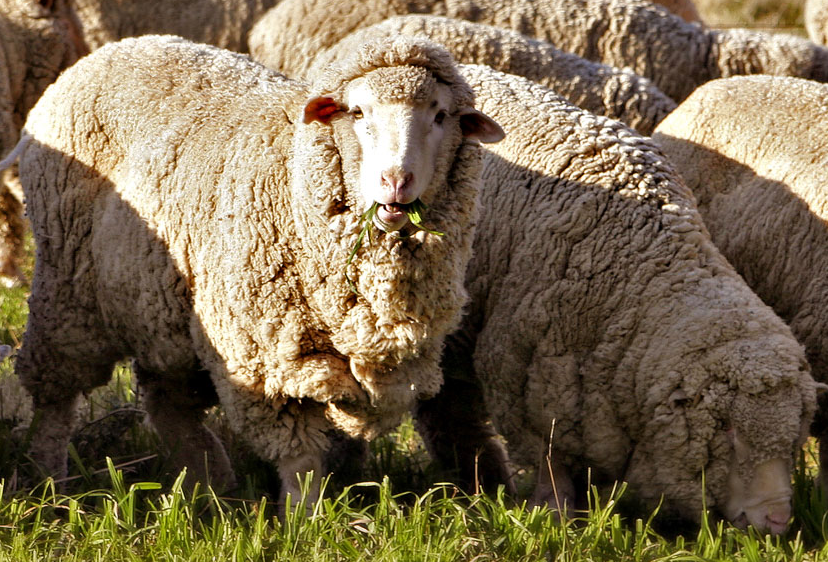

When they pulled out of the IWS, the New Zealand producers were frustrated that their wool was being blended with what they regarded as lower quality fibres from higher volume producers in other countries to improve the average.

As New Zealand wool was swamped by the output of other producers, the prices farmers received were volatile. Furthermore, because New Zealand merino wool had been blended, there was little to differentiate the product in buyers' minds.

According to Mr Andrew Caughey, MNZ's European marketing manager, "merinos are the aristocrats of the sheep world". More than that, he argues that New Zealand merinos grow the finest wool of all.

New Zealand produces around 8,000 tonnes of merino wool a year, only about 8% of the country's total wool production by volume and a tiny proportion of the world's merino output. That scarcity has been turned into a marketing point by stressing the fibre's "exclusivity".

Mr Kym McConnell, MNZ's brand manager, says New Zealand merinos, which mainly live in the high country of South Island, enjoy a cleaner environment and better pasture than others.

New Zealand merino fibres are stronger, making them ideal for suiting material, which requires a combination of strength and softness. The lack of pollution means the fleeces are whiter than others even after they have been washed.

Mr McConnell contends that New Zealand merino compares with cashmere in terms of the fineness of the fibre, measured in microns, and its "handle" - and it is in similarly scarce supply.

Not only does New Zealand merino apparently have considerable cachet for its quality, it also has numerous alleged benefits of a more tangible nature (just like the hemp gi I've reviewed in the past: I'll be putting up a review of yet another hemp gi soon). On the Gimono site, you can find several articles that discuss them at length. For example, here, where it states:


Merino fibers can be bent up to 30,000 times without breaking - so its core structure produces the most amazing blend of properties: exceptional softness and resilience. [...]

It's hydroscopic - which means it is capable of absorbing moisture vapor and repelling liquid at the same time. This explains why when you wear merino next-to-skin, you can sweat a lot but not feel damp and clammy. The merino, which is capable of storing around a third of its own dry weight in water vapor, draws sweat away from your skin (a process known as wicking), absorbs and desorbs the vapors, speeding up the body's own cooling system while remaining dry to touch. [...]

Moreover, with its unique physical and chemical structure, merino is naturally odor and soiling resistant, and anti-bacterial to boot.

Australians managed to nab the merino.com domain, meaning they can claim that their merino is in fact the best, listing the following further benefits to merino:

- natural breathability
- keeps you warm in winter, yet cool in summer
- drapes beautifully and resists creasing
- shrugs off stains and keeps its colour when washed
- benefits from natural anti-static and anti-odour properties.

Merino.com goes into greater detail over in the 'unique properties' section of the website, where each of the benefits gets its own icon. The list is longer, including soft, elastic, breathable, static resistant, easy to care for, odour resistant, stain resistant, machine washable, anti-wrinkle, natural barrier to UV, biodegradable and (somewhat bizarrely) fire resistant.

Merino is often used in base layers, so you'll see it advertised for hikers, mountain climbers and the like. That gives the media yet another chance to extol the virtues of merino, such as this piece by Wendy Warburton:


Merino wool undies also let your sweat evaporate, although not as quickly. But unlike poly, wool keeps you warm even when it does get damp and it doesn't smell. It's great for less-experienced winter athletes, outdoor skaters and alpine skiers. It's also natural and renewable since it comes from merino sheep, a breed of sheep that lives in the high alpine.

It should be kept in mind that all of those benefits, whether or not they're being overblown, are related to merino specifically as opposed to Fortitude, a polyester/merino blend. However, there is plenty of cross-over. In a factsheet I was sent by Gimono about Fortitude, it has a comparable summary of benefits:


• Superior next-to-skin physiological comfort: A fine layer of merino worn next to skin provides natural odour resistance. An anti-microbial treatment helps prevent attacks by microorganisms such as bacteria.
• High burst strength: Engineered to last, Fortitude™ offers an astounding strength-to-weight ratio without compromising comfort or aesthetics.
• Excellent breathability: Originally designed for the world’s toughest contact sports, Fortitude™ offers high levels of breathability and moisture management.
• Good dimensional stability: Fortitude™ combines the softness and drape of a knit with the stability and strength of a woven fabric – making it extremely versatile.
• Attractive surface texture
• Lively drape
• Superb handle
• Easy care: Fortitude™ is machine washable and shrink resistant. Ideal for domestic, commercial and industrial applications.

The genesis of the Fortitude material came in 2005, when Gimono co-founder Grant Scott was training judo in Tokyo. He was frustrated that at the end of his training, he was left with a "smelly, blood-stained gi." He teamed up with experienced businesswoman Lavinia Calvert, who among her packed CV has fifteen years with Reuters. Given that high-performance materials had been developed for use in many other sports, the pair sought to do the same for martial arts.

The majority of gis are still made of cotton, although there have been some innovations, such as ripstop, hemp and bamboo. These have now been joined by Fortitude. A piece in the Otago Daily Times from July 2010 describes the process Calvert and Scott went through to develop their material:


They started looking at existing textiles, but nothing met their list of needs of being comfortable, strong, able to stretch and recover from being gripped, pulled and tugged during bouts, did not shrink, can be washed and retain its colour.

Wool was widely used in the active outdoor market, because it had similar qualities required by martial arts, but it stretched, so Ms Calvert asked AgResearch Textile for help.

In 2007, they had their first sample fabric, a wool-polyester blend, which has since been refined to a final product that is a third the weight of cotton Gis and met their list of requirements. The wool layer is next to the skin.

A patent is pending on the fabric, with Gis selling for between $300 and $400, similar to a top-priced cotton garment. [...]

Ms Calvert said they made jackets, shorts and pants, with the fabric made in Auckland and garments in Christchurch.

Fortitude looks beyond the world of martial arts too, with applications in equestrian sports and the catwalks of fashion. I will obviously be focusing on how Fortitude functions on the jiu jitsu mat. Getting into the technical details, the material is 330gsm, which while technically a little heavier than my lightest gi (the Gorilla ripstop, which is 250gsm), it does not feel any bulkier. It also is not a typical jiu jitsu gi weave, so looks quite different as well as feeling unlike any other gi you've ever worn.


That is due to the wool/polyester mix. Calvert sent me a helpful email when I asked about the specific choice of blend, stating that:


You'll see that the merino/polyester composition is 36%/64%. When we were developing the fabric we tried different compositions, including a higher percentage of merino, but to achieve the desired performance attributes (strength, stretch, weight, breathability, thickness etc) the optimal blend turned out to be 36%/64%.

I also asked her if the gi was legal for IBJJF competition. The answer is no, which does not surprise me as the IBJJF isn't exactly renowned for being an organisation open to change from the mainstream. A completely atypical weave and material like Fortitude (see the close-up above) is therefore going to be a tough sell. Still, there is always a chance that may change, though personally I would recommend this gi for travel rather than competing. Nevertheless, the Gimono position is that the company is attempting to meet every other requirement outside of material and weave:


Regarding competition rules, the short answer is 'no' – simply because Fortitude isn't cotton or cotton-like, and it's not a woven fabric. However, as far as uniform measurements go, we have worked hard to ensure that our gi's meet the standard requirements (lapel width, sleeve opening at full extension, jacket length, sleeve length etc). [...]

Because we know our product is pushing some pretty entrenched traditional boundaries, we haven't yet approached the IBJJF (or the IJF for that matter) about getting acceptance for what we've developed. [...] While we fully appreciate why such rules exist, we believe it will take considerable time, money and influence to bring about change at the administration levels of the sport. That's not to say it can't or won't happen eventually ... just that we don't think the time is quite right for us to take that issue on!


In time, yes – we'd welcome the opportunity to have the conversation – but in reality I think we have a little way to go before a top-down approach would work in our favor! We'd rather see how the market responds, get the concept understood and accepted by practitioners themselves and then address the issue of competition compliance. Granted, there will be a segment of the market that won't be prepared to try an alternative like Gimono because it doesn't fully comply with the rules, but we're okay with that. We're in this for the long haul and we don't see any reason why this type of innovation won't eventually be more broadly accepted in the sport ... it's just going to take time and patience, that's all.

I'm no stranger to gis made of unusual materials, although I was a little concerned about the wool. I never wear wool. The few times my parents tried to put me in a wool jumper back when I was even smaller than I am now, I found it unbearably itchy. Fortunately, merino is different. According to Deb Acord, it has "longer fibers that make it virtually itch-free." That proved true for the Gimono, which had none of wool's dreaded abrasion.

I got a size 3, which is roughly equivalent to an A1: they use judo sizing, probably because one of the co-founders is a judoka. The fit was superlative, with a slightly longer skirt than average for BJJ gis (personally I like that, as I'm fond of using the gi skirt for chokes), but still relatively tight to the body rather than a baggy judo-style. The reinforcements are entirely distinct from what you would normally see (except on the jacket vents, which have the usual additional material at the top), due to the material being equally distinct from any other gi. Instead of those triangular patches inside the armpit, the Gimono has lots of seams running along the length of the sleeves and down the trouser legs.

I have not noticed much shrinkage at all after three washes. The pre-wash measurements were close to my Gorilla ripstop: from cuff to cuff the Gimono started at 150cm, the trousers at 92cm and from shoulder to hem it was 80cm (slightly longer than the Gorilla, which is 76cm). I then did two washes in Georgette's machine on cold (which she said was about 25 degrees celsius), followed by 30 minutes at 30 degrees celsius back home in Bristol. Both the trousers and shoulder to hem length stayed the same after two washes. The cuff to cuff length shrunk by about 1cm or so. After the third wash in Bristol, there was still no notable shrinkage, as the measurements had not changed.

The Gimono has much more elasticity than I'm used to, but not so much that it affects training. It does make the measurements slightly harder to confirm, as you have to try and stretch it the same amount each time: my marker was the point at which I felt tension. It is almost as light as the Gorilla, at a mere 1.2kg, and just as thin. The Gimono is therefore brilliant for travel, particularly as this is either as fast-drying as the Gorilla or maybe faster.

In Texas, the Gimono took less than three hours to go from straight out of the washing machine to completely bone dry. It isn't especially wet when you first take it out of the machine, which was enough to convince me the Gimono is indeed hydroscopic. Judging by that, you could wear your Gimono to class in the morning, wash it, then wear it again for the evening class. Georgette's house is clearly much warmer than mine, as in the UK it took more like six hours to dry, but then that's without the heating on and a temperature of around 5 degrees celsius outside.

As the co-founder of Gimono warned me, this gi is completely different from anything you will have worn before in BJJ, so it will take a bit of getting used to. It feels like a quality pair of pyjamas, or as several people in Texas described it, a polyester suit from the '70s. It is also shiny white, which I like, but may put off those who prefer a darker colour (though I imagine Gimono will eventually have models in blue and perhaps other shades as well).

Of the handful of reviews I've seen so far (mainly going off the Gimono Facebook page), the main complaint was directed at the collar: several people mentioned that the thin Gimono collar cut into their neck. Those reviews were from a year ago, so it's Gimono might have made some modification since then. When I tested the Gimono BJJ gi, I found that although the collar was extremely easy to grab, it did not cut into my neck. Calvert is aware of the issues with the collar and it is something she is looking to address:


The one area where we have further improvements to make and that we are still working on getting right (but that isn't a rule-breaker per se), is the thickness and construction of the lapel itself. While we have made significant improvements in our second generation design (an example of which you have), we are aware of the need to stiffen up the lapel, make it a little thicker still, and to possibly change the way we've constructed it so as to prevent burning. The current issues with it are partly due to our fabric being so much lighter-weight and softer – which is good for some things, but not so good for others – so as with all these things it's about finding the right balance.

I should emphasise that I did not experience that burning, just the difficulty of removing grips. The soft nature of the material has some advantages too. Though there are seams on the back, which is becoming rare in BJJ gis, I did not find they dug into my back. The seams aren't the typical huge joins you would see on a cotton gi (e.g., as on the Padilla & Sons single weave), but thin strips. Interestingly, after I rolled with Jeff Rockwell, he mentioned that it was hard for him to get a grip on my hips, which potentially goes some way to counteracting the ease of grip on the collar.

The design appeals to me, as somebody who appreciates a clean look. There are almost no patches at all on the outside of the gi. The only externally visible patches are on the back of the lower trouser leg and at the end of the lapel. Inside, there are some washing instructions backing the lapel patch, while the joining seam along the middle has 'Fight For You Rights!' written across it (in case you're wondering, those rights relate to comfort, not anything political ;D). Again, that seam does not result in any abrasion or discomfort while rolling.

I found that the drawstrings were a good length, perhaps because they are the flat type instead of a bungee cord (the cord in my experience has a tendency to be overly long and dangle, such as with the otherwise excellent Tatami Nova). Personally, I prefer the flat type, though there has been a growing trend to use rope instead. There are also typically multiple belt loops on BJJ gi trousers: the Gimono only has one. That's not unusual for judo gi trousers, but I can't remember seeing that arrangement in a BJJ gi. I didn't mind the solo loop, but your mileage may vary.

In regards to some of the alleged benefits claimed for Fortitude, I can agree with comfort and easy care: the drying time is what impressed me most. There is a specific claim in the Fortitude factsheet that proudly announces "Merino wool can absorb up to 35% of its dry weight in moisture before it becomes wet. This keeps the wearer drier and less clammy from perspiration." I wasn't completely convinced of that, as I felt clammy during one of my training sessions in Texas (to be fair, this is Texas, so it was still relatively hot in November by UK standards). The only way to test that properly would be to do the same set of exercise that results in sweat wearing both a Gimono and some other gi. So that's what I did, although back in the UK.

I worked up a slight sweat by doing a load of press-ups and sit-ups followed by running up and down the stairs for four minutes. The lightweight cotton gi I used for comparison stayed fairly dry, but I could feel some minor moisture in the ripstop trousers. I decided that was enough to test the Gimono. As soon as I put it on, I noticed another benefit: it's cold in the UK, but the Gimono immediately warmed me up. That's probably unsurprising, given merino's common use as a base layer for hiking and the like. During and after the exercise, the Gimono seemed to regulate the temperature and moisture more effectively. It was only slight, but there was a noticeable difference. I'd need to do hard rolling in both to really test it, but unfortunately my leg isn't up to that.

The Gimono arrives in its own branded bag, consisting of a large main pocket plus a zip slot on the front, along with a detachable shoulder strap. It looks similar to a laptop bag, except the dimensions are not the same: one previous reviewer described it as a 'shoe box'. It demonstrates how compact the Gimono can be: the Gimono has none of the bulk of a typical gi, much like my Gorilla ripstop. This is definitely going into my travel gi rotation.

The glaring issue for potential customers is that a Gimono is currently quite expensive, and you need to consider customs and tax if you're outside New Zealand. I ended up being charged £90.92 in fees (which I should note Calvert kindly reimbursed: it was a pleasure dealing with her throughout), so if you're paying full price, that would mean you're laying out £240 for the gi. Gimono may come up with a solution to reduce that cost for those of us based outside of Australasia, but I'm sure it's not an easy thing to arrange.

There is the argument that if Fortitude can live up to its claims of durability and last significantly longer than a standard cotton counterpart, a high price could be justified to a degree (the same is true of hemp and bamboo gis, which are also both currently expensive). That remains to be seen and will be a major test for all non-standard gi materials. Available to buy here. As of March 2020, they're doing a sale, where the jiu jitsu gi is avaialble for $149 (US $).

Update March 2020: I've now used this gi (and other products from GIMONO) regularly for 8 years, all over the world, it is still holding up well. It's even survived my various attacks on it with dye and patches. I like it so much that I now have several gis from GIMONO, hopefully I'll be able to afford to buy more in the future. Handily, you can buy the trousers separately, which for me are the best travel gi trousers on the market.

Here's a video of the GIMONO in action, although as usual I'm pairing my 2012 GIMONO jacket with some ripstop trousers:


References

'Terms of the Men's Apparel Industry', Cedric Larson, American Speech, Vol. 27, No. 4 (Dec., 1952)

'NZ Puts Upmarket Spin on Merino Wool', Financial Times, 16th April 1997

'In From The Cold', Wendy Warburton, Calgary Herald, 29th November 2007

'Sock Market Boom', Deb Acord, The Gazette, 15th August 2002

'New fabric has more than fighting chance', Carolyn Enting, Dominion Post, 25th August 2010

'Merino finds a new niche in martial arts', Neal Wallace, Otago Daily Times, 10th July 2010

'Fortitude Fact Sheet', Fortitude Textiles Ltd, Lavinia Calvert email