slideyfoot.com | bjj resources

 Home
 Contact
 Reviews
 BJJ FAQ  Academy

This website is about Brazilian jiu jitsu (BJJ). I'm a black belt who started in 2006, teaching and training at Artemis BJJ in Bristol, UK. All content ©Can Sönmez
Showing posts with label teaching # Mount: Cross Choke. Show all posts

24 April 2019

24/04/2019 - Teaching | Mount | Single Arm Cross Choke

Teaching #855
Artemis BJJ (Easton Road), Can Sönmez, Bristol, UK - 24/04/2019


I first learned this choke from BJJ Library, demonstrated by Saulo himself. He calls it the Saulo choke, but in the interests of being descriptive, I'm currently going with single arm cross choke. From high mount, you start by feeding your hand into the opposite collar, an initial step common to most chokes from mount. For this one, insert your thumb so your hand is palm down.

As with any cross choke, Roger's tips apply. Open up their collar and slide your hand in, then jam your elbow into your same side hip. Use that addition leverage to power your knuckles right to the floor, then bring your elbow. This will press your forearm into the side of their neck. You need to turn their head a bit as you do that, in order to expose the side of the neck properly.


At this point, you can also lower your head to the mat by your choking arm hand, to make sure you stay on the same side as your palm down grip. The more you bring your head away from your choking arm side, the easier it is for them to roll you over. To finish, bring your other hand underneath your own stomach, gripping low on their other collar. To finish, pull on that collar and twist your body away, rotating towards their legs.
________________
Teaching Notes: Head down, don't bend wrist.

22 April 2019

22/04/2019 - Teaching | Mount | Cross choke (palm up palm down)

Teaching #854
Artemis BJJ (Easton Road), Can Sönmez, Bristol, UK - 22/04/2019

Starting from high mount, sitting on their organs not their hip bones (as Mike Bidwell puts it), I used the tip on getting your choke grip that Roger Gracie taught me. He advises that you pull open their collar low on their lapel (or at least lower than their elbows. You don't want to get stuck trying to yank out the collar from directly underneath their tightly crossed arms). You can then insert your hand, palm up.

A post shared by Artemis BJJ (@artemisbjj) on


To provide extra leverage for pushing that hand past their defences, Roger told me to brace your own elbow against your hip. You can then wriggle forwards, driving your arm in front of you with the combined power of your hips, legs and arm. Also form your hand into a wedge, as this will help cut past their blocking arms. Drive your knuckles all the way down to the mat. A tip from Saulo is to keep your head by that hand. If your head goes towards the other side of their head, it will be easier for them to roll you over.

My preferred variation from this grip is the one I learned from Michel Verhoeven. After you've inserted your first hand, start to raise your partner towards you slightly (that should make it harder for them to roll you). Your second arm is free, so be ready to use that to maintain your base until the moment is right. You can then bring your second arm around to the other side of their head, then 'shave' back across their face to position that arm by their neck. You want this as tight to their neck as possible, like you've dropped on iron bar there. Grab a handful of gi by their shoulder, then drop your elbow so your forearm is pressing diagonally into their neck. This second arm doesn't move after that point: the choke comes from twisting the first hand and drawing that first elbow back.


________________
Teaching Notes: Palm up palm up classic, does going up into neck slightly help? What's the ideal angle of second hand entry? Remember one hand maintenance drill.

18 October 2017

18/10/2017 - Teaching | Mount | Single Arm Cross Choke

Teaching #713
Artemis BJJ (MYGYM Bristol), Can Sönmez, Bristol, UK - 18/10/2017

I first learned this choke from BJJ Library, demonstrated by Saulo himself. He calls it the Saulo choke, but in the interests of being descriptive, I'm currently going with single arm cross choke. From high mount, you start by feeding your hand into the opposite collar, an initial step common to most chokes from mount. For this one, insert your thumb so your hand is palm down.

As with any cross choke, Roger's tips apply. Open up their collar and slide your hand in, then jam your elbow into your same side hip. Use that addition leverage to power your knuckles right to the floor, then bring your elbow. This will press your forearm into the side of their neck. You need to turn their head a bit as you do that, in order to expose the side of the neck properly.

A post shared by Artemis BJJ (@artemisbjj) on


At this point, you can also lower your head to the mat by your choking arm hand, to make sure you stay on the same side as your palm down grip. The more you bring your head away from your choking arm side, the easier it is for them to roll you over. To finish, bring your other hand underneath your own stomach, gripping low on their other collar. To finish, pull on that collar and twist your body away, rotating towards their legs.
_____________________

Teaching Notes: This is a simple choke in mechanical terms, but it is easy to turn it into a nasty pain compliance move. To prevent that I don't want to overemphasise leaning into the neck with all your weight. It's a slight press with the elbow going too far over: if you drop the elbow it is possible to get the choke with one arm, as Saulo does, but that also puts loads of weight into your partner's neck.

Next time, be sure to mention the turn of your body with the other arm to generate leverage, that seemed to help a number of people who had questions about generating sufficient torque, if that's the right word.

13 October 2017

13/10/2017 - Teaching | Mount | Cross Choke (palm up, palm down)

Teaching #710
Artemis BJJ (MYGYM Bristol), Can Sönmez, Bristol, UK - 13/10/2017

Starting from high mount, sitting on their organs not their hip bones (as Mike Bidwell puts it), I used the tip on getting your choke grip that Roger Gracie taught me. He advises that you pull open their collar low on their lapel (or at least lower than their elbows. You don't want to get stuck trying to yank out the collar from directly underneath their tightly crossed arms). You can then insert your hand, palm up.

A post shared by Artemis BJJ (@artemisbjj) on


To provide extra leverage for pushing that hand past their defences, Roger told me to brace your own elbow against your hip. You can then wriggle forwards, driving your arm in front of you with the combined power of your hips, legs and arm. Also form your hand into a wedge, as this will help cut past their blocking arms. Drive your knuckles all the way down to the mat. A tip from Saulo is to keep your head by that hand. If your head goes towards the other side of their head, it will be easier for them to roll you over.

My preferred variation from this grip is the one I learned from Michel Verhoeven. After you've inserted your first hand, start to raise your partner towards you slightly (that should make it harder for them to roll you). Your second arm is free, so be ready to use that to maintain your base until the moment is right. You can then bring your second arm around to the other side of their head, then 'shave' back across their face to position that arm by their neck. You want this as tight to their neck as possible, like you've dropped on iron bar there. Grab a handful of gi by their shoulder, then drop your elbow so your forearm is pressing diagonally into their neck. This second arm doesn't move after that point: the choke comes from twisting the first hand and drawing that first elbow back.

A post shared by Artemis BJJ (@artemisbjj) on


_____________________

Teaching Notes: I didn't mention pulling them up and twisting, that's better left for when you want to insert your thumb and loop the arm (these days I prefer to just drive the arm in by the shoulder, so I'm not committing both arms until I have a choke). I could talk more about leaning through the arm on the cross choke, as well as bringing the head forward to the ground to increase leverage. Quite a few people were trying to get a full collar grip rather than simply anchoring their hand in place. Naturally you can switch to a full collar grip, but it isn't efficient.

That probablys means I should focus more on precisely what you're doing with that 'bar' arm that is by their throat. That presses in tight, leaning into the neck. The other hand twists and your elbow moves back. This is the only cross choke I showed, so perhaps it would be useful to show the standard variation as a contrast: I don't find it very effective, but then I know all the variations, beginners won't be aware of them.


15 March 2017

15/03/2017 - Teaching | Mount | Single Arm Cross Choke

Teaching #645
Artemis BJJ (MYGYM Bristol), Can Sönmez, Bristol, UK - 15/03/2017

A video posted by Artemis BJJ (@artemisbjj) on


I first learned this choke from BJJ Library, demonstrated by Saulo himself. He calls it the Saulo choke, but in the interests of being descriptive, I'm currently going with single arm cross choke. From high mount, you start by feeding your hand into the opposite collar, an initial step common to most chokes from mount. For this one, insert your thumb so your hand is palm down.

As with any cross choke, Roger's tips apply. Open up their collar and slide your hand in, then jam your elbow into your same side hip. Use that addition leverage to power your knuckles right to the floor, then bring your elbow. This will press your forearm into the side of their neck. You need to turn their head a bit as you do that, in order to expose the side of the neck properly.

At this point, you can also lower your head to the mat by your choking arm hand, to make sure you stay on the same side as your palm down grip. The more you bring your head away from your choking arm side, the easier it is for them to roll you over. To finish, bring your other hand underneath your own stomach, gripping low on their other collar. To finish, pull on that collar and twist your body away, rotating towards their legs.
_____________________

Teaching Notes: It can be tough to get the hand in if you're driving it past their defences, Roger Gracie hip-elbow style. The simple solution there is to turn your hand the other way around to get the initial push, then switching back. I can emphasise putting your head by your hand to get the balance, as well as driving your weight through that arm. That's where most of the choke comes from (Saulo demonstrates how to do it with just that arm too). Also, you don't need to grip especially deep with the second hand on the gi.

I also covered the intermediate class today, where I went through the ezequiel choke with the gi. It does work, but it's definitely best in that intermediate class setting, as I think it also works well as a combination attack. E.g., moving off to side control for a bunch of other submissions that work off a similar set up.

17 October 2016

17/10/2016 - Teaching | Mount | Single Arm Cross Choke

Teaching #575
Artemis BJJ (MYGYM Bristol), Can Sönmez, Bristol, UK - 17/10/2016

A video posted by Artemis BJJ (@artemisbjj) on


I first learned this choke from BJJ Library, demonstrated by Saulo himself. He calls it the Saulo choke, but in the interests of being descriptive, I'm currently going with single arm cross choke. From high mount, you start by feeding your hand into the opposite collar, an initial step common to most chokes from mount. For this one, insert your thumb so your hand is palm down.

As with any cross choke, Roger's tips apply. Open up their collar and slide your hand in, then jam your elbow into your same side hip. Use that addition leverage to power your knuckles right to the floor, then bring your elbow. This will press your forearm into the side of their neck. You need to turn their head a bit as you do that, in order to expose the side of the neck properly.

At this point, you can also lower your head to the mat by your choking arm hand, to make sure you stay on the same side as your palm down grip. The more you bring your head away from your choking arm side, the easier it is for them to roll you over. To finish, bring your other hand underneath your own stomach, gripping low on their other collar. To finish, pull on that collar and twist your body away, rotating towards their legs.
_____________________

Teaching Notes: Most of my teaching focus was on the format today. My back is still fairly bad, so I couldn't demonstrate. Instead, I did it by proxy, puppeting two of my students through it. I think I've done that before when I've been injured: not ideal, but it's a good solution when I can't get cover. ;)

12 October 2016

12/10/2016 - Teaching | Mount | Cross Choke (Verhoeven variation)

Teaching #574
Artemis BJJ (MYGYM Bristol), Can Sönmez, Bristol, UK - 12/10/2016

Starting from high mount, sitting on their organs not their hip bones (as Mike Bidwell puts it), I used the tip on getting your choke grip that Roger Gracie taught me. He advises that you pull open their collar low on their lapel (or at least lower than their elbows. You don't want to get stuck trying to yank out the collar from directly underneath their tightly crossed arms). You can then insert your hand, palm up.

A video posted by Artemis BJJ (@artemisbjj) on


To provide extra leverage for pushing that hand past their defences, Roger told me to brace your own elbow against your hip. You can then wriggle forwards, driving your arm in front of you with the combined power of your hips, legs and arm. Also form your hand into a wedge, as this will help cut past their blocking arms. Drive your knuckles all the way down to the mat. A tip from Saulo is to keep your head by that hand. If your head goes towards the other side of their head, it will be easier for them to roll you over.

My preferred variation from this grip is the one I learned from Michel Verhoeven. After you've inserted your first hand, start to raise your partner towards you slightly (that should make it harder for them to roll you). Bring your second arm around to the other side of their head, then 'shave' back across their face to position that arm by their neck. You want this as tight to their neck as possible, like you've dropped on iron bar there. Grab a handful of gi by their shoulder, then drop your elbow so your forearm is over their throat. This second arm doesn't move after that point: the choke comes from twisting the first hand and drawing that first elbow back.
_____________________

Teaching & Sparring Notes: The women's class was very useful for preparing this session, helping to put it in context for me. I also added that drill for maintaining your mount with a grip, again noting that you want to keep your head by that hand, basing out with your free arm until you're ready to establish the second grip.

I had what I thought was a pretty good sparring session. Rolling with Mike, he was stopping me getting the Saulo style palm down choke, keeping his other arm up as a barrier. It felt like there should be a way to capitalise on that space by the arm, which I need to try out more. Sparring Simon was fun too, as his defence is getting pretty good now.

I played around with attacks after gripping that collar, to try and go for a choke. He was doing a decent job of blocking my choke, attempting to get on his side and dig out space space with his elbow. He almost managed to get me into half guard a few times, but I was able to spin round and maintain a sort of mount (it was specific sparring, so I'm not sure if I was cheating by not stopping. I tend to judge an escape from mount by them securing a guard position, or reversing me).

I eventually managed to get my arm around his head and grip the collar, looking for a bow and arrow style choke. I got that at the end, but not before a lot of wriggling. At one point, I was in a weird position where I was up by his head, facing his legs, still on top. I attempted to get my legs through for some kind of crazy triangle. That was hard to lock in, though at times it felt like I almost had it. Immediately after that roll, my back felt sore: standing up straight was difficult, as my lower back in particular was complaining. I went and rolled two more times after that, mostly staying on the bottom.

Bad idea. The next day, it took me several days to get out of bed and I couldn't cycle to work (fortunately they're nice, so let me work from home). I think it was that attempt to pull my legs into a weird triangle that did it. Lesson learned, next time I'm in that position, don't try and force it. My back hasn't hurt this much since I messed it up at kettlebells, due to poor form after swinging a 32kg. At least, I hope that's lesson learned: pain tends to be a useful reminder. ;)

12/10/2016 - Teaching | Womens Class | Mount Choke Variations

Teaching #573
Artemis BJJ (MYGYM Bristol), Can Sönmez, Bristol, UK - 12/10/2016

Once again, it was just experienced students, so I tried out some choke variations from the mount. Last time it was mount month, I worked on the single arm choke Saulo likes, so I tested out that along with the standard Verhoeven variation I normally teach on the cross choke. From drilling and testing that lots with Ruth, I've got the next few lessons sorted for this month, which I'll try to build on as ever next time mount month rolls around too.

The Verhoeven choke is palm up, sliding that up the collar, then getting the other hand to the shoulder. From there you can apply the choke by leaning through your other forearm (I teach this as a sort of iron bar you lay tight against their neck), twisting your first grip and bringing your elbow back. For the Saulo single arm choke (which isn't quite single arm, so I need to come up with a better name for that, though I think he does manage it with one arm. But then he's Saulo, so he's on a whole different level ;D), the palm is down.

Rather than inserting your fingers into the collar, you're therefore just putting your thumb in. That slides in as before. Keep your head by that hand, to make it harder for them to roll you over. Reach under yourself with your other hand, grabbing their opposite collar: this doesn't need to be so deep as the first grip. Twist back towards their legs as you press your weight into your neck arm, rotating your torso.

The handy thing about both of these grips is that it also opens up the armbar. If they try to block, they will tend to raise their elbow. That enables you to slide your knee to their head. Your arm is already in place to hook their arm. You can now go for the armbar, or switch back to a choke. Saulo likes to switch grips for this, which makes sense. He can then take his pick of the armbar or the choke.

I'll keep playing with these in sparring, so hopefully by the end of the month, I'll have a good sequence for people to go for from mount. Depending on my back: I'm writing this up a day later, so as you'll read in the next post, I've managed to hurt myself again, so I'm not certain if I'll be teaching on Friday or not (fortunately Chris has said he's able to cover).

13 April 2016

13/04/2016 - Teaching | Mount | Cross Choke

Teaching #494
Artemis BJJ (MYGYM Bristol), Can Sönmez, Bristol, UK - 13/04/2016

Starting from high mount, keep low, your arm based out, putting your head on the same side to concentrate your weight. Remember to keep your feet tucked under their bum for control. Drive your first grip in, which normally is going to be blocked by their arms crossed over their chest. To work past that, Roger advises that you pull open their collar low on their lapel (or at least lower than their elbows. You don't want to get stuck trying to yank out the collar from directly underneath their tightly crossed arms). You can then slide your arm through. To make that extra-solid, Roger Gracie told me to brace your own elbow against your hip. You can then wriggle forwards, driving your arm in front of you with the combined power of your hips, legs and arm. Also form your hand into a wedge, as this will help cut past their blocking arms.

Either way, once you have the grip, lift them up towards you slightly, twisting your hand so that you create a small gap between their neck and collar. Into that gap, insert the thumb of your free hand, to establish your second grip. You can also drop your elbow to the other side, so that you're pressuring into their neck.

Slide that thumb behind their head to the other side of their neck. As you do, also move your head to the other side of their head. Next, bring the arm of your thumb grip to the other side of their head, 'shaving' close to their face. This is to set up the choke, putting your wrists on both sides of their neck.

Once you've got the thumb arm into position, so that both carotid arteries are blocked off, move your forehead to the floor directly above their head. Twist your wrists and drop your weight into them to finish the choke. Roy Dean provides a handy pointer here, which is to shift your hips forward slightly, still basing on your head. That will give you a little extra leverage, should you need it.

I focused on my preferred cross choke variation from Michel Verhoeven. After you've inserted your first hand, start to raise your partner towards you slightly. Bring your second arm around to the other side of their head, then 'shave' back across their face to position that arm by their neck. Grab a handful of gi by their shoulder, then drop your elbow so your forearm is over their throat. This second arm doesn't move after that point: the choke comes from twisting the first hand and drawing that first elbow back.
_____________________

Teaching Notes: I'm wondering if I should scrap the 'put the thumb in and loop around' part, just teaching the Verhoeven method instead. It would be quicker, though I should add in the 'shaving the face' element to get the arm tight to the neck. That's a little nasty, so I would like a gentler way of getting into the neck, like the thumb rotate for lifting the chin when on the back. I could also change my set up, as I'm beginning to move towards Saulo's conception of mount as a place to stay upright rather than low. So next time, I could modify the teaching on this a bit perhaps, try going from Saulo's upright posture instead?

Also, this class didn't just have an equal number of men and women, it actually had more women, so that's cool. That's only out of a small class (7 people), but I was still pleased. :D

12 October 2015

12/10/2015 - Teaching | Mount | Cross Choke

Teaching #403
Artemis BJJ (MYGYM Bristol), Can Sönmez, Bristol, UK - 12/10/2015

Starting from high mount, keep low, your arm based out, putting your head on the same side to concentrate your weight. Remember to keep your feet tucked under their bum for control. Drive your first grip in, which normally is going to be blocked by their arms crossed over their chest. To work past that, Roger advises that you pull open their collar low on their lapel (or at least lower than their elbows. You don't want to get stuck trying to yank out the collar from directly underneath their tightly crossed arms). You can then slide your arm through. To make that extra-solid, Roger Gracie told me to brace your own elbow against your hip. You can then wriggle forwards, driving your arm in front of you with the combined power of your hips, legs and arm. Also form your hand into a wedge, as this will help cut past their blocking arms.

Either way, once you have the grip, lift them up towards you slightly, twisting your hand so that you create a small gap between their neck and collar. Into that gap, insert the thumb of your free hand, to establish your second grip. You can also drop your elbow to the other side, so that you're pressuring into their neck.

Slide that thumb behind their head to the other side of their neck. As you do, also move your head to the other side of their head. Next, bring the arm of your thumb grip to the other side of their head, 'shaving' close to their face. This is to set up the choke, putting your wrists on both sides of their neck.

Once you've got the thumb arm into position, so that both carotid arteries are blocked off, move your forehead to the floor directly above their head. Twist your wrists and drop your weight into them to finish the choke. Roy Dean provides a handy pointer here, which is to shift your hips forward slightly, still basing on your head. That will give you a little extra leverage, should you need it.

I focused on my preferred cross choke variation from Michel Verhoeven. After you've inserted your first hand, start to raise your partner towards you slightly. Bring your second arm around to the other side of their head, then 'shave' back across their face to position that arm by their neck. Grab a handful of gi by their shoulder, then drop your elbow so your forearm is over their throat. This second arm doesn't move after that point: the choke comes from twisting the first hand and drawing that first elbow back.
_____________________

Teaching & Sparring Notes: Getting past the arm defence can be a problem, which I tried to resolve by giving advice on the shape of the hand this time round (keeping in mind you don't want to get stuck on their thumb). Interestingly, a few people were coming up on one leg to increase their leverage. Personally I'd be wary of that, because it gives the person on the bottom space to escape, but I'll be curious to see if that proves effective for people.

In sparring, I'm continuing to get up high, but not finishing all that successfully. I wanted to practice balancing with the one arm in, so it was good to have a play with that, although I'm also looking to move into submission that don't depend so much on grips. Armbar would be the obvious option, possibly americana too, but that tends to be so much lower percentage.

Something to keep playing with, and importantly, paying as much attention as possible to their reactions. One thing I noticed was people trying to grab at arms or push on the hips, leaving their neck exposed. That should then set up an ezequiel attempt, followed by moving up higher if they block it. Which is just about what happened, although I need to be smoother and more efficient on the ezequiel: it was a bit slap dash when I went for it.

09 October 2015

09/10/2015 - Teaching | Mount | Single Arm Cross Choke

Teaching #402
Artemis BJJ (MYGYM Bristol), Can Sönmez, Bristol, UK - 09/10/2015

I'm not sure if this has a common name, as I've only seen it as the Saulo choke over on BJJ Library, demonstrated by Saulo himself. In the interests of being descriptive, single arm cross choke seems to work.

From high mount, you start by feeding your hand into the opposite collar, an initial step common to most chokes from mount. For this one, insert your thumb so your hand is palm down. Drive your knuckles right to the floor, then bring your elbow down, pressing your forearm into the side of their neck. You need to turn their head a bit, in order to expose the side of the neck properly.

At this point, you can also lower your head to the mat, making sure you stay on the same side as your palm down grip. The more you bring your head to the other side, the easier it is for them to roll you over. To finish, bring your other hand underneath your own stomach, gripping low on their other collar. To finish, pull on that collar and twist your body away.
_____________________

Teaching Notes: It's a fairly simple choke, perhaps even something I could add into the high mount lesson. Alternatively, it might be good to use this lesson as a way of practicing how to keep your base when you've got one hand in the collar. It's very common to get rolled when you put one hand in, so if I can develop a way to make people confident about doing that, it should be a big help to landing more chokes.

I added a drill at the start where you put one hand in then just try to keep your balance. Something I think I'll do myself when I next get the chance, maybe at open mat. I'm too timid with attacks, as I don't like losing position. Need to take more risks! :)

20 April 2015

20/04/2015 - Teaching | Mount | Cross Choke

Teaching #312
Artemis BJJ (MYGYM Bristol), Can Sönmez, Bristol, UK - 20/04/2015

Starting from high mount, keep low, your arm based out, putting your head on the same side to concentrate your weight. Remember to keep your feet tucked under their bum for control. Drive your first grip in, which normally is going to be blocked by their arms crossed over their chest. To work past that, Roger advises that you pull open their collar low on their lapel (or at least lower than their elbows. You don't want to get stuck trying to yank out the collar from directly underneath their tightly crossed arms). You can then slide your arm through. To make that extra-solid, Roger Gracie told me to brace your own elbow against your hip. You can then wriggle forwards, driving your arm in front of you with the combined power of your hips, legs and arm. Also form your hand into a wedge, as this will help cut past their blocking arms.

Either way, once you have the grip, lift them up towards you slightly, twisting your hand so that you create a small gap between their neck and collar. Into that gap, insert the thumb of your free hand, to establish your second grip. You can also drop your elbow to the other side, so that you're pressuring into their neck.

Slide that thumb behind their head to the other side of their neck. As you do, also move your head to the other side of their head. Next, bring the arm of your thumb grip to the other side of their head, 'shaving' close to their face. This is to set up the choke, putting your wrists on both sides of their neck.

Once you've got the thumb arm into position, so that both carotid arteries are blocked off, move your forehead to the floor directly above their head. Twist your wrists and drop your weight into them to finish the choke. Roy Dean provides a handy pointer here, which is to shift your hips forward slightly, still basing on your head. That will give you a little extra leverage, should you need it.

I focused on my preferred cross choke variation from Michel Verhoeven. After you've inserted your first hand, start to raise your partner towards you slightly. Bring your second arm around to the other side of their head, then 'shave' back across their face to position that arm by their neck. Grab a handful of gi by their shoulder, then drop your elbow so your forearm is over their throat. This second arm doesn't move after that point: the choke comes from twisting the first hand and drawing that first elbow back.
_____________________

Teaching Notes: Pushing past that defending hand was a slight problem for a few people, though it seemed that eventually everyone could get through. However, I'm not sure if that is merely a matter of force, or something more refined. Hopefully it comes down to leverage rather than brute strength: I was advising people to bring their whole body to bear, rather than just shoving with their hand. Instead, having braced their elbow against their hip (like Roger says), they should also be driving with their hips, feet, legs and using their body weight to get that hand into position.

24 November 2014

24/11/2014 - Teaching | Mount | Roger Choke

Teaching #238
Artemis BJJ (Bristol Sports Centre/MyGym), Can Sönmez, Bristol, UK - 24/11/2014

Starting from high mount, keep low, your arm based out, putting your head on the same side to concentrate your weight. Remember to keep your feet tucked under their bum for control. Drive your first grip in, which normally is going to be blocked by their arms crossed over their chest. To work past that, Roger advises that you pull open their collar low on their lapel (or at least lower than their elbows. You don't want to get stuck trying to yank out the collar from directly underneath their tightly crossed arms). You can then slide your arm through. To make that extra-solid, Roger told me to brace your own elbow against your hip. You can then wriggle forwards, driving your arm in front of you with the combined power of your hips, legs and arm. Also form your hand into a wedge, as this will help cut past their blocking arms.

Either way, once you have the grip, lift them up towards you slightly, twisting your hand so that you create a small gap between their neck and collar. Into that gap, insert the thumb of your free hand, to establish your second grip. You can also drop your elbow to the other side, so that you're pressuring into their neck.

Slide that thumb behind their head to the other side of their neck. As you do, also move your head to the other side of their head. Next, bring the arm of your thumb grip to the other side of their head, 'shaving' close to their face. This is to set up the choke, putting your wrists on both sides of their neck.

Once you've got the thumb arm into position, so that both carotid arteries are blocked off, move your forehead to the floor directly above their head. Twist your wrists and drop your weight into them to finish the choke. Roy Dean provides a handy pointer here, which is to shift your hips forward slightly, still basing on your head. That will give you a little extra leverage, should you need it.

I also added in my preferred cross choke variation from Michel Verhoeven. After you've inserted your first hand, start to raise your partner towards you slightly. Bring your second arm around to the other side of their head, then 'shave' back across their face to position that arm by their neck. Grab a handful of gi by their shoulder, then drop your elbow so your forearm is over their throat. This second arm doesn't move after that point: the choke comes from twisting the first hand and drawing that first elbow back.
_____________________

Teaching Notes: I am tending to show a variation, which I wasn't doing earlier. I'm not sure if it is better to leave out the variation and keep it focused: I probably should do that, as I think I cut into sparring time a bit due to the variation. Though personally I much prefer the variation, I could just teach that on another day or next time. I have to be careful I don't get bogged down in too much detail, it's something I can add in during drilling.

The main problem people were having was, I think, not getting those grips close enough to the neck. One of the students also said they were struggling if their partner got a hand to defend. I don't advocate crushing through the hand for a choke, so my solution to that would be going for something else. E.g., if you can't get the cross choke without brute force and bone crushing, I'd suggest using the position to move your knees up higher. That could lead to an americana, or just taking the back.

09 June 2011

09/06/2011 - Teaching (Attacking Mount)

Teaching #005
Gracie Barra Bristol, (BJJ), Can Sönmez, Bristol, UK - 02/06/2011

Now that we have an idea how to maintain mount, I wanted to show some attacks from there, in high and low mount respectively. The material I'm going to cover owes a lot to a training partner of mine at RGA Bucks, who was promoted to purple alongside me: Sahid Khamlichi. A little over a month ago, he taught a fantastic lesson on Roger Gracie's version of the cross choke from mount. Many of the details I'm about to cover come from Sahid's lesson, so the wording will be very similar to my earlier write up.

I have seen this choke taught a few times over the years, including by Roger himself, but it's always useful to go over the details again. As has been said many times before, it may be the first submission you learn, but it's one of the toughest to master.

I'll put up the same bunch of pictures showing Roger choking out Lovato Jr in 2009, though like I noted last time, I'm going to cheat and put them out of order: Roger also didn't set it up exactly the way I'm about to describe, but hopefully the photos will still help. You could also take a look at Trumpet Dan's videos, and here's Roger teaching a slightly different variation of the cross choke ( turn on the subtitles by clicking 'CC' at the bottom right).

Start in that high mount I showed last week, keeping low, your arm based out, putting your head on the same side to concentrate your weight. Remember to keep your feet tucked under them bum for control.

Your other arm goes under their head, cross-facing, also using your shoulder to turn their head towards your basing side. It will now be tough to bridge you off. It is also important that you are really tight with your chest, so that there is no space for them to slip an arm inside to defend their neck.

Grab their same side collar with your basing arm, or just the material by their shoulder. This isn't going to be involved in the choke, as at this stage, you are simply looking to yank the gi material to your basing side. That should take out any slack. The grip comes next, as you pull your arm out from behind their head, instead reaching through (raising up as little as possible) for that collar you've carefully prepared. Grasp with your four fingers, palm facing up. Your free hand can continue to cinch up their collar if it still isn't tight enough.

If they are blocking with their arms, as is likely, you'll need to drive your hand past their hands. Pull open their collar before their elbows (rather than trying to yank it out from directly underneath their tightly crossed arms), then slide your arm through. Good advice I remember from Roger is that if you need extra leverage, brace your own elbow against your hip. You can then wriggle forwards, driving your arm in front of you. Also form your hand into a wedge, as this will help cut past their blocking arms.

Either way, once you have the grip, lift them up towards you slightly, twisting your hand so that you clear a small gap between their neck and collar. Into that gap, insert the thumb of your free hand, to establish your second grip. I forgot to mention here that you can drop your elbow to the other side, so that you're pressuring into their neck.

Slide that thumb behind their head to the other side of their neck. As you do, also move your head to the other side of their head. Next, bring the arm of your thumb grip to the other side of their head, 'shaving' close to their face. This is to set up the choke, putting your wrists on both sides of their neck.
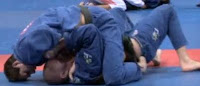
Once you've got the thumb arm into position, so that both carotid arteries are blocked off, move your forehead to the floor directly above their head. Twist your wrists and drop your weight into them to finish the choke. Roy Dean provides a handy tip here, which is to shift your hips forward slightly, still basing on your head. That will give you a little extra leverage, should you need it.

From low mount, I mentioned last week that this position isn't well suited to submissions, but there is at least one reliable option. For the Ezequiel choke, you again need to get one arm under their head. Many people will just give you that space as they try to escape, but if not, you can press into their neck to get them to raise their head.

You have one arm in place. To get the choke, you need to block off both sides of their neck. For the first side, you're going to use your gi. With the hand you have under their head, grab your free sleeve. Pull it tight to the nearest side of their neck.

To block the other side of their neck, make a chopping motion with your free hand, as if you're trying to decapitate them. Make sure you're pressing into the side of their neck, not the throat (although crushing the windpipe may still get a tap, it isn't as efficient).

Obviously it isn't going to be that easy in sparring. They're going to be blocking you with their hand, trying to buck you off, disrupting your attack any way they can. To avoid that, there are a couple of options. One is to slip your arm inside their defending arm until your elbow gets to the mat. Alternatively, they may give you the opportunity by pushing on your knee.

Either way, slide their arm out of the way and clamp it to their side with your elbow. Fill up the space by sticking your head right next to theirs. Use this as both a means of control and a barrier against their efforts to get a hand back inside. Stay low, then gradually slip in your second hand.

Again, they may give you the opportunity by bridging. If they are staying really tight, use your head to push into their skull, aiming to get them to turn. Follow your head with your hand, then slip through for the choke.

You can also try bringing a leg to their shoulder for leverage, chopping into their neck with your hand as before, raising up to generate even more pressure. However, that does give them more space for defence.

Finally, I showed a nastier variation, which I was in two minds about demonstrating. It is a bit unpleasant after all, and that isn't the kind of jiu jitsu I generally want to be teaching. Then again, it combines fairly well with the Ezequiel, so can be used as a way of opening them up to other attacks, rather than a finish in itself.
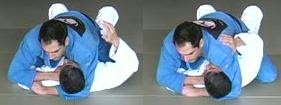
I'm referring to what Roy Dean calls the 'fist choke'. The set-up is similar to the Ezequiel, as again it involves having an arm under their head and grabbing the sleeve of your free arm. This time, you don't pull that sleeve in tight to their neck. Instead, you simply drive your fist into their neck instead. That closes off one side.

To block the other artery, cross-face them. The bicep of the arm you have under their head should be as close to their neck as possible, after which you can just roll your shoulder to apply pressure. Pull on the gi sleeve, and that combination should result in either the tap, or loosen them up for an Ezequiel, an armbar or some other attack.

I did emphasise that this isn't something you should regularly be attempting during training, as it is probably going to annoy your training partners. Best to stick with smooth technique if possible, and save more crude applications like the fist choke for competition. I'd be interested to know what anyone reading this thinks: is the fist choke a 'dirty' technique, or something legitimate you regularly use in class?

A few people had problems getting the Ezequiel right, as their sleeves were a little short. The fist choke still works in that situation, but it did make me wonder if I could make some adjustment of angle or pressure that would mean a shorter sleeve wouldn't be a problem.