slideyfoot.com | bjj resources

 Home
 Contact
 Reviews
 BJJ FAQ  Academy

This website is about Brazilian jiu jitsu (BJJ). I'm a black belt who started in 2006, teaching and training at Artemis BJJ in Bristol, UK. All content ©Can Sönmez
Showing posts with label single leg x-guard. Show all posts

28 February 2015

28/02/2015 - Private with Kev | Open Guard | Sitting Guard, Shin-to-Shin and Single Leg X

Class #630 - Private #020
RGA Aylesbury, (BJJ), Kev Capel, Aylesbury, Buckinghamshire, UK - 28/02/2015

Just a short one this visit, as my brother-in-law's flight getting delayed in the US, combined with a mortgage call they were dealing with, meant that the birthday plans for my younger niece got moved around. Rather than being able to train until 2pm, that meant I was needed back home for 12:00. Fortunately I'd already booked a private lesson, so could still get in about an hour of valuable training with Kev.

For this twentieth private lesson, I wanted to continue refining a path Kev had sent me down with an earlier private back in November 2013. I have always liked the tripod and sickle sweep combination from open guard, resulting in my open guard being built around those sweeps. My starting position was initially just sitting up with a stiff arm, based on Kev's lesson.

I've since been able to refine that, after buying Ryan Hall's Defensive Guard during a Black Friday sale. For me (and my friend Seymour agrees) it is easily Hall's best DVD set, which is saying something as his instructional sets are among the best on the market. I drilled my way through the DVDs with Chris last year and it's had a significant impact on how I approach seated guard.

Armed with the stuff I've learned from the DVDs, drilling with Chris and what I've been doing during open guard sparring, I ran through it with Kev. He suggested a few tweaks, plus some helpful additions for scenarios I haven't had much of an answer for (especially when they come in close to your shin). As a result, I've now got a coherent plan of action from open guard, based around that sitting guard position. As I'm finishing this write up on the 9th March a day after the GrappleThon, I've got details from rolling at that too (you can still support Equality Now and donate, here).

* Sit up, base an arm behind, grab their opposite collar. Keep a strong line through your shoulders and expand your chest, like Ryan Hall shows.

* Keep the foot of my raised knee outside theirs. If that knee starts to angle inwards, they can crush it down and pass, similar to the principle with knee shield passing.

* If they move to the outside of my raised knee foot, go for a collar drag and take the back. Remember to scoot around their near leg as you do.

* If they move to the inside, look for the loop choke, bringing your outside leg over their back as well. You'll tend to end up with the other knee pressing into their stomach, to clamp them in place as you go for the choke. Also, be sure to get the grip and pull down, rather than just flailing. I'm still tending to snatch at this choke rather than securing it properly, something I want to focus on.

* If they stay in the middle and with their head up, especially if they start to move backwards, ankle pick sweep them.

* If they come in close and they're standing, put your foot on their hip and move into the tripod/sickle combination.

* If they come in close and start to sit with their knee on the ground, shift into shin-on-shin guard. I've never used this, but basically, just put your shin in front of their same side leg. With your other leg, push on their knee. That will normally make them post their arm. Grab their sleeve, then simultaneously pull on their sleeve and lift their shin for the sweep. Even better, pass their arm under their leg to your other hand. With your passing hand, grab around the back of their gi, then in combination with your shin lift, sweep them. It's much the same as the basic de la Riva sweep I was taught at GB Brum.

* If you try the shin-on-shin sweep but they put their arm out of range, continue reaching for that arm. Make them think you are going for that, then switch your legs so you are hooking their rear leg with your forward leg. Grab the side of their knee and drive forwards, a bit like an ankle grab sweep.

* If they stand up from the shin-on-shin, move into single leg x and double ankle grab sweep. That one I'll need to review, as I don't think I quite got it. From what I remember, you lift up with your shin, pull their leg around (almost as if you're pulling mount), bringing your other knee behind their leg, just above their knee. You're still holding the foot (and collar, ideally I think), so can lift your hips and drive forwards to knock them over.

Interestingly, Kev said he's moved away from the nappy grip he showed me back in 2013, as it isn't high percentage enough when you're up against somebody who gets wise to it. Nevertheless, it's still a useful last resort: I haven't generally had a lot of success with it myself, though it worked pretty well last time I was in Bucks last November. I also got it a few times at the GrappleThon, although that was mostly during the long flow roll with Mike, so he wasn't putting up much resistance.
_____________

As always, visiting my parents meant art, this time the day after training. My father took me along to the Rubens exhibition at the Royal Academy, which is titled 'Rubens and His Legacy'. I have to agree with some of the critics who reviewed the show. While I don't think it's fair to complain that there isn't much Rubens, given that "and his legacy" is part of the description, there is an issue with a number of the comparisons. An exhibition based around a work's influence on both contemporaneous and later artists is something I could enjoy, but it quickly becomes frustrating if the original influences being discussed aren't there in some form.

That was a recurring problem here. Often, the text would say "and the influence of blah blah painting by Rubens can be seen in the blah', but that original painting would simply be referred to by its name and date. Even if there was some small monochrome reproduction, that would have been something, but nothing at all means the comparison is meaningless (unless of course you already know the paintings in question well, so my father didn't mind). Sometimes there was a copy of the original painting, which was better than nothing but still disappointing. The rather sparse audioguide didn't help.
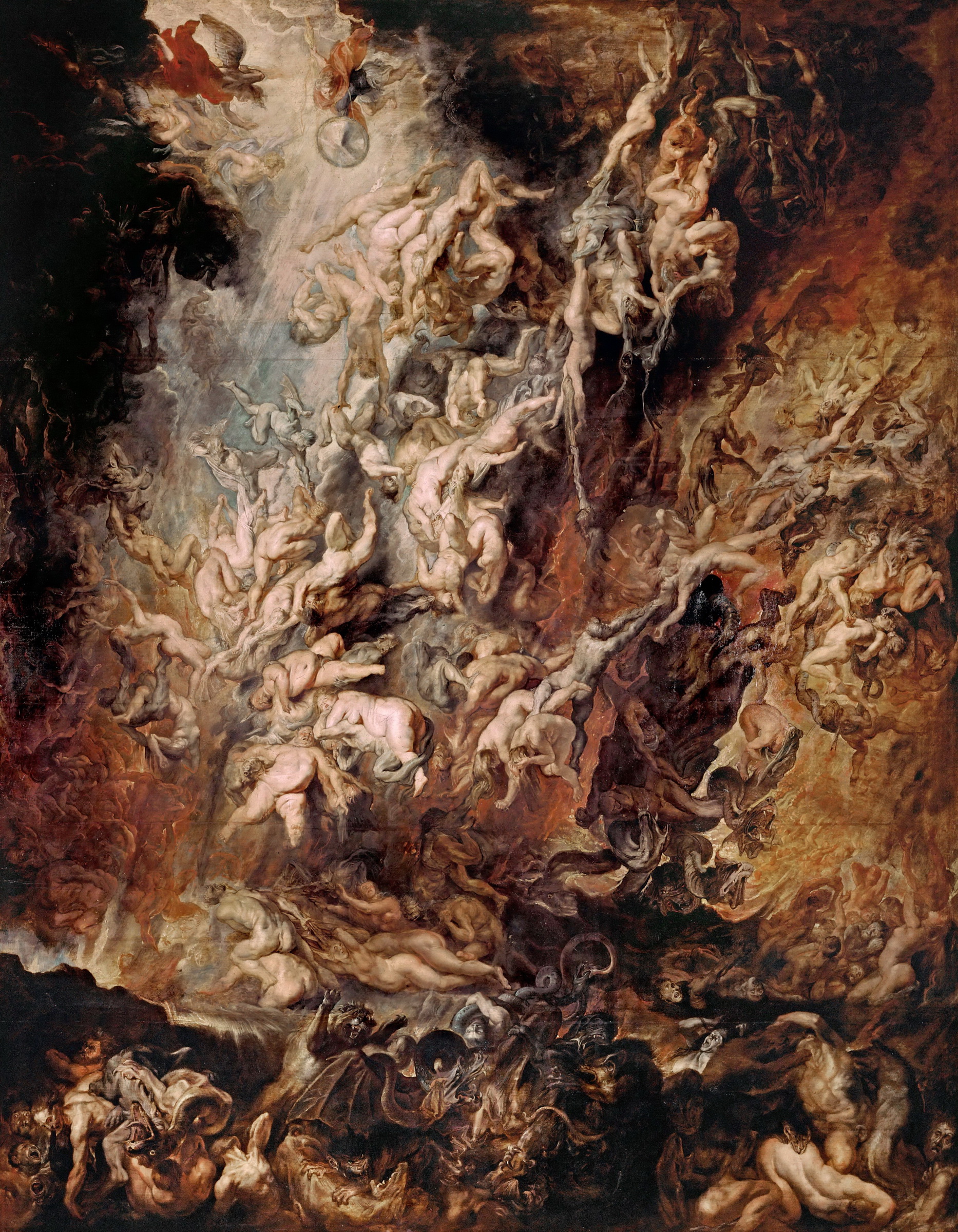
I can understand it's not always easy to get hold of paintings, but I think the exhibition would have been greatly improved if they focused on the paintings they could get and build it around that. So although there were lots of excellent paintings, it felt like I had walked into the middle of a film and missed the start. Having said that, splitting it into themes (e.g., 'compassion' for his religious art, 'lust', 'violence', etc) was a good idea, showing the range of Rubens work. The 'violence' paintings were particularly good, my favourite being 'The Fall of the Damned' (at least I think that was in the 'violence' room. Either way, it was cool). Sadly the original wasn't there (though the replacement they found at least gave a good idea), but with the magic of the internet I can reproduce Rubens' painting here.

16 July 2013

16/07/2013 - Teaching (Side Control Basic Maintenance)

Teaching #114
Gracie Barra Bristol, (BJJ), Can Sönmez, Bristol, UK - 16/07/2013

GB Bristol hosted its 5th submission only competition last weekend, which I think is currently the sole sub only comp in the UK with no time limits. It is free to enter for GB and RGA affiliates, meaning it's also a good chance to catch up with some friends from around the country, like Rob T across the border at Chris Rees Academy and Tanya from Exeter BJJ. I was helping with admin again, which this time round was much smoother due to a new system Geeza used, where the weight divisions become the absolute rather than separating the two. The event was also far quicker, finishing around 3pm, but I suspect that was at least partially due to the intense heat we've been having in the UK recently.
_____________________

I went back to the basics of maintaining side control tonight. I kicked off with the conceptual framework John described to me in Texas, which I've mentioned before: the primary control points are the hips and the triangle of shoulders and head, secondary control is inside the knees and elbows, then finally tertiary control relates to the wrists and ankles. John goes into more detail over on this thread. I think it's helpful to have that framework at the start, as then the students can hopefully see how that principle filters through everything we'll be training today.

Another key point to keep in mind is that when you're underneath, one of the worst things that can happen is they control your near arm. Now you're on top, you therefore want to get control of that arm. Dig your knee into the armpit, aiming to slip it right under, bringing your knees in close to their head to trap their arm. You can also try switching to scarf hold briefly, scooping their arm up with your hip, then switching back to side control.

Next, you want to apply the cross face. If you're not familiar with the term, that means bringing your near side arm under their head: I like to reach right to their far armpit and anchor my arm there, either by cupping, or by getting a hold of the gi material. From that position, you can then drive your shoulder and/or arm into the side of their head or neck, aiming to get their head to turn away from you and/or generate some choking pressure to distract them.

If they can't turn their head back towards you due to the shoulder pressure, it will make it much harder for them to create space and escape. "The body follows the head" or "where the head goes, the body follows" is an old adage and a true one. This is what SBG call the 'shoulder of justice.' If you shift your shoulder from their face to their neck, that choking pressure can also open up opportunities to switch to mount or consider initiating a submission attempt. However, it does mean they can probably turn their head again, which improves their escape opportunities.

Either way, you've got control of their near arm and their head. You're now going to deal with their far arm. Reach under that far elbow with your arm, coming under the armpit. You have a couple of options here. Option one is linking your hands together with a gable grip and sucking them in towards you, providing a very tight side control. This is how Tran showed it to me several years ago, and has been my preferred control ever since. Option two is gripping around their shoulder, to bring their shoulder off the mat: this is something Dónal likes to do, which isn't surprising as I think I first saw that on a Braulio video. You can also use the elbow of your far arm to squeeze into their far hip. This latter option makes more sense if you're already grabbing by their armpit with your near arm.

You want to keep control over their far arm for two reasons: first, they can use it to defend, by getting it into your neck. Second, there are a number of attacks you can do from here. Final point I wanted to emphasise was chest position. Picture an imaginary line between the middle of their chest and also between yours. You want to bisect those lines: don't be too far over them, or they can easily roll you (if they DO try and roll you and it's working, put your far arm or your forehead out for base). Too far back, and it's easier for them to slip out and escape. Stay low, dropping your hips: don't leave them any space.

This is what I would call orthodox side control, which is what I started out using before I switched to the armpit grab. The reason I liked this position is because I felt like I had a lot of control, as my opponent has no space. It remains a good position, especially for beginners who want a 'safe' place on top of side control. If you do use that knees in position, clasping your hands in what Xande calls the 'super hold' on his DVD makes for a powerful grip.

At this point, I wanted to note that there are a bunch of different things you can do with your legs. I used to prefer to bring both knees in tight, but more recently I've been sprawling the leg nearer the head back. Either way, you need to keep your hips low. If your knees are in tight, widen them if your hips are still high. With the sprawled back position, lowering your hips is easier. The lower the hips, the more weight on top of them, which therefore gives you better control. However, if you have both legs sprawled back, there is a chance they might be able to bring their knee inside: you need to block it somehow, which would commonly be with the hip nearest their legs, your hand or your knee. Play around and see which position you like, and also be ready to switch depending on your partner's movement

That leads into the second section, where I wanted to emphasise mobility in side control as well as focused pressure. Although it can be tempting to just seize up in side control, you have to keep moving: otherwise, you aren't reacting to your opponent and they're eventually going to escape. The old "it's better to bend than to break" cliche comes to mind.

That transitional, mobile element to side control can be seen in Saulo's method for maintaining side control, which he shows on Jiu Jitsu Revolution. He keeps his hip stuck right by theirs throughout. The only time he lets off the pressure is if he gets something better, like strong control on the far arm. As they move, turn and put your other hip to theirs, following them around with your legs sprawled back. Your elbow is across, blocking their other hip: however, be careful of pinching that in too forcefully, as that may help them initiate an escape where they roll you over the top.

Your weight should constantly be on them, because of that sprawl: don't touch the floor with your legs or knees. You can also reverse, which Saulo's brother Xande discusses in detail on his DVD. Turn your hips in the other direction, so that you're now facing their legs. Control their far arm, also making sure to block their near hip to prevent their movement in that direction.

To continue emphasising the importance of that hip connection, I then brought in the drills I first taught a while ago, with sparring from side control without using your arms, then another round where the bottom person can use their arms but the top person still can't. My intention was to help students improve their sensitivity and weight distribution, both on top and on the bottom. That progresses into general specific sparring.

_____________________

Teaching Notes: I think my teaching structure slipped a bit tonight, perhaps because I'm being too complacent about reviewing my notes for this lesson because it's one of my favourite positions. I need to make sure I don't forget about the point regarding not bringing your chest too far over. When it comes to the no-arm sparring drills, I also forgot to remind people that they can use their arms if they are about to fall flat on their face. I wouldn't want anyone to injure themselves as a result of headbutting the floor! ;)

I was able to get in a bit of sparring myself, which is good, mainly in the no-arm drilling section. On top I'm quite comfortable. That also reminds me of another point I should make before people start that drill: your head becomes a very useful controlling point, in lieu of your limbs. Underneath I found it much tougher, but it was a good opportunity to practice bridging.

My groin injury isn't giving me too much trouble at the moment: tonight was the first lesson since last September where I joined in with everything, including all the stretches. My left groin did feel a little sore the next day, but I'm hoping that's just due to not being used properly for a while. I'll see how it goes for the rest of the week.

Before class tonight, Mike popped over early to get in some drilling. He wanted to work on his single leg x-guard (for a discussion of that, check out Jiu Jitsu Lab, which is where I got the picture from), which gave me an excuse to go look at the x-guard passes from that Lucas Lepri DVD I reviewed for Jiu Jitsu Style earlier this year. We spent about thirty minutes working on Mike's single leg x guard control and sweeps. From what I gather, the important thing was preventing their ability to twist their knee inwards as well as getting their leg up onto your shoulder and clamping it there. Mike goes for that a lot in sparring, so I've become increasingly wary of letting him get my foot. ;)

On top, I wasn't getting too much of a chance to try the Lepri passes, as those are for normal x-guard rather than single leg, but some of the principles applied. The first pass starts by grabbing the leg furthest in front of you with your near arm and pushing down, twisting to get the knee of your trapped leg onto their chest. You then lean towards their head and post on your arm, finishing by kicking you rear leg and backstepping through to side control. The second pass has some similarities, except this time you grab the leg hooking underneath with both hands, bring your hips back then thrust them into the leg, before doing another backstep. That second one doesn't seem to apply so well against the single leg x-guard, but the first one vaguely worked.

Main points I learned against single leg x-guard was knocking off the foot by your hip as soon as possible, avoid them putting your leg up on their shoulder, crouch low (don't kneel, that makes it easier for them to sweep you) and get your knee onto their chest. Hopefully it was useful for Mike too: certainly a good workout for my base and balance!