Class #1203
RGA Bucks, Kev Capel, Aylesbury, UK - 23/11/2019
Armbar drill, then ezequiel with bottom knuckle to artery, drive hips and hook leg they're trying to push. Armbar, under elbows, cross their arms right over (maybe wristlock), grabbing elbow and pulling in, leaning back. Can then pick your moment. İf ezequiel blocked, can do the same motion, get under elbows, back to that armbar set up.
Rolling, first keV's son, nothing going from open guard, framed a bit. Running escape, left too much back open, slow motion seoi nage out. Almost exact same thing with keV after. Tried to swivel for Lepri, couldn't get underhook in and leg too far away.
Showing posts with label Kev Capel. Show all posts
Showing posts with label Kev Capel. Show all posts
23 November 2019


07 July 2018
07/07/2018 - Kev Turtle attacks Class
Class #999
RGA Bucks, Kev Capel, Aylesbury, UK - 07/07/2018
The sequence begins from a standard roll over against turtle, where you pull them by the corner to move into the back. Right away from there, kimura grip an arm. Maintaining the grip on their wrist, you can then push down the other arm and trap it with your leg.
To finish, there's the single arm choke. İf they bridge into you and clear your leg, swivel that cleared leg under (as they've given you space), establishing a crucifix on their arm. Switch your legs before you do (you already have a leg round their arm due to your previous technique of trapping their arm).
On the crucifix, you can single arm nogi choke with a squeeze, or go for a collar choke. İf they manage to dip down and roll backwards to escape, be ready to push their head into a reverse triangle. This will catch people unawares, as their arm is likely to still be stuck by your legs due to needing that base for the backward roll.
You can then either pull on their trapped arm and squeeze your legs to finish the choke, or focus on the other arm instead, going for a pressing armbar etc. After training, lots of great art in London, checking out the Courtauld Gallery for the first time. :D
24 December 2016
24/12/2016 - RGA Bucks | Half Guard
Class #791
RGA Aylesbury, (BJJ), Kev Capel, Aylesbury, Buckinghamshire, UK - 24/12/2016
I am not normally in Aylesbury in time to do the xmas eve training at RGA Bucks, but this year I managed it. Very useful, as I had annoyingly missed the session I wanted to go to in November because Megabus messed up. I like to check in with Kev at least six times a year, this final 2016 session marking the sixth (I think?).
Half guard tonight, starting by grabbing their wrist and pushing it between their legs. They've underhooked your other arm, meaning you need to wriggle your legs into play (this part I found tricky: I wasn't sure if you should let go of their wrist, or try to swim your leg inside your arm). That sets you up for a triangle.
You can also attempt a 'tee pee' triangle, where from that position you reach underneath both your legs and extend them. Switching to the reverse triangle is another option, meaning your legs are locked the other way.
In rolling, I got crushed under Sandeep's side control, which is what always happens with him. The only difference is how long I hold him off. Tonight I was still trying to save my fingers and avoid gripping too much, which appeared to make Sandeep's pass even quicker. He's very good at grabbing a sleeve and a leg, then bringing that inside to drop his shoulder and pass. I guess more grip breaking might help, though I don't want to get into a grip breaking battle with a strong wrestler like him. ;)
Sandeep also landed a nice footlock on me later (pressing the other foot into the hip, compared to what I'm used to). I recognised it, as I know from following Instagram posts that he learned it from a certain Mr Yang down in Borehamwood. ;)
I then got squished by a big white belt, where I stayed defensive. When I attempted to move into deep half, he got a lovely spin through, I think to my back? Either way, it looked smooth from where I was. Finally, the important roll, with my instructor Kev. I'm continuing to work on framing, grabbing the collar and scooting back Ryan Hall style.
He said it is improving: the trouble I have is once he gets that grip around my back and holding the opposite collar, it is extremely tough to maintain my guard. That's something I shall play with more. Of course, Kev is an experienced black belt, so it's not like he has to try very hard to pass my guard. ;p
23 October 2016
23/10/2016 - Private with Kev | Open/Closed Guard Maintenance
Class #775 - Private #026
RGA Aylesbury, (BJJ), Kev Capel, Aylesbury, Buckinghamshire, UK - 23/10/2016
To mark my approaching ten year anniversary in BJJ, I thought I'd book another private with Kev. Open guard has continued to be the weakest area for me, so we focused on that. Kev started off by sharing a few guard retention drills he's found useful (both to practice and to teach). They're related to the series he taught a long while back, but I think this version encourages more hip rotation, which is useful.
You've established a basic open guard, feet on their hips. They grab your ankle and pull it across, the beginning of a leg drag. Turn your hips in order to bring your other leg across, then push off that to recover square on. Then they go a bit further, so you push into the knot of their belt, again recovering to guard. The reason you go for the knot is that too far in either direction could lead to footlocks, them dislodging your foot and passing, or the Estima footlock (there's still a risk of that, but it's less). As you swivel, you yank your other leg free by pulling your knee to your chest.
If they manage to get to the knee cut pass, there is a counter you can try (a little like the ones from Leuven). Ideally you want to get your knee shield in, that's the most powerful defence. If you've missed that, first grab their gi collar, your fist into their neck. It's important your palm is facing down, that makes it harder for them to knock that hand out of the way. Your other elbow goes behind, to give you enough base to scoot away and get your knee shield in, then recover guard.
Playing open guard generally, Kev recommends getting a grip on their same side trouser leg first, as that tends to be the hard one to get. Shin-on-shin is the quickest guard to establish, making sure you keep your shin engaged. If you aren't actively pushing that into their shin, they can simply whip their leg around. Similarly, you need to keep your other leg pressed into their knee, constantly pressurising them.
Kev prefers sitting guard. Again, after you've wrapped your leg and arm around, keeping the pressure on their other leg with your free leg. If you don't, they'll squish you with their knee. From here, you can kick up to knock them past your head, or sweep your leg back to go into a single leg. There's de la Riva and x-guard entries from here too, but as neither of those are main guards for me, I can save those for a later date.
If they get strong sleeve grips, Kev suggested moving into spider guard to help reduce the power of those grips. He doesn't tend to sweep much with that (apart from the push on the floor one to knock them towards his head and then sweep), instead using it to set up closed guard.
From closed guard, there was another handy tip. The first thing Kev does is grab the meat of their hands by the thumb side, twisting both of their hands so they face upwards. That makes it really hard for them to get any kind of grips. Their reaction will indicate the next move. Kev likes to move an arm across and pull them in with the knees, to get that strong position where they are collapsed over their own arm.
That leads into what Nic Gregoriades randomly (but memorably) calls the 'chimp, chump, champ' series. The words don't entirely fit, but the idea here is that a 'chimp' won't react, so they just sit there in that position. Grabbing their lat, you can move into a back take. A 'chump' will make the mistake of putting up their leg on the non-trapped arm side. You can then hook that with your same side leg and sweep them. A 'champ' puts up their leg on the other side: that gives you the opportunity to move into an armbar.
My preference is the shoulder clamp grip, which Kev noted would be something to move into if they try to move their arms out to recover their hands. You can capitalise on their focus on their hands to pull them in and thread into a shoulder clamp.
Finally, in terms of passing open guard, there is another hand grip that's handy: you're also grabbing the meat of the hand, but the other side (i.e., under the little finger), forcing their palms down. As with the closed guard option, that makes it hard for them to establish grips. You can then step your same side leg behind their knee, moving around to a perpendicular angle.
Once you've got that angle and can drive your knee in behind theirs (into a sort of knee-led leg drag), you 'land the airplane', coming in low to lock up the pass. I think that was the last technique, hopefully I didn't forget anything on my way to the train. Before I left, Kev popped a fourth stripe on my purple belt, which is always nice.
24 September 2016
24/09/2016 - RGA Bucks | Half Guard | Knee Shield
Class #769
RGA Aylesbury, (BJJ), Kev Capel, Aylesbury, Buckinghamshire, UK - 24/09/2016
Moving into groundwork, as they try to pass your guard, grab their far sleeve (i.e., the one on the side they're passing) with your opposite hand. Secure a good grip, then with your same side hand, grasp the meat of their hand. Use those grips to create a bend in their hand. Insert your knee shield, using that and your grips to pull them back into closed guard.
Alternatively, stretch them out with your knee, switching to pushing with your foot. Kev described this as a sidekick to their hip. Gradually transfer that pressure to your other foot, pressing into their other hip. At the same time, you're going to use the grip you have on their sleeve to do an arm drag, then take their back.
If you get your knee shield and then go for the sleeve, they might be savvy and pull it back. To do that, they are invariably going to bring their weight back slightly. Keeping your knee driving firmly into their hip, turn your torso completely away from them, so you're looking in the same direction they are. Walk back on your hands, until you end up knocking them over. You will probably find yourself in a sort of half butterfly. Grapevine your hooked leg to stuff their sweep attempt, bringing your other leg over the top of their knee. It's then a simple slide into mount.
Related to that, Stu made an interesting point when we were sparring. I tried to shin-on-shin sweep him repeatedly, but he kept getting his balance back. He explained that he was just walking on his hands until he could re-establish some base. That then enabled him to untangle his legs while still maintaining his balance. In terms of sparring, he also recommended combining the knee cut with a leg drag, by pulling them legs across if you can't land the knee cut. I think Donal might have shown me that years ago, but I've not been trying it: good reminder!
Sparring with Kev, he had a potent counter for the opposite side half guard pass I like to do. Before I switched to the other side, he was able to get a grip around my lapel, locking his arm to my back. To prevent my cross-face, he made enough space to jam his forehead into my arm (in my notes, I said 'eyebrow to armpit', to be specific ;D), so I couldn't drive my shoulder into to his jaw or neck. Bringing my hip down onto the ground, he moved smoothly into an ezequiel. He finished it with a fist, sliding that in as I bridge to turn. In the process of bridging, I opened up my neck. Normally the fist finish to an ezequiel is vicious, but Kev did a very technical version, it was on immediately without any of the usual nasty grinding. Black belt skills. ;)
RGA Aylesbury, (BJJ), Kev Capel, Aylesbury, Buckinghamshire, UK - 24/09/2016
Kev kicked off with a method for wristlocking when somebody is pushing your chest. Grab their hand with your opposite hand, locking that to your body. Your other hand grabs behind their elbow as you step towards them. Put your head on their shoulder and switch both hands to their elbow. You can then apply pressure for the wristlock. The competition application is when they grab your collar. Again, grab their hand with your opposite hand: aim to knock across, to create a bend in their wrist. Then it's the same as before, to get the wristlock.
Moving into groundwork, as they try to pass your guard, grab their far sleeve (i.e., the one on the side they're passing) with your opposite hand. Secure a good grip, then with your same side hand, grasp the meat of their hand. Use those grips to create a bend in their hand. Insert your knee shield, using that and your grips to pull them back into closed guard.
Alternatively, stretch them out with your knee, switching to pushing with your foot. Kev described this as a sidekick to their hip. Gradually transfer that pressure to your other foot, pressing into their other hip. At the same time, you're going to use the grip you have on their sleeve to do an arm drag, then take their back.
If you get your knee shield and then go for the sleeve, they might be savvy and pull it back. To do that, they are invariably going to bring their weight back slightly. Keeping your knee driving firmly into their hip, turn your torso completely away from them, so you're looking in the same direction they are. Walk back on your hands, until you end up knocking them over. You will probably find yourself in a sort of half butterfly. Grapevine your hooked leg to stuff their sweep attempt, bringing your other leg over the top of their knee. It's then a simple slide into mount.
Related to that, Stu made an interesting point when we were sparring. I tried to shin-on-shin sweep him repeatedly, but he kept getting his balance back. He explained that he was just walking on his hands until he could re-establish some base. That then enabled him to untangle his legs while still maintaining his balance. In terms of sparring, he also recommended combining the knee cut with a leg drag, by pulling them legs across if you can't land the knee cut. I think Donal might have shown me that years ago, but I've not been trying it: good reminder!
Sparring with Kev, he had a potent counter for the opposite side half guard pass I like to do. Before I switched to the other side, he was able to get a grip around my lapel, locking his arm to my back. To prevent my cross-face, he made enough space to jam his forehead into my arm (in my notes, I said 'eyebrow to armpit', to be specific ;D), so I couldn't drive my shoulder into to his jaw or neck. Bringing my hip down onto the ground, he moved smoothly into an ezequiel. He finished it with a fist, sliding that in as I bridge to turn. In the process of bridging, I opened up my neck. Normally the fist finish to an ezequiel is vicious, but Kev did a very technical version, it was on immediately without any of the usual nasty grinding. Black belt skills. ;)
02 July 2016
02/07/2016 - RGA Bucks | Open Guard | Countering the Double Underhooks Pass
Class #749
RGA Aylesbury, (BJJ), Kev Capel, Aylesbury, Buckinghamshire, UK - 02/07/2016
It was a flying visit today, as multiple family birthdays on both my partner and my own side meant I was rushing up and down the country. I was determined to get in a class at RGA Bucks either way, to make sure I'm touching base with Kev at least every couple of months on average. After July, I don't get back up to Bucks until at least September, so it would have been a long wait if I didn't make it for July (and it's my middle niece's birthday, as well as my father's). ;)
The theme today was countering the double underhooks pass. As they come in for the double under pass, have your arms ready by your legs. Once their arm is in range and before they can lock their hands together (this is important, it will be a great deal harder to prevent the pass if they lock their hands), bringing your same side arm underneath theirs, locking your own hands together in a gable grip. That position should block the pass attempt, plus you can now move into submission attempts.
Keep pulling on their arm until you can bring it away from their body. Your top arm comes over the top of their arm and shoulder, to grab their wrist. With your other hand moving underneath, grab your own wrist. You can then do a reverse kimura. If they manage to straighten their arm when you do that, bring it to your head and clamp to your ear. A pressing armbar is waiting for you at this point. Kev likes to get the wrist flat on his neck, which he finds puts their elbow in the right spot. If their arm slips out of that too, grip their tricep and pull the arm across, moving into a triangle.
A more complex option arises if you can't get their arm away from their body in the first place. Bring your leg over the top of their bent arm, then triangle your legs to lock that in place. Switch your arms, grabbing your own leg. This puts on a bit of bicep slicer pressure, so be careful (especially if you're in a competition that doesn't allow bicep slicers for lower belt ranks). Turn, rolling them all the way over, unlocking your legs in order to avoid throwing their entire weight on top of your foot. Keep on turning, which will then apply a shoulder lock. This is a little like the rolling omoplata.
I had lots of good rolls as always, especially with Kev. I played with the stiff arm from open guard again, along with escapes. I couldn't get into position for knee cut counters, though speaking of those, Kev had a nice detail. When he grips around the back, he turns his palm outwards, which straightens the arm into the back and makes it tougher to collapse. I also tried what David Morecegao showed me about pushing the head away from open guard, though I think I still might not be doing that enough. I kept my other arm tucked back, like Dan Lewis showed at RGA Bucks some time ago (based on a David Onuma seminar). It felt like I wasn't as sore as normal after sparring, which is good if that means I'm using less force and being more flowy.
09 April 2016
09/04/2016 - RGA Bucks | Side Control | Reverse Triangle
Class #709
RGA Aylesbury, (BJJ), Kev Capel, Aylesbury, Buckinghamshire, UK - 09/04/2016
After my private lesson, in the normal class Kev focused on side control. He started with some basic escapes, with the guard recovery. He has a little tweak I haven't seen before, in the last part where you're getting back into guard. Rather than wrapping the arm over the top and reaching for your other shoulder, he prefers to make a frame against their shoulder and bicep. That enables you to push yourself away, then move into either open guard or wriggle into closed guard.
Kev upped the complexity next, with reverse triangles. Having escaped, the leg that was previous by their hip now kicks up diagonally, past their opposite shoulder, straightening your leg. If you have long legs, it might be tricky to manoeuvre it in place, but I don't have that problem. Put that leg across the back of their neck, then the other leg comes up to lock over the shin, as with a normal triangle. You are essentially putting yourself underneath side control: the same technique will work if you're starting out from side control too, though the setup is a little different (you'd push their head down towards your leg).
It can be difficult to finish the triangle, but their near arm is vulnerable. You can attack with pressing armbars, kimuras and even americanas, due to locking that shoulder down so they can't relieve the pressure. If you're having trouble, straighten out your leg that's over their neck, to push their head down further. Turn your hips, then the leg that was across the back of their head becomes the leg that locks over the top. The legs are switching, changing the triangle configuration. The hard part is getting the lock in tightly enough by the shoulder, especially as you can't see what you're doing.
I was taking it easy in sparring, as I had the GrappleThon to go to later. I mainly tried more maintaining open guard, attempting to pull them into closed guard like Kev had taught me in the private.
09/04/2016 - Private with Kev | Open Guard | Leg Lock Defence, Calf Crush & Open Guard
Class #708 - Private #022
RGA Aylesbury, (BJJ), Kev Capel, Aylesbury, Buckinghamshire, UK - 09/04/2016
I know very little about leglocks. I don't really care about being able to attack with them, but I am keen to nail down the defence. Rolling with Seymour at the GrappleThon, I kept ending up in 50/50 without much idea of how to get out, while he went for my feet. The last proper look I had at leglock defence was when John Palmer went through a few options with me, way back during my awesome 2012 Texas trip. Leglocks aren't something that feature in the vast majority of my training, so rolling with Seymour was an eye-opener. I had been planning to work on leglock defence in this private anyway, but that confirmed why it was important. ;)
Fortunately, it wasn't as complex as you might think. There are three basic principles that run through most defences, which I knew already, so that's good. First, 'put on the boot': pull your toes back and straighten out the leg that's being attacked, as if you were struggling to get on a boot. Second, you need to pull them towards you (e.g., grab their gi or head), as they need to drop back to apply most footlocks. Finally, stand up, because they're going to have a really tough time getting anything once you get the sole of your foot on the ground and can bring gravity to bear.
That applies to both orthodox footlock set-ups and stuff like 50/50. Kev added in some more specifics for 50/50 defence, which starts off with the usual putting on the boot, grabbing the gi and standing up. After you've done that, 'hula hoop' to put their locking leg in front of you, then grasp their knee and the bottom of their trouser leg. You can then shove that leg down and begin your pass. If the 50/50 is too tight, Kev suggested grabbing the locking knee, stiff-arming then shifting your hips away. I think I must have missed some details though, so I'll double check that with him next time.
You can also get in some early defence, such as getting a spider guard push into the arm they want to use to underhook your leg. Grab their same side arm, push into the crook of the elbow and use that to free your elbow. Sometimes you might need to hook under their leg as you're escaping, such as when you push their foot down and pop your hips over (I don't remember all the details on that, so will need to drill it some more).
As much as I don't intend to attack with footlocks, it is useful to know a few. Kev shared a nasty calf crush with me, interestingly entirely legal for white belts under IBJJF rules (as ever, that is just one rule set, but it's relatively widespread these days). From your usual straight ankle lock position, drag the arm you have underneath across the middle of their calf, aiming to pull as much calf up on the side as you can. Maintaining the tension, bring your other arm under, pushing the calf even higher. Lock that hand (thumb up) against the calf, then bring your other arm around the first, like you were trying to rear naked choke their calf. Squeeze, while also turning your shoulders away from the leg (i.e., towards their other leg). This comes on quick, so do it with control.
We also ran through some open guard maintenance again, as that's still my weak point. Kev did some light sparring, after which he said my approach is ok, but added that I should be pulling them into closed guard (because I said that's where I want to end up, progressing from the shoulder clamp etc). To do that is simple, you just need to yank them towards you when you feel their weight coming forwards. You can also do it like a guard pull, with a foot on the hip, grip on the collar, then pulling and swivelling from the floor. I'm also not setting up my ankle pick sweeps as effectively as I could. Kev suggested coming in closer and hooking the leg, IIRC.
There was a funky worm guard sweep too. In closed guard (or open, but closed was how we started), pull out their lapel. Get that underneath your same side leg, for which you'll need to open your guard, but keep your foot on their hip. Feed the lapel to your other hand. They will probably stand up at this point. Continuing pulling the lapel, yanking it behind their leg and again feeding to your other hand.
You're now going to do a final hand switch, so that you're grabbing the lapel with your same side hand, palm down. Bring your free leg on the outside of their wrapped shin. To finish, do a technical stand-up. That should knock them over, whereupon you can move through to pass or possibly even mount (you'll need to let go of the lapel for that).
Finally, Kev also got back to me on something I mentioned a few years ago (I was impressed he remembered!) about the 'cat' and 'dog' position with the back when inside somebody's closed guard. When you pop out your back ('dog'), that enhances your posture. It also makes it tough for them to climb their legs higher up your back. When he demonstrated, it put me in mind of Jason Scully's 'eat the belt' guard break: I should use that posture more. Good reminder. :)
24 October 2015
24/10/2015 - RGA Bucks | The Back | Escapes & Taking the Back
Class #673
RGA Aylesbury, (BJJ), Kev Capel, Aylesbury, Buckinghamshire, UK - 24/10/2015
Kev started with taking the back against turtle. Open up their collar with one arm, feeding that to the other, making sure you don't reach it so far that they can hook your elbow. Move around to the opposite side of your gripping arm and roll them into the back. You can move straight into a choke from here, where for some reason I got confused about which hand goes where. I think it was the same thing Kev was showing during that private last month, where you do the collar choke on the weak side (i.e., on the side you have your arm under their armpit), switching to a RNC with the arm by the neck if you can't get that.
Next was an escape, as Kev often likes to show both sides of a position when he teaches. For this back escape, grab their arm and pull it over your head, locking it by your shoulder with one arm. Move away from that arm with your legs, clearing their foot off your hip and walking over it. Once you have cleared that leg, grab their remaining leg, to prevent them swinging over into mount. Pushing off your feet, get your weight onto them, walk your feet around to side control, then finish by turning towards their legs.
The last technique looked perfect, as it was a knee cut counter. I get stuck there all the time. Kev did it from de la Riva, but I think it works from other places (e.g., IIRC, Bruno Matias did it from half guard at the BJJ Globetrotter Summer Camp a few months ago). It also comes with a flowery name, 'kiss of the dragon': Kev has the same view of fancy terminology for techniques as me, so said that with a wry smile. It certainly wouldn't be his choice of name, nor mine. ;)
Anyway, from de la Riva, switch hands to grab their ankle with your other hand (i.e., switch from your same side hand to opposite hand). That means you can pull their heel against your bum and lock their foot facing outwards. This should make it tough for them to turn their leg in order to do the knee cut. Your knee comes in place to block into their leg, again to hinder their ability to turn their knee in for the pass. Slide your free hand behind their other knee, back of the hand against the back of their knee. Use that as a guide to swivel your body and pop through their legs.
From there, you can just grab their ankles and knock them over. There's a chance you might be able to rotate your legs to the back of theirs, making it possible to flick their legs out and take their back. If not, knocking them into turtle may give you the opening to jump onto their back and lock on a seat belt. At worst, you should at least be able to get into top half guard. All of those are much better than getting your guard passed. :)
Sparring involved lots of guard passing attempts, where it took me most of the round to get past the first person's guard, then I had an americana locked on just as the timer ran out. I think I was underneath too and almost got my back taken at one point, so that was probably from side control. I have a bad habit of leaving my back exposed when escaping from there. Risky! I also missed a chance to try Chelsea's 'crazy dog' pass against a lasso spider guard in the last round, must remember to do that next time.
With a purple belt (who eventually got an americana too), I was trying out the sit-up escape type stuff again, blocking into his shoulder. Sort of worked, but he then got my basing arm and knocked me down, just like Kev warned in his private. Like I said before, I need to rewatch that Ryan Hall set where he talks about that, as I am sure he's got a counter to try. At the end of class, there were a few stripes given out, including one for me. Always nice, especially as it's been a few years. :)
______________________________________
 I've been looking forward to my next visit to Aylesbury, as there is a particularly good art exhibition on at the National Gallery right now, covering one of my favourite painters. 'Goya: The Portraits' has come at the perfect time for me, because my head is full of his work after my recent trip to Madrid and the accompanying research I did (for fun: I'm weird that kind of thing makes me happy).
It was a pleasure to see so many of the portraits I'd been reading about spring off the page. Three in particular stood out, 'The Family of the Infante Don Luis' (normally in Parma), 'Self Portrait with Doctor Arrieta' (from the Minneapolis Institute of Art) and best of all, the famous Duchess of Alba where she points at the ground.
She is rightly featured as the poster for the whole exhibition. A number of other sources I've read/watched interpret the fact that she's pointing at the words 'solo Goya' ('only Goya') on the ground as an indication of a romantic connection. The theory goes that it's Goya mooning over a younger woman and trying to 'claim' her in painting, like Rossetti arguably attempted with his endless images of Jane Morris. Another plausible explanation was offered by the audio guide, where the curator Dr Xavier Bray (who also notes it took a decade to get the exhibition sorted, apparently) says it is probably just Goya saying only he could paint the Duchess so well. Her potent presence is usually restricted to the Hispanic Society of America, based in New York, so as the audio guide said, it was awesome to get a chance to see it in person. Well ok, the guide didn't say 'awesome', but that was the gist of it. ;p
It was also really cool to see lots of other paintings that live in the US: the Duchess was just one of them. I've been earmarking various galleries in the States to see the work of my favourite painters, including a number of the Goya portraits that appear in this exhibition (works belonging to Washington and New York especially). Naturally that won't put me off going to the New York and Washington galleries: rather it acted as a delicious taster of what awaits me when I finally do make it out there (should be in 2017, during my next big BJJ trip).
There's a video done by the National Gallery introducing the exhibition embedded below, plus a few more over on the sponsor Credit Suisse's website.
RGA Aylesbury, (BJJ), Kev Capel, Aylesbury, Buckinghamshire, UK - 24/10/2015
Kev started with taking the back against turtle. Open up their collar with one arm, feeding that to the other, making sure you don't reach it so far that they can hook your elbow. Move around to the opposite side of your gripping arm and roll them into the back. You can move straight into a choke from here, where for some reason I got confused about which hand goes where. I think it was the same thing Kev was showing during that private last month, where you do the collar choke on the weak side (i.e., on the side you have your arm under their armpit), switching to a RNC with the arm by the neck if you can't get that.
Next was an escape, as Kev often likes to show both sides of a position when he teaches. For this back escape, grab their arm and pull it over your head, locking it by your shoulder with one arm. Move away from that arm with your legs, clearing their foot off your hip and walking over it. Once you have cleared that leg, grab their remaining leg, to prevent them swinging over into mount. Pushing off your feet, get your weight onto them, walk your feet around to side control, then finish by turning towards their legs.
The last technique looked perfect, as it was a knee cut counter. I get stuck there all the time. Kev did it from de la Riva, but I think it works from other places (e.g., IIRC, Bruno Matias did it from half guard at the BJJ Globetrotter Summer Camp a few months ago). It also comes with a flowery name, 'kiss of the dragon': Kev has the same view of fancy terminology for techniques as me, so said that with a wry smile. It certainly wouldn't be his choice of name, nor mine. ;)
Anyway, from de la Riva, switch hands to grab their ankle with your other hand (i.e., switch from your same side hand to opposite hand). That means you can pull their heel against your bum and lock their foot facing outwards. This should make it tough for them to turn their leg in order to do the knee cut. Your knee comes in place to block into their leg, again to hinder their ability to turn their knee in for the pass. Slide your free hand behind their other knee, back of the hand against the back of their knee. Use that as a guide to swivel your body and pop through their legs.
From there, you can just grab their ankles and knock them over. There's a chance you might be able to rotate your legs to the back of theirs, making it possible to flick their legs out and take their back. If not, knocking them into turtle may give you the opening to jump onto their back and lock on a seat belt. At worst, you should at least be able to get into top half guard. All of those are much better than getting your guard passed. :)
Sparring involved lots of guard passing attempts, where it took me most of the round to get past the first person's guard, then I had an americana locked on just as the timer ran out. I think I was underneath too and almost got my back taken at one point, so that was probably from side control. I have a bad habit of leaving my back exposed when escaping from there. Risky! I also missed a chance to try Chelsea's 'crazy dog' pass against a lasso spider guard in the last round, must remember to do that next time.
With a purple belt (who eventually got an americana too), I was trying out the sit-up escape type stuff again, blocking into his shoulder. Sort of worked, but he then got my basing arm and knocked me down, just like Kev warned in his private. Like I said before, I need to rewatch that Ryan Hall set where he talks about that, as I am sure he's got a counter to try. At the end of class, there were a few stripes given out, including one for me. Always nice, especially as it's been a few years. :)
______________________________________
It was a pleasure to see so many of the portraits I'd been reading about spring off the page. Three in particular stood out, 'The Family of the Infante Don Luis' (normally in Parma), 'Self Portrait with Doctor Arrieta' (from the Minneapolis Institute of Art) and best of all, the famous Duchess of Alba where she points at the ground.
She is rightly featured as the poster for the whole exhibition. A number of other sources I've read/watched interpret the fact that she's pointing at the words 'solo Goya' ('only Goya') on the ground as an indication of a romantic connection. The theory goes that it's Goya mooning over a younger woman and trying to 'claim' her in painting, like Rossetti arguably attempted with his endless images of Jane Morris. Another plausible explanation was offered by the audio guide, where the curator Dr Xavier Bray (who also notes it took a decade to get the exhibition sorted, apparently) says it is probably just Goya saying only he could paint the Duchess so well. Her potent presence is usually restricted to the Hispanic Society of America, based in New York, so as the audio guide said, it was awesome to get a chance to see it in person. Well ok, the guide didn't say 'awesome', but that was the gist of it. ;p
It was also really cool to see lots of other paintings that live in the US: the Duchess was just one of them. I've been earmarking various galleries in the States to see the work of my favourite painters, including a number of the Goya portraits that appear in this exhibition (works belonging to Washington and New York especially). Naturally that won't put me off going to the New York and Washington galleries: rather it acted as a delicious taster of what awaits me when I finally do make it out there (should be in 2017, during my next big BJJ trip).
There's a video done by the National Gallery introducing the exhibition embedded below, plus a few more over on the sponsor Credit Suisse's website.
26 September 2015
26/09/2015 - RGA Bucks | Open Guard | Koala Guard Sweeps
Class #667
RGA Aylesbury, (BJJ), Kev Capel, Aylesbury, Buckinghamshire, UK - 26/09/2015
Kev began with a takedown off the usual grips. From there, press down on the arm that's gripping your collar, leaning on it until you can reach for the leg. Grab that leg and pick it up, which they will normally defend by certainly their leg to the outside (if they don't do that, take them down with a single). When they circle to the outside, step your other leg inside, posting it behind their non-circling leg. Drive and trip them, moving into your pass. As with the ankle pick sweep, keep your weight back so you don't fall forwards into a guillotine.
We then progressed into the main part of the lesson, covering various options from what Mackenzie Dern calls koala guard. It was the same sequence I taught during open guard month recently. I can therefore copy and paste most of that.
From sitting guard, immediately scoot in, hooking the leg you have on the ground around the back of their leg. Your collar-gripping arm goes around the back of their leg. Jam your head in tight against their leg, on the inside (or you're at risk of guillotines). You don't have any grips on their sleeves, meaning your sweeping options are slightly reduced.
There are plenty of strong options remaining though. Perhaps the simplest is a mini technical stand-up, basing off your free hand and other foot. Posting on your outside leg and your basing hand, lift your bum slightly off the ground, then scoop their leg with the leg you have behind theirs. Maintain a tight grip, then move into side control.
For even more control, it's useful to grip their sleeve with the arm you have behind their leg. Failing that, you can also grab their belt or their gi lapel. If none of that is available, you can just grab your own gi. Be aware of their knee positioning. You want to try and stay on the side of that knee. If they are able to drive their knee into your chest, that gives them a chance to set up a pass, crushing your back down onto the mat.
If you can get a grip on their sleeve, then you can feed that to the hand you have behind their leg. Get your free arm high around their back (you may well have to pull down on their collar first to put them in range), reaching around the outside of their head so you are 'pre-establishing' your cross-face. Roll them over, knock them down and go straight into side control, or mount (if you can angle your foot positioning to step straight through).
Finally, there was the roll under sweep, from the same starting position with a grip on the arm. Note this will be hard if their leg is far away from you, time it appropriately. Push with your foot into their thigh, they grab your foot and step through to pass. That puts them in position for you to dive underneath, reaching with your arm for their thigh and roll through.
Immediately get a grip as you come up, hooking your hands around the top of their belt and pulling it in tight (like Kev showed in my private lesson earlier). With your other hand, you're pushing their knee back to help the pass. If for whatever reason they are able to post (i.e., you haven't got control of their sleeve), you might find it easier to go for the back instead.
In sparring I worked on koala first, but wasn't getting far enough around the leg. That meant they could crush their knee down and flatten me out, starting their pass. The 'present the dish' cross-face concept was fun to play with, as well as trying to pull the gi across the mat to get their shoulders to the mat. That proved to be difficult, but still, felt good when Kev did it to me so I'll keep trying it.
Rolling with a fellow purple, I was looking to get on top with those new cross-facing ideas. Pulled out his gi, but I waited too longer and he was able to wriggle back into half guard. I kept trying the knee slide, then each time he adjusted his foot position with a kind of 'reverse lockdown', enabling him to turn whenever I attempted to push through for the knee slide. Bit like shin-on-shin, I think? I'll have to try it: effective on me! ;)
26/09/2015 - Private with Kev | Half Guard | Passing
Class #666 - Private #021
RGA Aylesbury, (BJJ), Kev Capel, Aylesbury, Buckinghamshire, UK - 26/09/2015
It has been a while since I last saw Kev, as he has been recovering from a knee injury. I made sure to get some time with him for my visit in September, booking in another private lesson. Previously, I have come in with a clear idea of what I wanted to work on. As any reader of this blog will know, I like to be prepared.
This time, I took a different tack. I've already been through my major problem areas with Kev (back escapes and open guard), and I didn't think I had progressed sufficiently far with what he showed me before to warrant another specific lesson on those topics. So instead, I asked to just spar for a bit, then Kev could point out any tweaks that might help.
The first thing he suggested was something he did to me, with a back attack. I tried to move to the non-choking side and get my head under his, but he locked in a sliding collar choke. When I moved to the choking side to relieve the pressure, Kev said that actually makes it harder to finish the sliding choke. However, it sets him up perfectly to switch into a RNC, which he did. To block that choke, he uses his chin, but not the classic white belt chin tuck. Instead, his chin is on the other side of your attacking arm, so the chin is underneath that side of the arm.
The majority of the tips focused around half guard on top. I have for several years been using Dónal's tip on grips, when you can't get the underhook. Instead, gripping their lower collar, drop your elbow and use that to maintain control. It has worked for me in the past, but with Kev, he easily rolled me over every time. He suggested the safer option of wrapping around their back, locking your elbow in to achieve your control.
On the cross face, Kev simply puts his hand on the mat by their head and drives his arm into the side of their face. That makes for a strong barrier, it is easy to adjust and reapply, and best of all it won't mash up your fingers. JT Torres taught another variation at RGA Bucks a while ago, which Kev wanted with me. Torres calls it 'presenting the dish'. With your palm up, press that into the middle of their shoulder blades. Your elbow goes high and pressed into the side of their face. It doesn't feel like you're doing a lot, but it is a surprisingly powerful grip.
I have also been playing with several lapel attacks from half guard. They all involve pulling out your opponents gi lapel, then either pushing that over or under their arm. Underneath presents a brabo choke option, over the top is an americana and choke. However, Kev notes that with somebody who has a good half guard, they are going to be hard to get. It is better to focus on getting your knee free, then progressing into either a knee cut or a switch to mount, depending on their reaction.
For the mount, you drive into quarter mount, getting an underhook on the non crossfacing side. Keep walking that up high, until it is right against their head. You can then use your crossfacing arm to grab the triceps and lock it to their head, like on that side control to mount transition. Your other arm goes on top of their head, then crush through to mount. That can a little mean on their face, especially the nose, so be careful when you do that in class.
Pulling out the gi does have some uses, such as helping you flatten them out. Drag that gi way across, so it acts as a pin on their shoulder. On the brabo, it can work, but if you try and do it from half guard, when you switch your hand across to grab by their neck, your arm is in a similar position to that low elbow control. Therefore there is that same risk of getting rolled. Better to go from a more secure position like knee on belly, or mount.
When I pass the half guard with a knee cut, I have assumed that basing out is a good idea, to give you stability. On the contrary, Kev recommended bringing that free knee in tight to their hip (but don't lock your legs, or they can move you as one unit and take your back). Also, if they are hooking underneath your leg with theirs, on the leg that is raised, cut your knee underneath their leg. You almost put yourself right into a leg drag, moving straight into mount.
The last couple of things were locking in grips on the top of their belt in side control, to realling immobilise their hips. Finally, sparring with the sitting guard, Kev did that thing I can remember from Ryan Hall's DVD where he grips arounds the waist and uses that to prevent the guard. I can remember Hall had a defence to it on Defensive Guard, so I'll give that another watch. Awesome! More great stuff to bring back to Artemis BJJ. :D
28 February 2015
28/02/2015 - Private with Kev | Open Guard | Sitting Guard, Shin-to-Shin and Single Leg X
Class #630 - Private #020
RGA Aylesbury, (BJJ), Kev Capel, Aylesbury, Buckinghamshire, UK - 28/02/2015
Just a short one this visit, as my brother-in-law's flight getting delayed in the US, combined with a mortgage call they were dealing with, meant that the birthday plans for my younger niece got moved around. Rather than being able to train until 2pm, that meant I was needed back home for 12:00. Fortunately I'd already booked a private lesson, so could still get in about an hour of valuable training with Kev.
For this twentieth private lesson, I wanted to continue refining a path Kev had sent me down with an earlier private back in November 2013. I have always liked the tripod and sickle sweep combination from open guard, resulting in my open guard being built around those sweeps. My starting position was initially just sitting up with a stiff arm, based on Kev's lesson.
I've since been able to refine that, after buying Ryan Hall's Defensive Guard during a Black Friday sale. For me (and my friend Seymour agrees) it is easily Hall's best DVD set, which is saying something as his instructional sets are among the best on the market. I drilled my way through the DVDs with Chris last year and it's had a significant impact on how I approach seated guard.
Armed with the stuff I've learned from the DVDs, drilling with Chris and what I've been doing during open guard sparring, I ran through it with Kev. He suggested a few tweaks, plus some helpful additions for scenarios I haven't had much of an answer for (especially when they come in close to your shin). As a result, I've now got a coherent plan of action from open guard, based around that sitting guard position. As I'm finishing this write up on the 9th March a day after the GrappleThon, I've got details from rolling at that too (you can still support Equality Now and donate, here).
* Sit up, base an arm behind, grab their opposite collar. Keep a strong line through your shoulders and expand your chest, like Ryan Hall shows.
* Keep the foot of my raised knee outside theirs. If that knee starts to angle inwards, they can crush it down and pass, similar to the principle with knee shield passing.
* If they move to the outside of my raised knee foot, go for a collar drag and take the back. Remember to scoot around their near leg as you do.
* If they move to the inside, look for the loop choke, bringing your outside leg over their back as well. You'll tend to end up with the other knee pressing into their stomach, to clamp them in place as you go for the choke. Also, be sure to get the grip and pull down, rather than just flailing. I'm still tending to snatch at this choke rather than securing it properly, something I want to focus on.
* If they stay in the middle and with their head up, especially if they start to move backwards, ankle pick sweep them.
* If they come in close and they're standing, put your foot on their hip and move into the tripod/sickle combination.
 * If they come in close and start to sit with their knee on the ground, shift into shin-on-shin guard. I've never used this, but basically, just put your shin in front of their same side leg. With your other leg, push on their knee. That will normally make them post their arm. Grab their sleeve, then simultaneously pull on their sleeve and lift their shin for the sweep. Even better, pass their arm under their leg to your other hand. With your passing hand, grab around the back of their gi, then in combination with your shin lift, sweep them. It's much the same as the basic de la Riva sweep I was taught at GB Brum.
* If you try the shin-on-shin sweep but they put their arm out of range, continue reaching for that arm. Make them think you are going for that, then switch your legs so you are hooking their rear leg with your forward leg. Grab the side of their knee and drive forwards, a bit like an ankle grab sweep.
* If they stand up from the shin-on-shin, move into single leg x and double ankle grab sweep. That one I'll need to review, as I don't think I quite got it. From what I remember, you lift up with your shin, pull their leg around (almost as if you're pulling mount), bringing your other knee behind their leg, just above their knee. You're still holding the foot (and collar, ideally I think), so can lift your hips and drive forwards to knock them over.
Interestingly, Kev said he's moved away from the nappy grip he showed me back in 2013, as it isn't high percentage enough when you're up against somebody who gets wise to it. Nevertheless, it's still a useful last resort: I haven't generally had a lot of success with it myself, though it worked pretty well last time I was in Bucks last November. I also got it a few times at the GrappleThon, although that was mostly during the long flow roll with Mike, so he wasn't putting up much resistance.
_____________
As always, visiting my parents meant art, this time the day after training. My father took me along to the Rubens exhibition at the Royal Academy, which is titled 'Rubens and His Legacy'. I have to agree with some of the critics who reviewed the show. While I don't think it's fair to complain that there isn't much Rubens, given that "and his legacy" is part of the description, there is an issue with a number of the comparisons. An exhibition based around a work's influence on both contemporaneous and later artists is something I could enjoy, but it quickly becomes frustrating if the original influences being discussed aren't there in some form.
That was a recurring problem here. Often, the text would say "and the influence of blah blah painting by Rubens can be seen in the blah', but that original painting would simply be referred to by its name and date. Even if there was some small monochrome reproduction, that would have been something, but nothing at all means the comparison is meaningless (unless of course you already know the paintings in question well, so my father didn't mind). Sometimes there was a copy of the original painting, which was better than nothing but still disappointing. The rather sparse audioguide didn't help.
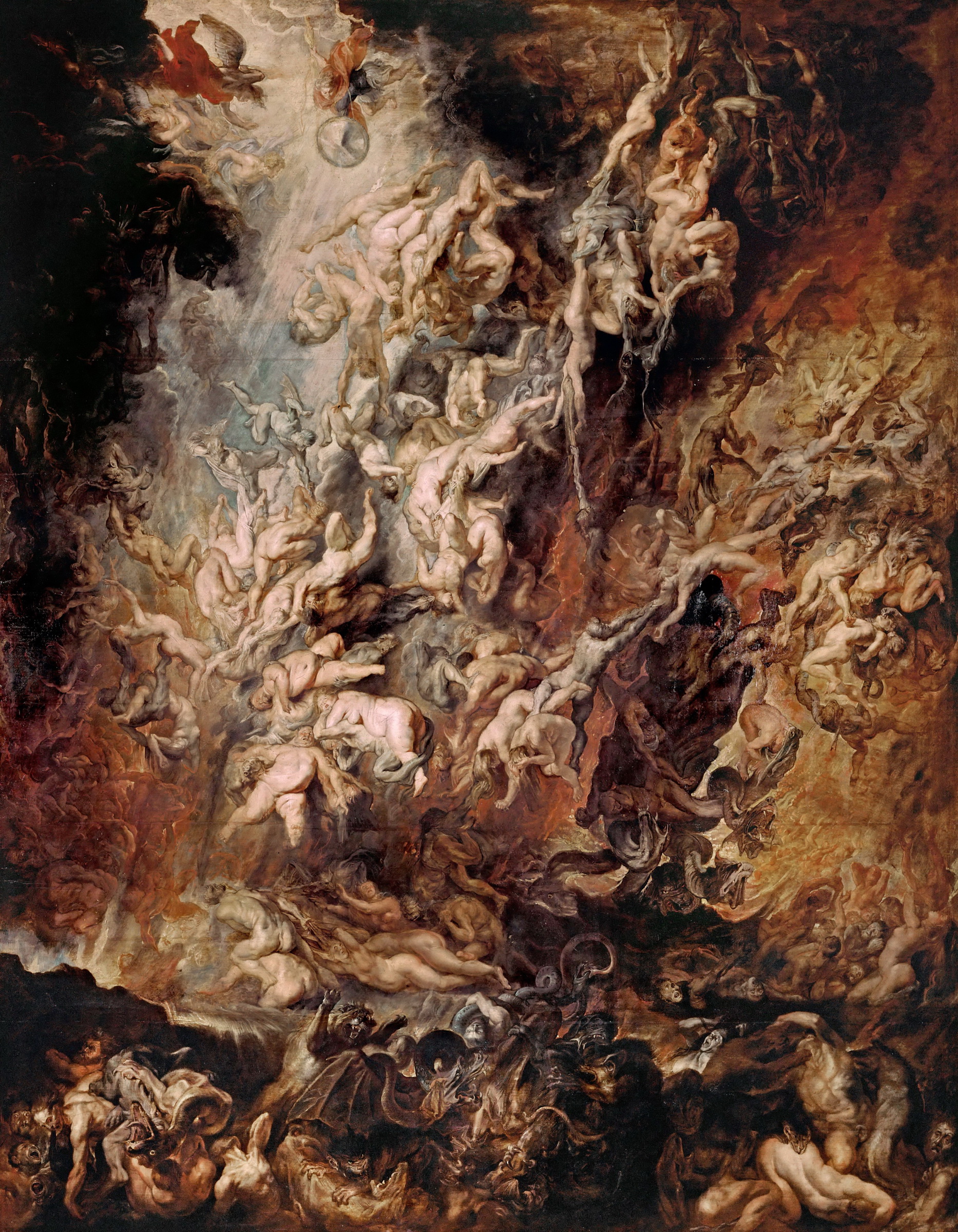 I can understand it's not always easy to get hold of paintings, but I think the exhibition would have been greatly improved if they focused on the paintings they could get and build it around that. So although there were lots of excellent paintings, it felt like I had walked into the middle of a film and missed the start. Having said that, splitting it into themes (e.g., 'compassion' for his religious art, 'lust', 'violence', etc) was a good idea, showing the range of Rubens work. The 'violence' paintings were particularly good, my favourite being 'The Fall of the Damned' (at least I think that was in the 'violence' room. Either way, it was cool). Sadly the original wasn't there (though the replacement they found at least gave a good idea), but with the magic of the internet I can reproduce Rubens' painting here.
RGA Aylesbury, (BJJ), Kev Capel, Aylesbury, Buckinghamshire, UK - 28/02/2015
Just a short one this visit, as my brother-in-law's flight getting delayed in the US, combined with a mortgage call they were dealing with, meant that the birthday plans for my younger niece got moved around. Rather than being able to train until 2pm, that meant I was needed back home for 12:00. Fortunately I'd already booked a private lesson, so could still get in about an hour of valuable training with Kev.
For this twentieth private lesson, I wanted to continue refining a path Kev had sent me down with an earlier private back in November 2013. I have always liked the tripod and sickle sweep combination from open guard, resulting in my open guard being built around those sweeps. My starting position was initially just sitting up with a stiff arm, based on Kev's lesson.
I've since been able to refine that, after buying Ryan Hall's Defensive Guard during a Black Friday sale. For me (and my friend Seymour agrees) it is easily Hall's best DVD set, which is saying something as his instructional sets are among the best on the market. I drilled my way through the DVDs with Chris last year and it's had a significant impact on how I approach seated guard.
Armed with the stuff I've learned from the DVDs, drilling with Chris and what I've been doing during open guard sparring, I ran through it with Kev. He suggested a few tweaks, plus some helpful additions for scenarios I haven't had much of an answer for (especially when they come in close to your shin). As a result, I've now got a coherent plan of action from open guard, based around that sitting guard position. As I'm finishing this write up on the 9th March a day after the GrappleThon, I've got details from rolling at that too (you can still support Equality Now and donate, here).
* Sit up, base an arm behind, grab their opposite collar. Keep a strong line through your shoulders and expand your chest, like Ryan Hall shows.
* Keep the foot of my raised knee outside theirs. If that knee starts to angle inwards, they can crush it down and pass, similar to the principle with knee shield passing.
* If they move to the outside of my raised knee foot, go for a collar drag and take the back. Remember to scoot around their near leg as you do.
* If they move to the inside, look for the loop choke, bringing your outside leg over their back as well. You'll tend to end up with the other knee pressing into their stomach, to clamp them in place as you go for the choke. Also, be sure to get the grip and pull down, rather than just flailing. I'm still tending to snatch at this choke rather than securing it properly, something I want to focus on.
* If they stay in the middle and with their head up, especially if they start to move backwards, ankle pick sweep them.
* If they come in close and they're standing, put your foot on their hip and move into the tripod/sickle combination.
 * If they come in close and start to sit with their knee on the ground, shift into shin-on-shin guard. I've never used this, but basically, just put your shin in front of their same side leg. With your other leg, push on their knee. That will normally make them post their arm. Grab their sleeve, then simultaneously pull on their sleeve and lift their shin for the sweep. Even better, pass their arm under their leg to your other hand. With your passing hand, grab around the back of their gi, then in combination with your shin lift, sweep them. It's much the same as the basic de la Riva sweep I was taught at GB Brum.
* If you try the shin-on-shin sweep but they put their arm out of range, continue reaching for that arm. Make them think you are going for that, then switch your legs so you are hooking their rear leg with your forward leg. Grab the side of their knee and drive forwards, a bit like an ankle grab sweep.
* If they stand up from the shin-on-shin, move into single leg x and double ankle grab sweep. That one I'll need to review, as I don't think I quite got it. From what I remember, you lift up with your shin, pull their leg around (almost as if you're pulling mount), bringing your other knee behind their leg, just above their knee. You're still holding the foot (and collar, ideally I think), so can lift your hips and drive forwards to knock them over.
Interestingly, Kev said he's moved away from the nappy grip he showed me back in 2013, as it isn't high percentage enough when you're up against somebody who gets wise to it. Nevertheless, it's still a useful last resort: I haven't generally had a lot of success with it myself, though it worked pretty well last time I was in Bucks last November. I also got it a few times at the GrappleThon, although that was mostly during the long flow roll with Mike, so he wasn't putting up much resistance.
_____________
As always, visiting my parents meant art, this time the day after training. My father took me along to the Rubens exhibition at the Royal Academy, which is titled 'Rubens and His Legacy'. I have to agree with some of the critics who reviewed the show. While I don't think it's fair to complain that there isn't much Rubens, given that "and his legacy" is part of the description, there is an issue with a number of the comparisons. An exhibition based around a work's influence on both contemporaneous and later artists is something I could enjoy, but it quickly becomes frustrating if the original influences being discussed aren't there in some form.
That was a recurring problem here. Often, the text would say "and the influence of blah blah painting by Rubens can be seen in the blah', but that original painting would simply be referred to by its name and date. Even if there was some small monochrome reproduction, that would have been something, but nothing at all means the comparison is meaningless (unless of course you already know the paintings in question well, so my father didn't mind). Sometimes there was a copy of the original painting, which was better than nothing but still disappointing. The rather sparse audioguide didn't help.
I can understand it's not always easy to get hold of paintings, but I think the exhibition would have been greatly improved if they focused on the paintings they could get and build it around that. So although there were lots of excellent paintings, it felt like I had walked into the middle of a film and missed the start. Having said that, splitting it into themes (e.g., 'compassion' for his religious art, 'lust', 'violence', etc) was a good idea, showing the range of Rubens work. The 'violence' paintings were particularly good, my favourite being 'The Fall of the Damned' (at least I think that was in the 'violence' room. Either way, it was cool). Sadly the original wasn't there (though the replacement they found at least gave a good idea), but with the magic of the internet I can reproduce Rubens' painting here. 22 November 2014
22/11/2014 - RGA Bucks | Closed Guard | Scissor & Combat Base Sweep
Class #604
RGA Aylesbury, (BJJ), Kev Capel, Aylesbury, Buckinghamshire, UK - 22/11/2014
I'm liking the pattern that I've settled into now. On a family birthday, I head up to my parents place on a Friday. I do some training at RGA Bucks the following morning, after which my parents treat me to an art exhibition and a posh meal in London. On the actual birthday I'll get yet more tasty food and catch up with my sister and nieces, before heading back home to Bristol. Awesome.
The art in question this time was perfectly targeted to my taste, a National Gallery exhibition dubbed Rembrandt: The Late Works. As my father is a member (one of the first, as that scheme is quite new at the National Gallery, compared to the Tate and Royal Academy which have had memberships for a long time), it didn't matter that all the tickets were sold out, as members can just wander up and show their cards.
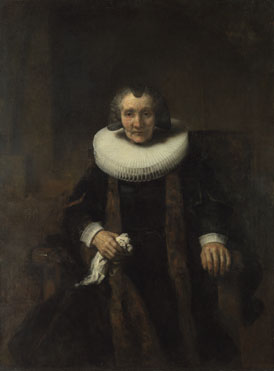 Like I've mentioned before, my favourite period of art is 1450-1700, especially Mannerism, the Northern Renaissance and the Dutch Golden Age. Rembrandt is arguably the pre-eminent example of that third category. Even so, £16 is rather steep, given that despite my habit of staring at paintings a really long time and going through every single caption and audio commentary, I was still done in less than two hours. Fortunately I didn't pay anything, but worth keeping in mind if you're paying full price. Though it did work out well, as I only had just under two hours before the restaurant booking anyway.
Strangely, there are no descriptive captions in the exhibition space. Instead, those are all in the booklet you get given before you go in. For me that's positive, as firstly it maximises space for exhibits, secondly it means you end up with an informative memento of your visit. Hence why I'm armed with way more facts about the exhibition than I would normally: in total, there are 91 exhibits (5 of which are from The National Gallery itself) across seven small rooms. Of those 91, 33 are oil paintings, the rest are etchings and ink drawings.
The audio guide (£3.50) was a little sparse for my liking. It covers 24 of the exhibits (19 paintings and five of the etchings/drawings). Given that there were only 33 paintings in total, I felt there could have been more (although to be fair, some of the commentary did cover two paintings at one and multiple drawings, plus there were a few "click play to hear more" moments). It wasn't as good as the Turner audio guide from last time, as there was far too much pretentious waffling about Rembrandt's 'love of humanity'.
By contrast, the Turner guide talked about the nitty gritty of constructing the painting, so materials, technique, framing and so forth, with some historical context. The Rembrandt guide wasn't devoid of that, but I found myself rolling my eyes at some of the pontificating about the painting's meaning. Pointing out references and providing convention is useful, such as how Margaretha de Geer's confident pose and commanding gaze might relate to her sharp business sense and formidable personality, as she took over her husband's company after his death. Talking about 'feeling' is rather less helpful.
 Any quibbles are forgotten when you're stood in front of the incredible paintings, which is of course why you bother going to the exhibition in the first place. Rembrandt is endlessly fascinating, achieving so much with just a few brushstrokes, innovating right up until his final painting. At first I was a bit disappointed that two-thirds of the exhibition was etchings and drawings, but here the audio guide became especially useful. It was enlightening to learn how Rembrandt had continued to fiddle with the original plate after he took prints from it. For example, when he got to fifty prints from one of them, there was quite a bit of wear to the plate. So he almost completely changed the scene before continuing to take prints.
There are a number of famous works in here too. Aside from the National Gallery masterpieces regular visits will already be familiar with, you get to see great works like 'The Conspiracy of the Batavians under Claudius Civilis' (loaned from The Royal Academy of Fine Arts in Sweden), 'The Jewish Bride' (from the Rijksmuseum) and 'The Anatomy Lesson of Dr Joan Deyman' (from the Amsterdam Museum, also recently discussed on a BBC Four documentary all about anatomy). So perhaps a bit overpriced, but if you've got the money and you're a Rembrandt fan, well worth checking out. It's on until January, IIRC.
________________________________________
Training at RGA Bucks focused on sweeps from guard, something I'm keen to improve. Kev teaches lots of technique on a Saturday (I don't know if that's a Saturday thing or if his classes are now normally like that), with three different options increasing in complexity. First off there's the basic scissor sweep. Start by getting a deep grip on their opposite collar, then with your other hand grab their same side elbow. Alternatively, you can grip their wrist and pin it to your chest.
 Rener makes a clear distinction here, as he suggests grabbing the sleeve if they are pushing into your bicep, grabbing the wrist if they are pushing into your chest. Either way, your intention – and this is true for lots of sweeps and reversals – is to prevent their ability to post with that hand. That makes for a straightforward test for whether or not what you’re using is effective: can they put their hand on the mat and prevent the sweep?
The next step is to put your foot on their same side hip (or the floor, depending on your preference) and shrimp out slightly, to make space to insert your knee. Slide that knee over, once again to that same side, until your shin is across their stomach. Hook your instep around their other side. Another option is to angle your knee towards their shoulder, which can act as an entry into the triangle.
A key detail is to then raise your elbows towards your head, so that you're pulling them onto your shin. The aim is to load them onto your leg, which in turn means that their weight is no longer on their legs. Extending your torso back, rather than remaining curled up, may help that weight transfer.
 This should make them lighter: drop your other leg to the mat, chopping underneath them as you bring your hooking leg over, rolling into mount. Ryron has two handy tips here. Firstly, use the heel of your hooking foot to swivel and clamp to their side, becoming a leverage point to assist your shift into mount. Secondly, bring the elbow of your sleeve gripping arm further backwards, to put your opponent even more off balance.
The sweep shouldn't require much strength, so if you're having to strain, you probably haven't pulled them forward enough first. You can also get this sweep if they raise a knee up, which is the classic way to teach it. Drop your same side knee towards their opposite hip, then continue the sweep as above. If you're finding that when you try and chop their leg they simply step over it, raise your chopping leg slightly. You might even try hooking behind their knee with it, as that will immobilise the leg, although it may also make it more difficult to get a smooth chopping motion.
If for some reason you're having trouble chopping out their leg, you can switch to a push sweep, which is very similar to the scissor sweep. Everything is the same, except that you don't chop the leg. Instead, move your head back in line with theirs, so your torso is square on, then slide what would have been your chopping leg backwards. You now have room to use the foot of that leg to push into the side of their knee. Tracing a semi-circle, you're then going to shove their knee straight back, which will knock them off balance, whereupon you can roll through to mount as before.
 That was followed by the reverse scissor sweep, which I taught a class on a few years back. When you try to hit the scissor sweep, you may find that they shift their weight to block it, or try to grab your knee. Either way, that means you can then change to a reverse scissor sweep instead. Your shin is either across their stomach for the scissor sweep, or as Kev recommends, going higher and angling the knee up into their chest. You've also got a grip on the collar as well as their same side sleeve. Rather than pulling them onto you and chopping out their leg, switch your sleeve grip to their opposite sleeve, then yank it across their body. The elbow of your gripping arm can be used for base.
Next, release your collar grip arm and reach around to their opposite armpit, bringing them in tight. As when you're trying to take the back, you need to press your chest into the back of the arm you pulled across their body, so they can't pull it back out. On the same side as the arm you've trapped, put your back on the mat, which should enable you to fling them over in that direction with your braced leg (this should feel effortless: if you're straining, then adjust, as without good leverage you could hurt yourself) and move into side control. You should also end up in a great position to cross-face.
John Will uses a slight variation, on his Mastering Sweeps DVD (which I bought from him at his excellent seminar a few years ago). Rather than gripping the collar and sleeve, he advises gripping and then pushing your palms inwards, rather than leaving any slack. This makes it a bit easier to switch their arm to your other hand, as you already have a grip, rather than having to use your collar grabbing arm. Will comes up on one arm, then as he falls back to lift them, he switches the posting hand to instead reach through their arm. This is so he can end up reaching past their armpit into the collar.
Finally, Kev showed us a nifty option against combat base. Sit up, then reach your arm on the outside of their base, going under their raised leg. Feed their far collar/lapel to that reaching hand. That is enough to sweep them, but to make it easier, you're going to break their balance. If they are driving in towards you, pushing your inside foot to their same side hip/knee. To knock them forwards, kick that leg out, which is normally going to make them base on their far arm. You can now grab that arm and drive for the sweep. Put your inside knee to their hip, cutting their knee out of the way, then slide through to mount.
I had the pleasure of being smashed by a big purple in specific sparring, and that was with him being nice, waiting for me to react. It was from guard, where I am still weak: I need to keep looking for angles and pushing for some kind of offence. On top I was trying to keep my balance and failing. Each time I went for the kneeling break, he easily broke down my posture or simply sat up, whether or not I had an arm into the chest to try and keep him down.
He also got a really tight triangle, though strangely the choke wasn't on (he eventually rolled me into mount with it still in place, so we reset). I think it could be something silly, in that I'm just a bit small for his frame! My neck was a little sore: I'm still not sure on the best balance between staying safe, while also helping your partner by not tapping too early. Neck was ok later, so hopefully I judged that right.
Later on, I though about that again, as I overheard Kev giving a pep talk to a younger student. That teenager had gotten slightly injured earlier in class. Kev made the excellent point that sometimes you have to let stronger people have certain things. It's not worth the injury risk to strain against somebody way more powerful than you, so give it up, looking to make up any lost ground later. Something I always try to keep in mind, but well worth reminding yourself, especially if you're a smaller grappler (like me and indeed Kev, so he's speaking from long experience).
In free sparring I continued having issues from guard with my first partner, a strong white belt, again because I'm ending up too square on. I'm still failing to angle off in closed guard and I need to improve that Relson grip, so they can't just swing their head under and out. I have a clear goal from most positions now, but closed guard keeps getting stuck into a repetitive cycle of break posture, grip, they get posture back, break posture, grip, etc. Or they manage to pass. The gi tail grip over the back is another handy goal, so I should be trying that more, though again I'm not angling off properly when I do get it.
Update November 2014: Thanks to lots of drilling with Chris back in Bristol, I think I may have finally cracked it in regards to my guard approach. We'll see how that goes, but the drilling has been massively useful so far! :)
The next round went better, with a blue belt, as I finally managed to mount some offence (though only once it moved into open guard, my closed guard was equally stale). It's also the first time I can think of that Kev's mawashi grip worked well for me, resulting in a few sweeps. The difference was an extremely basic bit of advice Kev mentioned when I said how I'd had trouble getting much off the grip: sit up. I realised that I've been trying to do it with my back too near the ground. Sitting up made it much more effective.
I managed to land the north-south kimura and mount was working well for me too, landing a few cross-chokes. I'm teaching the cross-choke on Monday, so it was very helpful to hit it a few times in sparring, in terms of establishing what elements of the technique are important to get it to function (for me at least: one of the best things about teaching is that it forces you to think about doing a technique using a body other than yours). Of course, this was against less experienced people who aren't too much bigger than me, but still handy to practice.
It was also cool to meet another of my blog readers: if he's reading this, as you asked about the details for my club, it's called Artemis BJJ. I teach in two places. The main one is Bristol Sports Centre/MyGym in the centre of town, over in St Paul's just off Portland Square near Cabot Circus. I also run a class in Kingswood, on Thursday, with an open mat on Saturday. Everything is up on the website, here - hope to see you and/or your Bristol family on the mats some time! :D
RGA Aylesbury, (BJJ), Kev Capel, Aylesbury, Buckinghamshire, UK - 22/11/2014
I'm liking the pattern that I've settled into now. On a family birthday, I head up to my parents place on a Friday. I do some training at RGA Bucks the following morning, after which my parents treat me to an art exhibition and a posh meal in London. On the actual birthday I'll get yet more tasty food and catch up with my sister and nieces, before heading back home to Bristol. Awesome.
The art in question this time was perfectly targeted to my taste, a National Gallery exhibition dubbed Rembrandt: The Late Works. As my father is a member (one of the first, as that scheme is quite new at the National Gallery, compared to the Tate and Royal Academy which have had memberships for a long time), it didn't matter that all the tickets were sold out, as members can just wander up and show their cards.
Strangely, there are no descriptive captions in the exhibition space. Instead, those are all in the booklet you get given before you go in. For me that's positive, as firstly it maximises space for exhibits, secondly it means you end up with an informative memento of your visit. Hence why I'm armed with way more facts about the exhibition than I would normally: in total, there are 91 exhibits (5 of which are from The National Gallery itself) across seven small rooms. Of those 91, 33 are oil paintings, the rest are etchings and ink drawings.
The audio guide (£3.50) was a little sparse for my liking. It covers 24 of the exhibits (19 paintings and five of the etchings/drawings). Given that there were only 33 paintings in total, I felt there could have been more (although to be fair, some of the commentary did cover two paintings at one and multiple drawings, plus there were a few "click play to hear more" moments). It wasn't as good as the Turner audio guide from last time, as there was far too much pretentious waffling about Rembrandt's 'love of humanity'.
By contrast, the Turner guide talked about the nitty gritty of constructing the painting, so materials, technique, framing and so forth, with some historical context. The Rembrandt guide wasn't devoid of that, but I found myself rolling my eyes at some of the pontificating about the painting's meaning. Pointing out references and providing convention is useful, such as how Margaretha de Geer's confident pose and commanding gaze might relate to her sharp business sense and formidable personality, as she took over her husband's company after his death. Talking about 'feeling' is rather less helpful.

There are a number of famous works in here too. Aside from the National Gallery masterpieces regular visits will already be familiar with, you get to see great works like 'The Conspiracy of the Batavians under Claudius Civilis' (loaned from The Royal Academy of Fine Arts in Sweden), 'The Jewish Bride' (from the Rijksmuseum) and 'The Anatomy Lesson of Dr Joan Deyman' (from the Amsterdam Museum, also recently discussed on a BBC Four documentary all about anatomy). So perhaps a bit overpriced, but if you've got the money and you're a Rembrandt fan, well worth checking out. It's on until January, IIRC.
________________________________________
Training at RGA Bucks focused on sweeps from guard, something I'm keen to improve. Kev teaches lots of technique on a Saturday (I don't know if that's a Saturday thing or if his classes are now normally like that), with three different options increasing in complexity. First off there's the basic scissor sweep. Start by getting a deep grip on their opposite collar, then with your other hand grab their same side elbow. Alternatively, you can grip their wrist and pin it to your chest.
 Rener makes a clear distinction here, as he suggests grabbing the sleeve if they are pushing into your bicep, grabbing the wrist if they are pushing into your chest. Either way, your intention – and this is true for lots of sweeps and reversals – is to prevent their ability to post with that hand. That makes for a straightforward test for whether or not what you’re using is effective: can they put their hand on the mat and prevent the sweep?
The next step is to put your foot on their same side hip (or the floor, depending on your preference) and shrimp out slightly, to make space to insert your knee. Slide that knee over, once again to that same side, until your shin is across their stomach. Hook your instep around their other side. Another option is to angle your knee towards their shoulder, which can act as an entry into the triangle.
A key detail is to then raise your elbows towards your head, so that you're pulling them onto your shin. The aim is to load them onto your leg, which in turn means that their weight is no longer on their legs. Extending your torso back, rather than remaining curled up, may help that weight transfer.
 This should make them lighter: drop your other leg to the mat, chopping underneath them as you bring your hooking leg over, rolling into mount. Ryron has two handy tips here. Firstly, use the heel of your hooking foot to swivel and clamp to their side, becoming a leverage point to assist your shift into mount. Secondly, bring the elbow of your sleeve gripping arm further backwards, to put your opponent even more off balance.
The sweep shouldn't require much strength, so if you're having to strain, you probably haven't pulled them forward enough first. You can also get this sweep if they raise a knee up, which is the classic way to teach it. Drop your same side knee towards their opposite hip, then continue the sweep as above. If you're finding that when you try and chop their leg they simply step over it, raise your chopping leg slightly. You might even try hooking behind their knee with it, as that will immobilise the leg, although it may also make it more difficult to get a smooth chopping motion.
If for some reason you're having trouble chopping out their leg, you can switch to a push sweep, which is very similar to the scissor sweep. Everything is the same, except that you don't chop the leg. Instead, move your head back in line with theirs, so your torso is square on, then slide what would have been your chopping leg backwards. You now have room to use the foot of that leg to push into the side of their knee. Tracing a semi-circle, you're then going to shove their knee straight back, which will knock them off balance, whereupon you can roll through to mount as before.
That was followed by the reverse scissor sweep, which I taught a class on a few years back. When you try to hit the scissor sweep, you may find that they shift their weight to block it, or try to grab your knee. Either way, that means you can then change to a reverse scissor sweep instead. Your shin is either across their stomach for the scissor sweep, or as Kev recommends, going higher and angling the knee up into their chest. You've also got a grip on the collar as well as their same side sleeve. Rather than pulling them onto you and chopping out their leg, switch your sleeve grip to their opposite sleeve, then yank it across their body. The elbow of your gripping arm can be used for base.Next, release your collar grip arm and reach around to their opposite armpit, bringing them in tight. As when you're trying to take the back, you need to press your chest into the back of the arm you pulled across their body, so they can't pull it back out. On the same side as the arm you've trapped, put your back on the mat, which should enable you to fling them over in that direction with your braced leg (this should feel effortless: if you're straining, then adjust, as without good leverage you could hurt yourself) and move into side control. You should also end up in a great position to cross-face.
John Will uses a slight variation, on his Mastering Sweeps DVD (which I bought from him at his excellent seminar a few years ago). Rather than gripping the collar and sleeve, he advises gripping and then pushing your palms inwards, rather than leaving any slack. This makes it a bit easier to switch their arm to your other hand, as you already have a grip, rather than having to use your collar grabbing arm. Will comes up on one arm, then as he falls back to lift them, he switches the posting hand to instead reach through their arm. This is so he can end up reaching past their armpit into the collar.
Finally, Kev showed us a nifty option against combat base. Sit up, then reach your arm on the outside of their base, going under their raised leg. Feed their far collar/lapel to that reaching hand. That is enough to sweep them, but to make it easier, you're going to break their balance. If they are driving in towards you, pushing your inside foot to their same side hip/knee. To knock them forwards, kick that leg out, which is normally going to make them base on their far arm. You can now grab that arm and drive for the sweep. Put your inside knee to their hip, cutting their knee out of the way, then slide through to mount.
I had the pleasure of being smashed by a big purple in specific sparring, and that was with him being nice, waiting for me to react. It was from guard, where I am still weak: I need to keep looking for angles and pushing for some kind of offence. On top I was trying to keep my balance and failing. Each time I went for the kneeling break, he easily broke down my posture or simply sat up, whether or not I had an arm into the chest to try and keep him down.
He also got a really tight triangle, though strangely the choke wasn't on (he eventually rolled me into mount with it still in place, so we reset). I think it could be something silly, in that I'm just a bit small for his frame! My neck was a little sore: I'm still not sure on the best balance between staying safe, while also helping your partner by not tapping too early. Neck was ok later, so hopefully I judged that right.
Later on, I though about that again, as I overheard Kev giving a pep talk to a younger student. That teenager had gotten slightly injured earlier in class. Kev made the excellent point that sometimes you have to let stronger people have certain things. It's not worth the injury risk to strain against somebody way more powerful than you, so give it up, looking to make up any lost ground later. Something I always try to keep in mind, but well worth reminding yourself, especially if you're a smaller grappler (like me and indeed Kev, so he's speaking from long experience).
In free sparring I continued having issues from guard with my first partner, a strong white belt, again because I'm ending up too square on. I'm still failing to angle off in closed guard and I need to improve that Relson grip, so they can't just swing their head under and out. I have a clear goal from most positions now, but closed guard keeps getting stuck into a repetitive cycle of break posture, grip, they get posture back, break posture, grip, etc. Or they manage to pass. The gi tail grip over the back is another handy goal, so I should be trying that more, though again I'm not angling off properly when I do get it.
Update November 2014: Thanks to lots of drilling with Chris back in Bristol, I think I may have finally cracked it in regards to my guard approach. We'll see how that goes, but the drilling has been massively useful so far! :)
The next round went better, with a blue belt, as I finally managed to mount some offence (though only once it moved into open guard, my closed guard was equally stale). It's also the first time I can think of that Kev's mawashi grip worked well for me, resulting in a few sweeps. The difference was an extremely basic bit of advice Kev mentioned when I said how I'd had trouble getting much off the grip: sit up. I realised that I've been trying to do it with my back too near the ground. Sitting up made it much more effective.
I managed to land the north-south kimura and mount was working well for me too, landing a few cross-chokes. I'm teaching the cross-choke on Monday, so it was very helpful to hit it a few times in sparring, in terms of establishing what elements of the technique are important to get it to function (for me at least: one of the best things about teaching is that it forces you to think about doing a technique using a body other than yours). Of course, this was against less experienced people who aren't too much bigger than me, but still handy to practice.
It was also cool to meet another of my blog readers: if he's reading this, as you asked about the details for my club, it's called Artemis BJJ. I teach in two places. The main one is Bristol Sports Centre/MyGym in the centre of town, over in St Paul's just off Portland Square near Cabot Circus. I also run a class in Kingswood, on Thursday, with an open mat on Saturday. Everything is up on the website, here - hope to see you and/or your Bristol family on the mats some time! :D
01 November 2014
01/11/2014 - RGA Bucks | The Back | Turtle Turnovers & Crucifix
Class #601
RGA Aylesbury, (BJJ), Kev Capel, Aylesbury, Buckinghamshire, UK - 01/11/2014
This week marks another family birthday, which means I get to enjoy three of the best things in life: my family's hospitality, great art and jiu jitsu (if you understandably only care about the third, click here). As I happened to be in London for Friday afternoon, I took advantage of the numerous tours offered by the Tate Britain.
 The first of those tours was digital, via an app on my phone. The Tate Britain have a '500 Years of British Art' tour available on the app store, for the excellent price of free. Its intention is to walk you through a representative selection of another representative selection. The Tate has curated several rooms to display a chronological circuit of British Art. Handily, the period covered by each room glints at you from the floor, though sometimes it requires a bit of wandering to work out which exit has the relevant number.
You get around three paintings discussed per room, between one to two minutes each time. Occasionally there is some extra content, like a contemporary artist discussing the work, or some historical background. For example, an expert on 18th century ballet to flesh out the pose struck by Giovanna Baccelli in Gainsborough's famous portrait, or Damien Hirst's opinion on 'Three Studies for Figures at the Base of a Crucifixion' by Francis Bacon.
That commentary is quite good, but there is an annoying downside to the audio guide. Normally when you play audio, you can switch off your screen. Not with this app. It insists on keeping your screen on, a major battery drain if you're a fellow user of phones in the 'ridiculously-huge' category. A less irksome problem is that this app is massive (158mb), but that's easily solved by downloading it over WiFi before you get to the gallery. There is apparently a Tate wifi network, but I couldn't get it to work last time I tried.
The guide shows you a full-screen picture of the painting when it plays the audio snippet, so you could quite happily do a tour from the comfort of your phone (though of course you're missing out on all the cool details you get from seeing the painting in person. The texture of the paint, the swerve of brush strokes, the individual flecks of pigment close to your eye).
I also joined a couple of the guided tours (again entirely free), which are mostly on the hour. I've been on the 15:00 tour that focuses on Turner before, so as I'm feeling rather full of Turner (perhaps due to the recent film, there's been lots on TV and I went to the Late Turner exhibition during my last visit), I opted for the 14:00 and 16:00 tours instead.
The 14:00 tour is a general one, covering those same chronological rooms as the app. Guides will vary in quality, but the knowledgeable and efficient woman leading it today was good. She checked with the group if they wanted to cover anything pre-Victorian, deciding to therefore concentrate on the 19th and early 20th century when nobody made much of a response. It was interesting to learn more about the Pre-Raphaelite Brotherhood (a rare exception to the normally narrow range of my art taste, which is almost entirely 1450-1700), followed by an examination of several painters I've conveniently enjoyed via BBC Four recently (Andrew Graham-Dixon did a good series on war artists: it was cool to see the Bombergs, Sickerts and Spencers in situ. Though I can't remember who did the Stanley Spencer documentary: that was earlier, but quite possibly Graham-Dixon again as he does a lot of the BBC Four art presenting).
Also, chatting to a friend afterwards, she asked me if I had any favourite paintings from the Tate. That led to an excellent couple of hours wandering around the Tate website: I hadn't realised just how fantastic they are on the digital front, with lots of interactivity and info. Hence why when somebody asks me that now, I can simply post a link. ;)
_____________________
Getting on to the jiu jitsu, Kev's Saturday class at RGA Bucks focused on attacking the back, a topic still fresh in my mind due to September. He started off with two simple attacks from the back, the rear naked choke and what I refer to as the sliding choke. You reach over their shoulder and grab high on their opposite collar, while your second hand slides past their armpit and again grasps the far collar. Pull the collar tight around the neck with your shoulder arm, while your armpit arm pulls its collar down.
That then moved into several options against the turtle. First off was a basic turnover, reaching underneath them for their far collar, a bit under their chest. Be careful of your elbow as you don't want them to hook it and roll you. Should they get some kind of grip on it, you can lean down and make yourselft heavy. If that's not enough, you can move all the way round to the other side and block their roll with your knee.
Assuming you avoid their grip, pull your elbow back. Sit back on the opposite side, then roll them over into back control. Should you have any trouble getting the second hook in place, use what Marcelo Garcia calls a 'hip extension' to make that available.
 Next up was something I recognised from Levo's video as the three-quarter nelson, this time used for a turnover. Secure that grip, with one arm behind their head and the other under their armpit, linking the two with a gable grip. On the side of the gable grip, wedge the knee nearest their head (if you turned and had both knees against them) behind their knee. Shove your knee back towards their legs, using your three-quarter nelson to turn them. At this point you can pull on their shoulder, then adjust your other arm into a single-arm choke.
To finish, Kev went through a crucifix entry. He drives the knee in behind their elbow as normal, flaring it out and trapping their arm between his legs. Controlling their other wrist with your same side hand, you can then roll over their wrist-side shoulder to move into the face-up crucifix. It's a similar motion to when you roll for the reverse omoplata on the near shoulder, except that you're doing that tight turn over the far shoulder instead.
To finish, Kev demonstrated a straight armbar from the kneeling crucifix. I find it hard to get the right spot for those, but Kev offered the handy pointer during his demo that your hips go by their shoulder. Sprawl from there and press down. Avoid moving too far back or you'll lose their elbow and enable them to free their arm. As long as you don't do that, their typical escape is to curl their arm back, which gives you the opening to roll into the crucifix or the reverse omoplata.
Sparring is one of the main benefits I get from regularly heading back to my home club. At RGA Bucks, there are lots of higher belts to smash me, not to mention fellow purples equally happy to crush, along with loads of tough blue belts ready to squish me too. I rolled with a couple of blues, a purple, a brown and a black belt, so got to experience the full range of being squashed under side control and people attacking my back.
 It seems those two positions are invariably where I end up when I spar anybody bigger and/or better than me, so I'm relatively comfortable. On the plus side, I wasn't relying as heavily on the running escape, trying to switch to the stiff-arm and attempting some standard bridge and shrimp escapes from under side control. As always Kev got into north-south, so I had a chance to try the escapes from last Saturday. I couldn't get into position for the head push, but did vaguely try the knee into the arm. I could only get one arm, but worth trying again. I also tried to get into position with a blue belt later, but they switched back to side control before I had a chance to go for a north-south escape.
I also finally remembered to go for that double-trap of the arms when they're on my back, clamping their armpit arm with my elbow and using my hand to grab their other sleeve. Although I was fighting off a deep choke during my last roll, mostly by pushing on the elbow: I doubt I would have gotten out if I hadn't had a strength advantage.
Back escapes have been a major weakness for me, so I'm pleased I felt a bit more confident there today, if only slightly. My other big weakness was still very much in evidence, the guard. I'm getting passed way too easily (almost every time, it was my own favourite pass, the knee cut). I have trouble keeping some kind of control over people when they're in my open guard. I can entangle one side slightly, but not enough. I tried the mawashi grip a few times, but didn't establish it properly. Going for that modified spider guard was useful as a goal, though it didn't yield any success today. Fortunately, I'll get to think long and hard about guard in a couple of months, as we'll be back into the three months of different guards at Artemis BJJ in a little while.
Today I also received what may be the best compliment I've ever had after sparring: "You smell like christmas." I suspect that's because I was wearing my Datsusara HCG-03, which has experienced the magic of Georgette's washing machine. That magic is strong, as it appears to have lingered on two years after my Datsusara passed through her detergent (at least that's what she claims it is: I remain convinced it can't be anything so mundane. Must all be rainbows and unicorns). Unless she meant it in more of a Trading Places "smell like xmas" sense, so booze and wee. I'll stick with my first thought. ;D
RGA Aylesbury, (BJJ), Kev Capel, Aylesbury, Buckinghamshire, UK - 01/11/2014
This week marks another family birthday, which means I get to enjoy three of the best things in life: my family's hospitality, great art and jiu jitsu (if you understandably only care about the third, click here). As I happened to be in London for Friday afternoon, I took advantage of the numerous tours offered by the Tate Britain.
The first of those tours was digital, via an app on my phone. The Tate Britain have a '500 Years of British Art' tour available on the app store, for the excellent price of free. Its intention is to walk you through a representative selection of another representative selection. The Tate has curated several rooms to display a chronological circuit of British Art. Handily, the period covered by each room glints at you from the floor, though sometimes it requires a bit of wandering to work out which exit has the relevant number.You get around three paintings discussed per room, between one to two minutes each time. Occasionally there is some extra content, like a contemporary artist discussing the work, or some historical background. For example, an expert on 18th century ballet to flesh out the pose struck by Giovanna Baccelli in Gainsborough's famous portrait, or Damien Hirst's opinion on 'Three Studies for Figures at the Base of a Crucifixion' by Francis Bacon.
That commentary is quite good, but there is an annoying downside to the audio guide. Normally when you play audio, you can switch off your screen. Not with this app. It insists on keeping your screen on, a major battery drain if you're a fellow user of phones in the 'ridiculously-huge' category. A less irksome problem is that this app is massive (158mb), but that's easily solved by downloading it over WiFi before you get to the gallery. There is apparently a Tate wifi network, but I couldn't get it to work last time I tried.
The guide shows you a full-screen picture of the painting when it plays the audio snippet, so you could quite happily do a tour from the comfort of your phone (though of course you're missing out on all the cool details you get from seeing the painting in person. The texture of the paint, the swerve of brush strokes, the individual flecks of pigment close to your eye).
I also joined a couple of the guided tours (again entirely free), which are mostly on the hour. I've been on the 15:00 tour that focuses on Turner before, so as I'm feeling rather full of Turner (perhaps due to the recent film, there's been lots on TV and I went to the Late Turner exhibition during my last visit), I opted for the 14:00 and 16:00 tours instead.
The 14:00 tour is a general one, covering those same chronological rooms as the app. Guides will vary in quality, but the knowledgeable and efficient woman leading it today was good. She checked with the group if they wanted to cover anything pre-Victorian, deciding to therefore concentrate on the 19th and early 20th century when nobody made much of a response. It was interesting to learn more about the Pre-Raphaelite Brotherhood (a rare exception to the normally narrow range of my art taste, which is almost entirely 1450-1700), followed by an examination of several painters I've conveniently enjoyed via BBC Four recently (Andrew Graham-Dixon did a good series on war artists: it was cool to see the Bombergs, Sickerts and Spencers in situ. Though I can't remember who did the Stanley Spencer documentary: that was earlier, but quite possibly Graham-Dixon again as he does a lot of the BBC Four art presenting).
Also, chatting to a friend afterwards, she asked me if I had any favourite paintings from the Tate. That led to an excellent couple of hours wandering around the Tate website: I hadn't realised just how fantastic they are on the digital front, with lots of interactivity and info. Hence why when somebody asks me that now, I can simply post a link. ;)
_____________________
Getting on to the jiu jitsu, Kev's Saturday class at RGA Bucks focused on attacking the back, a topic still fresh in my mind due to September. He started off with two simple attacks from the back, the rear naked choke and what I refer to as the sliding choke. You reach over their shoulder and grab high on their opposite collar, while your second hand slides past their armpit and again grasps the far collar. Pull the collar tight around the neck with your shoulder arm, while your armpit arm pulls its collar down.
That then moved into several options against the turtle. First off was a basic turnover, reaching underneath them for their far collar, a bit under their chest. Be careful of your elbow as you don't want them to hook it and roll you. Should they get some kind of grip on it, you can lean down and make yourselft heavy. If that's not enough, you can move all the way round to the other side and block their roll with your knee.
Assuming you avoid their grip, pull your elbow back. Sit back on the opposite side, then roll them over into back control. Should you have any trouble getting the second hook in place, use what Marcelo Garcia calls a 'hip extension' to make that available.
 Next up was something I recognised from Levo's video as the three-quarter nelson, this time used for a turnover. Secure that grip, with one arm behind their head and the other under their armpit, linking the two with a gable grip. On the side of the gable grip, wedge the knee nearest their head (if you turned and had both knees against them) behind their knee. Shove your knee back towards their legs, using your three-quarter nelson to turn them. At this point you can pull on their shoulder, then adjust your other arm into a single-arm choke.
To finish, Kev went through a crucifix entry. He drives the knee in behind their elbow as normal, flaring it out and trapping their arm between his legs. Controlling their other wrist with your same side hand, you can then roll over their wrist-side shoulder to move into the face-up crucifix. It's a similar motion to when you roll for the reverse omoplata on the near shoulder, except that you're doing that tight turn over the far shoulder instead.
To finish, Kev demonstrated a straight armbar from the kneeling crucifix. I find it hard to get the right spot for those, but Kev offered the handy pointer during his demo that your hips go by their shoulder. Sprawl from there and press down. Avoid moving too far back or you'll lose their elbow and enable them to free their arm. As long as you don't do that, their typical escape is to curl their arm back, which gives you the opening to roll into the crucifix or the reverse omoplata.
Sparring is one of the main benefits I get from regularly heading back to my home club. At RGA Bucks, there are lots of higher belts to smash me, not to mention fellow purples equally happy to crush, along with loads of tough blue belts ready to squish me too. I rolled with a couple of blues, a purple, a brown and a black belt, so got to experience the full range of being squashed under side control and people attacking my back.
 It seems those two positions are invariably where I end up when I spar anybody bigger and/or better than me, so I'm relatively comfortable. On the plus side, I wasn't relying as heavily on the running escape, trying to switch to the stiff-arm and attempting some standard bridge and shrimp escapes from under side control. As always Kev got into north-south, so I had a chance to try the escapes from last Saturday. I couldn't get into position for the head push, but did vaguely try the knee into the arm. I could only get one arm, but worth trying again. I also tried to get into position with a blue belt later, but they switched back to side control before I had a chance to go for a north-south escape.
I also finally remembered to go for that double-trap of the arms when they're on my back, clamping their armpit arm with my elbow and using my hand to grab their other sleeve. Although I was fighting off a deep choke during my last roll, mostly by pushing on the elbow: I doubt I would have gotten out if I hadn't had a strength advantage.
Back escapes have been a major weakness for me, so I'm pleased I felt a bit more confident there today, if only slightly. My other big weakness was still very much in evidence, the guard. I'm getting passed way too easily (almost every time, it was my own favourite pass, the knee cut). I have trouble keeping some kind of control over people when they're in my open guard. I can entangle one side slightly, but not enough. I tried the mawashi grip a few times, but didn't establish it properly. Going for that modified spider guard was useful as a goal, though it didn't yield any success today. Fortunately, I'll get to think long and hard about guard in a couple of months, as we'll be back into the three months of different guards at Artemis BJJ in a little while.
Today I also received what may be the best compliment I've ever had after sparring: "You smell like christmas." I suspect that's because I was wearing my Datsusara HCG-03, which has experienced the magic of Georgette's washing machine. That magic is strong, as it appears to have lingered on two years after my Datsusara passed through her detergent (at least that's what she claims it is: I remain convinced it can't be anything so mundane. Must all be rainbows and unicorns). Unless she meant it in more of a Trading Places "smell like xmas" sense, so booze and wee. I'll stick with my first thought. ;D
05 July 2014
05/07/2014 - RGA Aylesbury (Knee Cut & Knee Shield Pass)
Class #578
RGA Aylesbury, (BJJ), Kev Capel, Aylesbury, Buckinghamshire, UK - 05/07/2014
It's another family birthday, which means I'm returning not just to my family home, but to my jiu jitsu home as well, up in Aylesbury at RGA Bucks. Kev began with a very familiar drilling sequence: it's the same one I've been teaching for several years now, after Kev taught it to me earlier. That begins with them stepping to the level of your hip, then you recover your guard by shrimping and bringing your outside leg over to hook, pulling yourself square on to them.
 The next step is to do a running escape type hip swing, although I normally do this from knee on belly; Kev did it from the same position as the previous technique. Useful variation to know, as then I don't have to explain what knee on belly is. Although if somebody doesn't know what knee on belly is, that could indicate they are too new to easily perform this drill. I'm still not sure if it counts as an advanced move or if it is suitable for beginners.
That same question sprang to mind with the new drill (or at least, new to me, as I can't remember having seen it before, though it's entirely possible I've seen it in an earlier Kev class). Again they have passed to the level of your hip. Bring your outside leg over, putting your shin on their near side thigh. That leg is going to stay in place for the rest of the drill.
With your nearest hand, reach to their far leg: you can either hook behind or grab the trouser leg. Raise your hips and swivel, using your shin on their thigh as the pivot point. Keep spinning until you return to a guard position in front of them. You'll probably need to pull yourself across a little with that gripping/hooking hand.
As is common to Kev's classes (and completely alien to mine), he added in a couple of takedowns. Like I've said before, Kev is not only a champion BJJ black belt, he's got a judo black belt as well. The takedown option he showed was directly in response to some typically dubious rule changes by the IBJJF (fortunately there are many other competition companies you can go to, though the IBJJF is influential). I haven't competed since 2007, so sometimes forget the impact that IBJJF rule changes can have.
The one pertinent to this technique is that now when you are being single legged and they have their head on the outsie, you apparently can no longer do the obvious counter, dropping back and rolling them over your head with your trapped leg (in judo, this is a 'sumi-gaeshi', I think). That means that when somebody tries to single leg you, they can feel a lot less in danger if they put their head on the outside than before.
Due to that rule, it means the takedown becomes easier. You start with a Russian grip (I think that's what it is called), where you are grabbing one of their arms with both of yours, a bit like you would in an armdrag. Your first hand is holding their wrist, the other is grabbing higher up and underneath their arm. When you get that grip, they will often pull their arm out.
Immediately drop and grab their leg instead, made vulnerable due to their sudden pulling back of their arm and accompanying shift in balance. Once you've grabbed it with both your arms, reach underneath their leg and grab some marterial, either their gi or their belt. Pull down on that like it was an old-style toilet chain and drop your hips, knocking them to the floor and putting you in a good guard passing position.
Alternatively, if they don't pull their arm away, dig your shoulder in behind theirs (getting the sweet spot isn't easy: it's roughly on the bottom of their shoulder blade on the side nearest to you, I think). Drop your hips and angle your body to knock them down, kicking their supporting leg away to make sure. I had some trouble getting the right angle: I think you're going a little forwards, but I'm not sure.
 Moving on to the fun part with groundwork, Kev picked a couple of passes that relate to both half guard and open guard. The first was when they are in a sort of open half guard, with details on the knee cut that would also apply to a standard open guard. Grab their collar and follow it in with your body. You want to make sure you are not giving them any space to insert their knee under your arm as you do this. Also grip their knee and shove it to the mat, driving your own knee over their trapped shin.
On the other side, try to get an underhook: you may have to raise up slightly. The aim is to get your shoulder under theirs, so they can't pummel to get their own underhook. If the underhook isn't there, a good plan b is to drop the elbow of the collar-gripping arm and put your weight behind that. Use your head to push theirs out the way and with your free arm, pull up on their same-side elbow. This is better than pulling up on the sleeve, because if you grab the sleeve, their elbow is still potentially a risk (e.g., they can try to pop your knee off with their elbow, use it as a base point for shrimping, make space, etc). Slide through to finish the knee cut.
If they do get their knee in, you can try Kev's knee shield pass. Grab their collar and pull them in towards you, bringing your other arm around their lower back to block their hips. Step your leg up and sprawl back to pop your leg free (or do you step your leg up after? Can't quire remember). The lower part of the leg that was trapped now swings back (Kev refers to this as a windscreen wiper), pinning their leg to the mat.
From that position, Kev offered two ways to pass. My preference was the first, where you grab their trouser leg and shove it down to staple their legs in place. Shove down with your collar grip too, using those two grips as your base points to then walk around into north-south or side control, depending on how they react.
The other option is to reach through their legs diagonally, gripping the bottom leg to stop them recovering guard. Pull their legs out of your way and pass, without moving your hips too much in order to maintain the pressure.
My sparring today was all with larger blue belts, or at least blue belts bigger than me. I'm not sure how experienced they were, but their levels of intensity varied from fairly relaxed (I think because he was conscious of the size difference) to carefully measured bursts of speed (e.g., one of them tried shooting up their arm to grab mine when I was in mount and my arm came in range).
I was looking for the tripod/sickle sweep combo, as that's what I'm teaching next week. I sometimes have problems applying it because my arm or leg gets grabbed: I either need to consider how best to break those grips without giving them a pass (e.g., if I should do the hook behind and kick one or something else), or adjust to sweep them despite their grips, or indeed something else entirely.
I did eventually manage the tripod, but I need to get better at transitioning to the sickle. It isn't smooth enough on my part, as I'm pausing to think what foot goes where. I should try keeping in mind that whatever leg I've grabbed the heel/trouser, that's for pushing, the other is for pulling. I also need to be changing my body position for the sickle, swivelling my body.
 My deep collar grip also keeps getting stuffed, normally because I can't get it in deep enough and/or they swivel their head around. I had the same problem last time I was sparring at RGA Bucks, so that's something to ask Kev and Donal about to see what solutions they try. I'm also continuing to play with the lapel guard type thing, although in my case it is more "grab the lapel and see what they do" rather than any kind of guard. Everything I've seen from lapel guard so far looks way too complicated, so I'll keep playing to see if I can find anything more mechanically simple and with fewer steps.
One thing along those lines is the mawashi grip, but I wasn't able to shove the lapel under their legs before they got deep in their pass. They did have a fairly tight gi, but still, I want to get better at using that grip, as Kev totally killed me with it a while ago. Very effective, judging by being on the receiving end.
I'm repeatedly going for the crucifix when they turtle, since that Dave Jacobs seminar. I started walking back to knock them over, but their base was too good, so they ended up almost just sitting up with me on their back. Squirming around a bit, I got a more orthodox back control instead, but wasn't able to finish, despite having an arm around the neck. Earlier on he was able to pull my arm over his head in one of the classic escape. I'm not sure exactly what grip I had, but pulling up on their gi and anchoring with my elbow seemed to at least hold me in place, which is better than losing the back (advancing to some kind of submission would be better, of course).
I continue to rely far, far too much on wrapping up with my left arm in closed guard. I can tell when I'm doing that, as my arm gets sore and I use way more energy. I need to come up with a better approach to closed guard when I've got someone big and powerful, as holding them down that way is not effective in the long term. Pulling their gi over their back could be one option, or simply be more proactive on sweeps rather than waiting for the perfect position. I managed to do that in a later roll, where again I had someone bigger wrapped up, but transitioned into the windscreen wiper sweep. I think I keep not swivelling my body enough on that, but must have been in the right spot this time as it felt like a smooth roll into mount.
 However, once in mount I wasn't finishing. I was able to walk up into their armpits and hold them there, but not much else. I remembered to look for the switch into technical mount attacking for the bow and arrow choke, but couldn't get the handful of gi I needed to launch into that. So, more work required on what to do when I'm struggling to get their arms past horizontal in mount. I guess I could have looked more for the back by walking them over, or that tip Dónal had on moving your whole body around to the other side of their arm then squaring back up to trap it.
Sparring with Kev, I got stuck under his favoured kimura attack from north-south and side control. I went for the wriggling escape under north-south where you then try and swing your legs back over, which almost worked, but I couldn't quite establish the hook. Kev had two points to make on that: first, it's worth going for, though I could also be looking for half guard rather than all the way to the back. Second, although it does take more energy, you should consider whether you want to try for three escapes at 20% effort, or one attempt at a more effective escape at 60% effort. Seemed like a reasonable argument to keep in mind. :)
RGA Aylesbury, (BJJ), Kev Capel, Aylesbury, Buckinghamshire, UK - 05/07/2014
It's another family birthday, which means I'm returning not just to my family home, but to my jiu jitsu home as well, up in Aylesbury at RGA Bucks. Kev began with a very familiar drilling sequence: it's the same one I've been teaching for several years now, after Kev taught it to me earlier. That begins with them stepping to the level of your hip, then you recover your guard by shrimping and bringing your outside leg over to hook, pulling yourself square on to them.

That same question sprang to mind with the new drill (or at least, new to me, as I can't remember having seen it before, though it's entirely possible I've seen it in an earlier Kev class). Again they have passed to the level of your hip. Bring your outside leg over, putting your shin on their near side thigh. That leg is going to stay in place for the rest of the drill.
With your nearest hand, reach to their far leg: you can either hook behind or grab the trouser leg. Raise your hips and swivel, using your shin on their thigh as the pivot point. Keep spinning until you return to a guard position in front of them. You'll probably need to pull yourself across a little with that gripping/hooking hand.
As is common to Kev's classes (and completely alien to mine), he added in a couple of takedowns. Like I've said before, Kev is not only a champion BJJ black belt, he's got a judo black belt as well. The takedown option he showed was directly in response to some typically dubious rule changes by the IBJJF (fortunately there are many other competition companies you can go to, though the IBJJF is influential). I haven't competed since 2007, so sometimes forget the impact that IBJJF rule changes can have.
The one pertinent to this technique is that now when you are being single legged and they have their head on the outsie, you apparently can no longer do the obvious counter, dropping back and rolling them over your head with your trapped leg (in judo, this is a 'sumi-gaeshi', I think). That means that when somebody tries to single leg you, they can feel a lot less in danger if they put their head on the outside than before.
Due to that rule, it means the takedown becomes easier. You start with a Russian grip (I think that's what it is called), where you are grabbing one of their arms with both of yours, a bit like you would in an armdrag. Your first hand is holding their wrist, the other is grabbing higher up and underneath their arm. When you get that grip, they will often pull their arm out.
Immediately drop and grab their leg instead, made vulnerable due to their sudden pulling back of their arm and accompanying shift in balance. Once you've grabbed it with both your arms, reach underneath their leg and grab some marterial, either their gi or their belt. Pull down on that like it was an old-style toilet chain and drop your hips, knocking them to the floor and putting you in a good guard passing position.
Alternatively, if they don't pull their arm away, dig your shoulder in behind theirs (getting the sweet spot isn't easy: it's roughly on the bottom of their shoulder blade on the side nearest to you, I think). Drop your hips and angle your body to knock them down, kicking their supporting leg away to make sure. I had some trouble getting the right angle: I think you're going a little forwards, but I'm not sure.

On the other side, try to get an underhook: you may have to raise up slightly. The aim is to get your shoulder under theirs, so they can't pummel to get their own underhook. If the underhook isn't there, a good plan b is to drop the elbow of the collar-gripping arm and put your weight behind that. Use your head to push theirs out the way and with your free arm, pull up on their same-side elbow. This is better than pulling up on the sleeve, because if you grab the sleeve, their elbow is still potentially a risk (e.g., they can try to pop your knee off with their elbow, use it as a base point for shrimping, make space, etc). Slide through to finish the knee cut.
If they do get their knee in, you can try Kev's knee shield pass. Grab their collar and pull them in towards you, bringing your other arm around their lower back to block their hips. Step your leg up and sprawl back to pop your leg free (or do you step your leg up after? Can't quire remember). The lower part of the leg that was trapped now swings back (Kev refers to this as a windscreen wiper), pinning their leg to the mat.
From that position, Kev offered two ways to pass. My preference was the first, where you grab their trouser leg and shove it down to staple their legs in place. Shove down with your collar grip too, using those two grips as your base points to then walk around into north-south or side control, depending on how they react.
The other option is to reach through their legs diagonally, gripping the bottom leg to stop them recovering guard. Pull their legs out of your way and pass, without moving your hips too much in order to maintain the pressure.
My sparring today was all with larger blue belts, or at least blue belts bigger than me. I'm not sure how experienced they were, but their levels of intensity varied from fairly relaxed (I think because he was conscious of the size difference) to carefully measured bursts of speed (e.g., one of them tried shooting up their arm to grab mine when I was in mount and my arm came in range).
I was looking for the tripod/sickle sweep combo, as that's what I'm teaching next week. I sometimes have problems applying it because my arm or leg gets grabbed: I either need to consider how best to break those grips without giving them a pass (e.g., if I should do the hook behind and kick one or something else), or adjust to sweep them despite their grips, or indeed something else entirely.
I did eventually manage the tripod, but I need to get better at transitioning to the sickle. It isn't smooth enough on my part, as I'm pausing to think what foot goes where. I should try keeping in mind that whatever leg I've grabbed the heel/trouser, that's for pushing, the other is for pulling. I also need to be changing my body position for the sickle, swivelling my body.

One thing along those lines is the mawashi grip, but I wasn't able to shove the lapel under their legs before they got deep in their pass. They did have a fairly tight gi, but still, I want to get better at using that grip, as Kev totally killed me with it a while ago. Very effective, judging by being on the receiving end.
I'm repeatedly going for the crucifix when they turtle, since that Dave Jacobs seminar. I started walking back to knock them over, but their base was too good, so they ended up almost just sitting up with me on their back. Squirming around a bit, I got a more orthodox back control instead, but wasn't able to finish, despite having an arm around the neck. Earlier on he was able to pull my arm over his head in one of the classic escape. I'm not sure exactly what grip I had, but pulling up on their gi and anchoring with my elbow seemed to at least hold me in place, which is better than losing the back (advancing to some kind of submission would be better, of course).
I continue to rely far, far too much on wrapping up with my left arm in closed guard. I can tell when I'm doing that, as my arm gets sore and I use way more energy. I need to come up with a better approach to closed guard when I've got someone big and powerful, as holding them down that way is not effective in the long term. Pulling their gi over their back could be one option, or simply be more proactive on sweeps rather than waiting for the perfect position. I managed to do that in a later roll, where again I had someone bigger wrapped up, but transitioned into the windscreen wiper sweep. I think I keep not swivelling my body enough on that, but must have been in the right spot this time as it felt like a smooth roll into mount.
 However, once in mount I wasn't finishing. I was able to walk up into their armpits and hold them there, but not much else. I remembered to look for the switch into technical mount attacking for the bow and arrow choke, but couldn't get the handful of gi I needed to launch into that. So, more work required on what to do when I'm struggling to get their arms past horizontal in mount. I guess I could have looked more for the back by walking them over, or that tip Dónal had on moving your whole body around to the other side of their arm then squaring back up to trap it.
Sparring with Kev, I got stuck under his favoured kimura attack from north-south and side control. I went for the wriggling escape under north-south where you then try and swing your legs back over, which almost worked, but I couldn't quite establish the hook. Kev had two points to make on that: first, it's worth going for, though I could also be looking for half guard rather than all the way to the back. Second, although it does take more energy, you should consider whether you want to try for three escapes at 20% effort, or one attempt at a more effective escape at 60% effort. Seemed like a reasonable argument to keep in mind. :)
Subscribe to:
Posts (Atom)